
Drifting Away:
How Lot gradually moved away from Avraham’s derech
The question is not merely whether we remain attached to the people who taught us Torah. It is whether we continue to follow the derech they showed us.
The question is not merely whether we remain attached to the people who taught us Torah. It is whether we continue to follow the derech they showed us.

We cannot afford to weaken ourselves through unnecessary divisions.
Sometimes, the responsible course is to stand firmly on principle. At other times, it is to recognise that cooperation is necessary to protect what matters most.
The difference between Noach and Avraham Avinu sheds important light on this question.

The Tree of Knowledge gave man the ability to think about how to get what he wanted. The Tree of Life reminds him that there are things he cannot achieve on his own.
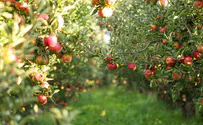
On Yom Kippur, we stood before HaKadosh Baruch Hu and asked for life. Now, in the sukkah, as the Flydubai miracle occurred, we are reminded how much of life we simply take for granted.
The proposed Christian October 7 event cannot simply be dismissed as a question of diplomacy or public relations.
It can be easier to stand in shul, say Vidui and ask Hashem to forgive us than to pick up the phone and say to someone, "I was wrong. I hurt you. Please forgive me."
A spiritual decline does not necessarily begin with a major decision or a dramatic break with the past. Sometimes it begins with something small, almost too small to notice. Only later do we see where that change has led.
The soundless voice of silence. What is it telling us?
We can stand together without praying together.
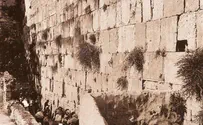
Lessons learned from the bee whose honey is a symbol of a sweet new year.

Have we really been listening to the song? Have we allowed the Torah to speak to us again?
Rabbi Eliezer Weisz urges the Chief Rabbinate to intervene after Givati soldiers were punished for refusing to ride in an APC with a female paramedic.
A Jew remains responsible for another Jew even when they are not standing on the same mountain.
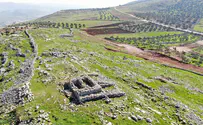
The nisayon changes. The Torah does not.
Yerach Yamim - A time to bring the past to a close.
A house can contain people who are different from one another, each with his own character and his own way, and yet they are all living under the same roof. That is the picture we should have of Am Yisrael.
In this election period, we must remember: Jewish life itself is full of debate. The Beit Midrash was built on questions and argument. The real question is: How do we disagree without dividing?
Not according to our timetable
Part I: Opening our hearts - the message of Parashat Eikev and Tu B’Av.

The darkness of galut is real, but it is not the final chapter of our story.

Jerusalem did not fall because Rome was invincible. It fell because the people inside could not tolerate one another.
Finding hope in the midst of destruction.
Jewish identity is not an optional lifestyle choice that can be carved up to suit progressive political tastes.
If the next generation is not anchored in Torah and yirat Shamayim, everything else we build is standing on unstable ground. This week's parshiyot teach that to us.
The target is evil itself, not the human being.
The biggest danger is that we, too, might fall into this exact same trap.
When outside forces try to tie our hands or misread our enemies, our only true defense is our internal clarity, our own independent strength, and our deep faith in Netzach Yisrael.
Political outcomes may appear stable, but in truth they are far more fluid than they seem.
A Rabbinic reflection on Alliances, Appeasement and Bitachon.
This is a deliberate strategy designed to make European Jews feel exposed, targeted, and ultimately unwelcome. It says that their most sacred traditions can be criminalized at any moment with the stroke of a pen.
The episode of the spies teaches that facts alone do not always determine conclusions. That is why responding to modern anti-Jewish bias with logic, history, or evidence so often proves ineffective.

A message of Jewish faith for Parashat Behaalotcha.
Before speaking about another person, we should ask ourselves one honest question: Am I truly going to help this person directly and privately, or am I simply using the language of “concern" to give myself something to discuss?
Rabbi Eliezer Weisz sent a sharply worded letter to Pope Leo XIV urging the Vatican to explicitly condemn the use of churches and other places of worship for military purposes during armed conflicts.
This minhag addresses the biggest psychological hurdle we face in our personal avodah (service of God) and spiritual growth: the trap of an "all-or-nothing" mindset.
In six short days beginning on the 26th of Iyar, darkness gave way to radiant light. The fear of mass graves became songs of salvation and tears of thanksgiving. Everything changed with breathtaking speed, as though Heaven itself had opened before our eyes.
In our generation, “iron" has taken on an entirely new meaning.
We moved from existential fear as described in the parasha to the heights of national renewal, with the climax being the liberation and reunification of Jerusalem, together with the return to Yehudah and Shomron.
In an attempt to settle the debate over conscription, the justices are using small children as a means of punishing their parents.
In these terrible times of war, in these terrible times of killings and the murder of Jews-times of Acharei Mot-we still remain Kedoshim.
On Yom HaZikaron, as we stand in the depth of loss, we see what Rabbi Akiva shouted: We are one family. The soldiers currently on the front lines and those who have fallen do not check who is "religious enough" or "political enough.
We remember a world that was destroyed, we look at the threats we face right now, and we are left with that same unanswered question: Why?
Ahead of Holocaust Remembrance Day, Rabbi Eliezer Simcha Weisz urges Pope Leo XIV to reject moral equivalence between terror and self-defense

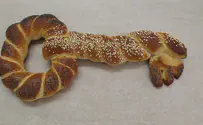
Ultimately, the Schlissel Challah is meant to focus our perspective. After a week of Matzah-the bread of humility-returning to regular bread represents a return to action.
Then, the waters became the undoing of a mighty empire. Today, the waters have become a channel through which a dangerous power is being weakened and held back.
"At this time, the State of Israel is not engaged in a war of choice. It is confronting an existential threat. The sweeping condemnation you made of 'those who wage war,' without distinction between aggressor and defender, risks creating a profound moral confusion."
Yosef’s coat represented separation. The bundle of hyssop represents humility and unity.
The world today finds itself in a fog of confusion. Why would a regime, already weakened and under immense strain, choose to double down? Look back to the Exodus to understand. And note how Pharaoh 'kept his word' when negotiating.
Shidduch lessons from Parashat HaNesi’im can help the shidduch crisis and lead to Nissuin - weddings!
Those who give their lives for the Jewish people-the קדושים-occupy a place in heaven that no other creature can reach.
A Vayikra reflection in a time of War.
Just as the Mishkan could only stand because every contribution was counted, so too the Jewish people grow strong when each person gives what they can, according to their abilities.
The fact that Hashem performs miracles does not release us from responsibility. On the contrary, it obligates us even more to act with seriousness and commitment.
David, King of Israel, lives and endures.
The salvation of Purim began quietly - not with a miracle, not with a battle, but with Shabbat.
Joy acts like a proactive medicine for the mind. Happiness and worry simply cannot live in the same heart at the exact same moment.

The ultimate goal of Jewish life isn't to be well-integrated or liked by our neighbors. It is for Judaism to be the centering fact of your life.
We cannot undo what has been lost. We cannot remove the pain from the bereaved. But we are commanded not to add to it.