
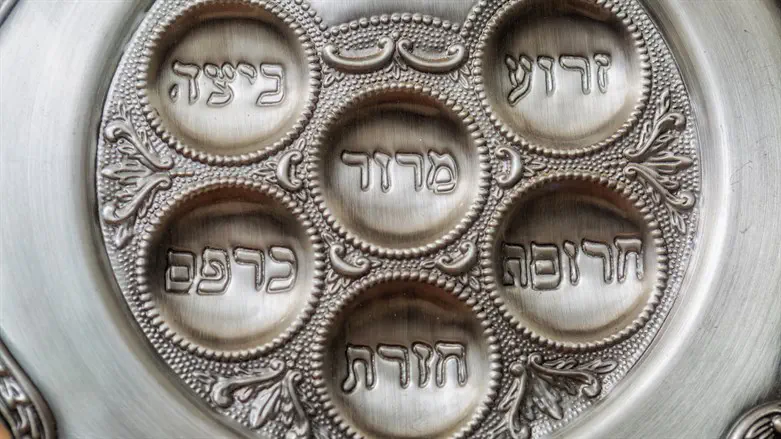
As we sit around the Seder table, we are not just telling an ancient story; we are stepping into it. The questions we ask and the actions we perform are not merely symbolic-they offer a deeper understanding of the roots of our history and the path ahead.
We begin with the words of the Mah Nishtanah:
"שֶׁבְּכָל הַלֵּילוֹת אֵין אָנוּ מַטְבִּילִין אֲפִילוּ פַּעַם אֶחָת, הַלַּיְלָה הַזֶּה שְׁתֵּי פְעָמִים"
“On all other nights we do not dip even once; on this night, we dip twice."
These two dippings are not a minor detail; they describe an entire historical process. The Ben Ish Chai, in his work Od Yosef Chai (Parashat Tzav), explains that these two dippings represent the beginning of the exile and its turning point: one opened the derech (path) to exile, and the other marks the beginning of redemption.
"שתי טבילות הללו הן כנגד שתי טבילות שהיו בישראל: אחת גרמה לגלות... ואחת היתה לתחילת הגאולה"
"These two dippings correspond to two dippings that occurred in Israel: one caused the exile... and one was for the beginning of the redemption."
The First Dipping: A Fracture in the Home
The story does not begin in Egypt; it begins in the home of Yaakov Avinu. The Torah points to two fractures in the relationship between Yosef and his brothers:
"וַיָּבֵא יוֹסֵף אֶת דִּבָּתָם רָעָה אֶל אֲבִיהֶם" (Bereishit 37:2)
“And Yosef brought their evil report to their father."
"וְלֹא יָכְלוּ דַּבְּרוֹ לְשָׁלֹם" (ibid. 37:4)
“And they could not speak to him in peace."
There is speech that damages, and there is silence that distances. Together, they create division. That division led to the first dipping in our history: "וַיִּטְבְּלוּ אֶת הַכֻּתֹּנֶת בַּדָּם"-“And they dipped the coat in blood" (Bereishit 37:31).
This was not just a technical act meant to deceive Yaakov. Yosef’s special coat represented separation-being set apart from the others. When it was dipped in blood, it became a symbol of division within the family. At that moment, the path to exile was set in motion.
The Chatam Sofer (on Sefer Shemot) connects this directly to the Seder night. The word "כרפס" (Karpas) alludes to Yosef’s fine garment, the "כֻּתֹּנֶת פַּסִּים" (Ketonet Passim). We dip the Karpas in salt water-reminiscent of tears (דמעות)-to remember that the suffering of Egypt did not begin with Pharaoh, but with a lack of unity between brothers.
The Second Dipping: The Power of the Bundle
To repair this, a mitzvah was given at the moment of redemption:
"וּלְקַחְתֶּם אֲגֻדַּת אֵזוֹב וּטְבַלְתֶּם בַּדָּם"
“And you shall take a bundle of hyssop and dip it in the blood" (Shemot 12:22).
Hyssop is a simple, lowly plant. On its own, it is weak and easily broken. But the Torah does not command us to take a single stalk-it commands us to take a bundle (אֲגֻדָּה), bound together.
This is the key. One stalk bends; a bundle holds strong. Yosef’s coat represented separation. The bundle of hyssop represents humility and unity. What was broken through separation is repaired through connection.
This idea continues with the Maror. Bitterness can lead a person to blame, to speak harshly, or to withdraw. Yet we dip the Maror into Charoset, softening its sharpness. Even within bitterness, we do not separate; we remain connected.
The Lintel and the Doorposts
We then take the bundle and mark the entrance of the home:
"וְהִגַּעְתֶּם אֶל הַמַּשְׁקוֹף וְאֶל שְׁתֵּי הַמְּזוּזוֹת"
“And you shall touch the lintel and the two doorposts" (Shemot 12:22).
The doorposts stand opposite each other, like individuals. The lintel stretches across and connects them. Without the lintel, there is no doorway-only separate beams. The lintel creates a home. So too with us. Individuals, even strong ones, do not create protection on their own. The connection between them is what creates a structure.
In Egypt, that unity marked the Jewish home. It was the boundary the Destroyer did not cross. In our times, this message is not abstract. Families and communities live under real threats. Soldiers stand at the frontlines, and civilians face uncertainty and danger. Strength is measured not only by numbers or strategy but by unity and mutual support.
Yosef as the "Mashpia"
This idea reaches its peak in the figure of Yosef himself. On the Seder night we declare: "כָּל דִכְפִין יֵיתֵי וְיֵיכֹל" (Whoever is hungry, let him come and eat). These are not just words of hospitality; they continue Yosef’s legacy as the "משפיע" (Mashpia)-the benefactor and provider for all.
Despite the pain his brothers caused him, Yosef rose above his instincts to become a Mashpia. The Chatam Sofer (based on Yalkut Shimoni 234) writes:
"יוסף הצדיק שבר את טבעו... ולא שילם להם כגמולם, אלא נהיה להם לממשפיע, לכלכלם ולסעדם ולנחמם. ובשביל ששינה יוסף את הטבע, שינה לו הקב"ה טבעו של עולם"
“Yosef HaTzaddik broke his nature... and did not repay them according to their deeds; rather, he became for them a provider (Mashpia), to sustain, support, and comfort them. And since Yosef broke his nature, G-d broke the natural order for him."
Because Yosef broke his nature to ensure family connection, G-d broke the natural order for him-manifested in the splitting of the sea.
A Message for Our Time
In our generation, the lesson is clear. We live in a period of real danger. Soldiers stand on the front lines, families carry uncertainty, and communities face threats. Strength is measured not only in numbers or strategy but in unity.
When a soldier knows he is not alone-that he is part of a "bundle," that an entire people stands behind him-his strength is transformed. When families feel that the tzibbur (community) supports them, their resilience grows. The lintel is not just a piece of wood; it is what is created when people hold each other.
We must be careful with harmful speech-words that divide. We must also guard against silence that distances. We must not stand as separate individuals. With Karpas, we remember where division leads. With Maror, we commit to staying together even in bitterness. And with "כָּל דִכְפִין", we open the door and expand the circle.
When we live as a "bundle," we create a strength that does not easily break. Within that unity, we hold on to Yosef’s promise:
"פָּקֹד יִפְקֹד אֱלֹקִים אֶתְכֶם"
“G-d will surely remember you all" (Bereishit 50:24).
May we merit to see the fulfillment of that promise bimherah (speedily), with a complete redemption for all of Klal Yisrael.
Next year in a rebuilt Jerusalem!