Israel's 1st Chief Rabbi:
Yom Kippur: The Holy King
What is the significance of the changes at the end of two blessings in the Silent Prayer during the 10 Days of Repentance between Rosh Hashana and Yom Kippur?
What is the significance of the changes at the end of two blessings in the Silent Prayer during the 10 Days of Repentance between Rosh Hashana and Yom Kippur?
Each Mitzvah forges a bond between a finite human being and an infinite G-d. No small feat. But teshuvah reconnects us after that bond has been severed through sin.
It can be easier to stand in shul, say Vidui and ask Hashem to forgive us than to pick up the phone and say to someone, "I was wrong. I hurt you. Please forgive me."
Based on an insight by Rav Soloveitchik on the avodah of Yom Kippur, a strategy for tesuvah emerges. Rav Dovid Hirsch makes this inference.
Teshuva comes to us through manifestations that can be divided into four eternal, absolute values which appear in a cognizant step-by-step fashion. These values are honor, love, knowledge, and life.
Words matter enormously. Yom Kippur is filled with them. We confess, pray, plead and ask to be forgiven. But our words have to result in something.
A spiritual decline does not necessarily begin with a major decision or a dramatic break with the past. Sometimes it begins with something small, almost too small to notice. Only later do we see where that change has led.
G-d is not here to catch us but to help us reach our tikkun, rectification. Each failure is merely a test that we were unable to overcome, but G-d is not done. Another similar test will come our way to see if we can overcome it.

Have we really been listening to the song? Have we allowed the Torah to speak to us again?
“Even if a person has been a sinner all his life and does Teshuva at the end, it is effective." (Rambam, Hilchot Teshuva 2:1)
It is Elul. And the voice of prayer merges with the early morning sound of a shofar, echoes in the sound of the bird singing on my porch rail this morning.

While Rabbi Kook emphasizes that the teshuva of the Jewish People and a return to the Torah go hand-in-hand, he indicates that a preliminary stage of national revival will begin this spiritual awakening.
The power of teshuvah is not limited, it encompasses every domain of life, that of the individual and that of civilization as a whole.
Today when Israel is troubled on all sides, from without and within, here’s a short story to help cheer up our spirits. Fantasy.

To fully grasp the concept of the Return, one must consider it in all its dimensions and at all of its levels.

This generation connects spiritually to the Land of Israel. That is the source of its willingness for self sacrifice in times of war.
“And I Will Remove the Sin of That Land in One Day”

The point of a Jew's yearly restart is not to wallow in feelings of guilt but to convert inner accusation into constructive return and renewal.
It's never all or nothing. G-d is the ultimate loving parent. When he sees that a Jew makes even the slightest movement of Teshuva, regardless of how much he has left to go, G-d immediately embraces this movement.
On a day that we're purified before G-d (Vayikra 16:30) and thrust into the holy of holies, we must contemplate our overall duty of devotion, because “in the times of Mashiach, there is only One to rely on, our G-d in Heavens.”
Rebbe Nachman of Breslov said, “If you believe that it is possible to make mistakes, then you can believe that it is also possible to make amends.”
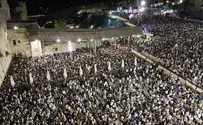
It is the last night of the Ten Days of Repentance - use the time well.
Does your soul dance with love and passion since the holy days of Rosh Hashanah? If not, Yom Kippur is another chance.

The Talmud teaches us that repentance (teshuvah) transforms deliberate sins into either mistakes or merits. Based on the teachings of Reish Lakish, the Maharsha, and Rav Kook, we show how repentance from love elevates wrongdoing into a catalyst for growth, deepening love of good, hatred of evil, and spiritual transformation.
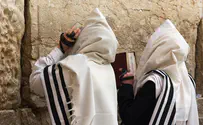
Reliving he moment when Rav Soloveitchik's face became a living commentary on the verse his son was chanting, and a living embodiment of a plea to Hashem sung by legendary Cantor Yossele Rosenblatt.
The most famous "seruvnik" - fighter for freedom for Soviet Jews - spent 11 years imprisoned in Siberia for his Zionism. He stayed true to his beliefs and his people. Lessons for today.
May you ascend, step by step, from one level of Teshuva to the next.
Before I Confess My Sins, I Must Confess My Greatness.
Only in our connection to the light of the national soul can we begin to examine our own lives and our connection to Hashem.
People who seek God without anchoring themselves to His people are lost at sea. The way home is through the nation, through its covenant, its language, its pain, and its resilience.
A new way to approach Teshuva through Rabbi Kook's original teachings guiding us on the path to achieve it.
For the past several years, I’ve observed that the most difficult struggles in life are the ones we talk least about. There is the battle of truly conquering oneself. The battle of refinement. The struggle through daily tests and challenges.
After repairing his soul, Reuben returned and looked at the pit.
I listen to the tourists planning their departures, and I wonder: Don't they understand the historical context of having the ability to return to our Holy Land after a long and bitter exile of 2,000 years? Why is going back to the US such an easy choice?

When we examine the Rosh Hashanah prayers, there is no mention of sin or penitence. How can that be?
“There is another type of T’shuva, not the penitence over specific sins, but a T’shuva aroused by a vague inner anxiety."
Rabbi Kook teaches that penitence which relates only to personal wrongdoing is incomplete because the Teshuva of each individual Jew is actually only a part of a much greater National Teshuva of Am Yisrael. What does that signify?
The State of Israel and all of its government ministers and all of its citizens must do serious heartfelt Teshuva. This is what October 7th is telling us.
In the generation of National Revival, as the revitalized Jewish Nation returns to its Homeland, a new type of religious Jew must appear to take up the challenge, wrote Rabbi Kook.
What about brainstorming some new outreach ideas? LIke - Why don’t teams of people man tables on or near the university lawns to answer questions about Judaism?
G-d treats His creatures mercifully, i.e., patiently, allowing them an opportunity to make amends, and going beyond the letter of the law.
We possess all the resources we truly need within ourselves. Our growth and our mission in this world are squarely within our grasp.
We need G-d’s blessing to continue to ensure that we and our children remain on the right path – and we need His mercy to bring us back from the curse of ongoing alienation from Him.
Is teshuva a prerequisite for Redemption?
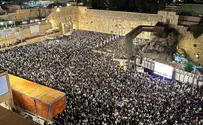
Everyone makes mistakes. The difference between the Tzaddik and the Rasha lies in their response.
Rambam: If a great tribulation comes upon the nation, trumpets must be blasted and people must examine their ill deeds A call for teshuva.

Torah observant Jews have a vital opportunity now.

Every decade since 1948 a new episode of violence erupts and Israel wins, with G-d's help. Here is how Israel can keep on winning.
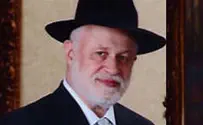
Thoughts for the days between Rosh Hashannah and Yom Kippur.

It's never all or nothing.
The moving cantor's prayer, the doubter's prayer. And the call to teshuva.
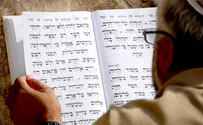
In a newly published video, the Rav delves into the secret of the baal teshuva's elevated status before God.
There are two great barriers to teshuva. They are surmountable.
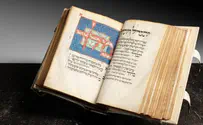
As we read our Parasha approaching the Day of Judgement, it guides us as to the ‘life’ for which we should fervently plead, on that Day.
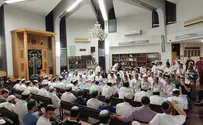
Where is the new outreach/inreach initiative by Belz heading?
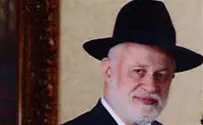
There is no greater work of Kiruv than the inspired work of two self-made women who did not have an Orthodox upbringing.
Man is called on to sanctify the material world, not shun it, writes Rav Samson Raphael Hirsch. So why do we fast?
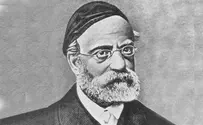
Being clear of sin is the goal for both the guf and neshamah in anticipation of the final resurrection.

My feelings towards Jews who have thrown off the mantle of Torah observance.
Rabbi Cohen's book 'What Did You Say?' remains one of the most popular works on shalom bayit.