
Rabbi Eliezer Simcha Weisz is a member of the Chief Rabbinate Council.
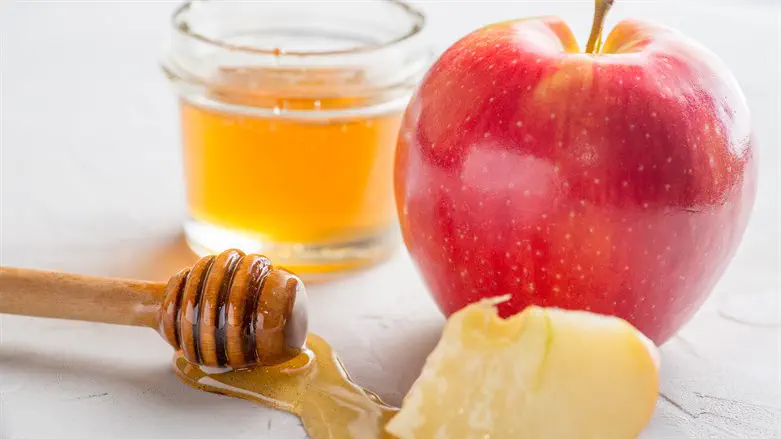
When we dip the apple into honey on Rosh Hashanah, we naturally think of our wish for a Shanah Tovah U’Metukah, a good and sweet year. But there is an interesting question: why do we specifically use honey from bees? Why not date honey or another natural sweetener?
The Leket Yosher, a collection of halakhic rulings, customs and practices compiled by Rabbi Yosef ben Moshe, a close disciple of Rabbi Yisrael Isserlein, author of the Terumat HaDeshen, gives a deep insight. Rabbi Yosef ben Moshe recorded many of the customs and teachings he heard from his rebbi.
When discussing the customs of Rosh Hashanah, he writes:
דבש חי סמן טוב לאכול בר"ה. ודבש דבורים מן המובחר, כי הדבורים דמי למשפט, כי עושים נקמה לפעמים, כמו שמוכח מן הפסוקים, ומה שיוצא מהן מתוק. וסי' לדבר שאנו יוצאין ממידת הדין למדת הרחמים, ודוקא חי סמן לחיים, וראייה ממה שאנו מבקשים ומתפללים בר"ה רק בשביל חיים.
“Raw honey is a good sign to eat on Rosh Hashanah. And bee honey is preferable, because bees resemble judgment, for at times they act in retribution, as is evident from the verses, while what comes from them is sweet. This is a sign that we emerge from the attribute of judgment and enter the attribute of mercy. And specifically raw honey is a sign for life, as we see from the fact that on Rosh Hashanah we ask and pray only for life."
There is something especially striking about this explanation. The bee has a sting. It can cause pain, and the Leket Yosher associates it with Din. Yet from that same creature comes something sweet. The Leket Yosher sees this as a Siman that we should go from Middat HaDin to Middat HaRachamim.
This is a powerful thought as we stand at the beginning of a new year. We have all experienced difficulties during the past year. There were things that were painful, things that were disappointing, and things that we may still not understand. We cannot know the meaning of every Din, but we can ask Hashem that the Din be turned into Rachamim, and that what seemed bitter should ultimately lead to Tovah and Yeshuah.
The honey of the bee expresses this beautifully: the sting and the sweetness come from the same creature.
There is another lesson we can learn from the bee. Young worker bees usually remain inside the hive, cleaning it and caring for the young bees. As they get older, they begin to leave the hive to collect food and bring it back. But these roles are not fixed. When the needs of the hive change, the bees can change what they do. When a hive loses many of the bees caring for the young, some of the older bees that had been bringing in food return to the hive and begin caring for the young again.
There is a lesson here for us too. It is easy to become accustomed to our usual roles and to think, This is what I do. This is what I am responsible for. That belongs to somebody else.
But life does not always remain the same. A family may suddenly need something from us that it did not need before. A community may need someone to step forward. There may be a responsibility in Avodat Hashem that we never expected to have to take on.
At such times, it is not enough to say, “This is not my job." The bee responds to what the hive needs. Perhaps this is something we should think about when we make our Cheshbon HaNefesh on Rosh Hashanah.
Beyond evaluating our actions over the past year-where we succeeded, where we faltered, and what requires correction-we must also examine where we must adapt and adjust our perspective to meet new obligations.
Perhaps there is a habit that has become too comfortable. Perhaps there is a responsibility we have been leaving for someone else. Or perhaps there is something we know we should be doing, but we have convinced ourselves that it is simply not our role.
Rosh Hashanah gives us the opportunity to recognize that sometimes the most important Kabbalah is not a grand promise. It is simply the willingness to do what the situation requires of us.
The Leket Yosher gives us the first lesson through the honey: “ומה שיוצא מהן מתוק" - what comes from the bee is sweet. The bee gives us another lesson through the way it responds when the needs of the hive change: sometimes we, too, have to step outside our usual routine and take on a responsibility that we did not expect.
These two ideas belong together. We ask Hashem to take the Din of the past year and bring it into Rachamim. At the same time, we have to ask ourselves whether there are things in our own lives that need to change. Where do I need to change? Where do I need to take greater responsibility? Where do my family, my community or my Avodat Hashem need me to step forward?
The honey on the Rosh Hashanah table therefore carries a deeper message. It is not simply a request for a year that will be sweet. It is a Siman that the Din should become Rachamim, that what was bitter should become sweet, and that we should be ready to recognize what is needed from us and respond.
The Leket Yosher adds one final point: “ודוקא חי סמן לחיים" - raw honey is specifically a Siman for Chaim, because on Rosh Hashanah we are asking Hashem for life itself. That request includes all the blessings that make a Jewish home possible: בני, חיי ומזוני, חן, חסד ורחמים - children, life and sustenance, together with all the Chen, Chesed v’Rachamim that we need.
The bee has a sting, but what comes from it is sweet. It also teaches us that when circumstances change, we cannot always remain in the same place. On Rosh Hashanah, these two lessons come together. We ask Hashem to turn Din into Rachamim, and we ask ourselves whether we are prepared to change, to take responsibility and to do what is needed.
We pray for a year of בני, חיי ומזוני, חן, חסד ורחמים - a year filled with life, sweetness, and complete blessing in our homes, our communities, and our Avodat Hashem.
Ketivah VaChatimah Tovah.