
Imagine the following situation. You are standing at passport control. Your bags are packed, you are ready to leave, and you hand over your passport, expecting to continue on your journey.
The officer looks at the computer and then looks at you.
"There is a travel restriction against you. You need to have it removed. Until then, you cannot pass through."
Suddenly, everything stops. You are ready to go, but you cannot move forward.
On Erev Yom Kippur, we should ask ourselves whether there is something that is still holding us back.
The new year has already begun. We have asked Hashem for health, parnassah, shalom bayis, nachas and all the good we want for ourselves and our families. But as we stand at the beginning of the year, we also need to look back at the year that has just passed. Is there something we left unresolved? Is there someone we hurt? Is there something we should have put right but did not?
Often, these things are not visible to anyone else. There may have been an argument that was never settled, a harsh word that was said, or something we did that hurt another person. We may have moved on, but the person we hurt may still remember.
This is one of the important messages of Yom Kippur.
The Mishnah in Yoma teaches us: "For sins between a person and Hashem, Yom Kippur brings atonement; but for sins between one person and another, Yom Kippur does not bring atonement until he has appeased the person he wronged." The Shulchan Aruch brings the same halachah (Orach Chaim 606:1).
If we have hurt another person, asking Hashem for forgiveness is not enough. We must also try to make peace with the person we have hurt.
Sometimes that is not easy.
It can be easier to stand in shul, say Vidui and ask Hashem to forgive us than to pick up the phone and say to someone, "I was wrong. I hurt you. Please forgive me."
But that is part of teshuvah.
On Erev Yom Kippur, we should think not only about our relationship with Hashem, but also about our relationships with other people. We should think about the people we have dealt with during the past year - our family, our friends, people we work with, people in shul and people in our community.
If there is someone we hurt, we should not wait for that person to make the first move. If we know that we caused the hurt, we should take the first step. Sometimes a phone call is enough. Sometimes we need to meet. And sometimes an apology is not enough; we also need to correct what we did.
The important thing is that the apology should be sincere.
There is another side to this. Sometimes we are the ones who have been hurt. We also have to ask ourselves whether we are able to forgive.
That does not mean pretending that nothing happened. It does not mean giving up something that is rightfully ours. But we should try not to carry anger and resentment with us into the new year.
This is especially important when there are disagreements between people. Even among Jews who are committed to Torah and mitzvot, there are differences of opinion and different ways of looking at things. We do not have to agree with one another on everything. But we have to be careful that a disagreement does not become personal, and that differences do not lead to anger or hatred.
Before Yom Kippur, each of us should ask not only what other people need to change, but what we ourselves need to change.
Perhaps there is someone we need to call. Perhaps there is an apology we need to make. Perhaps there is someone we need to forgive. And perhaps there is something within ourselves that needs attention - a habit, a weakness, or something in our conduct that we know needs to change.
Teshuvah means looking honestly at where we are and deciding to do better.
Yom Kippur gives us the opportunity to put right what we can, to ask forgiveness from those we have hurt, and to forgive those who have hurt us. What we take from Yom Kippur should continue afterwards - in the way we speak, the way we treat other people, and the way we conduct our lives.
We want to move forward. But sometimes, before we can do so, we have to deal with what is holding us back.
We cannot change what happened in the past. But we can decide what we will do now. We can ask forgiveness, make peace, forgive, and resolve to be more careful in the future.
As we stand before Hashem on Yom Kippur, we should come with an honest heart, ready to put right what we can and to strengthen ourselves in Torah and mitzvot.
May Hashem accept our Tefillot and our teshuvah, forgive our sins, and seal us all for a good year - a year of health, parnassah, shalom, nachat, and good news, for ourselves, our families and all of Klal Yisrael.
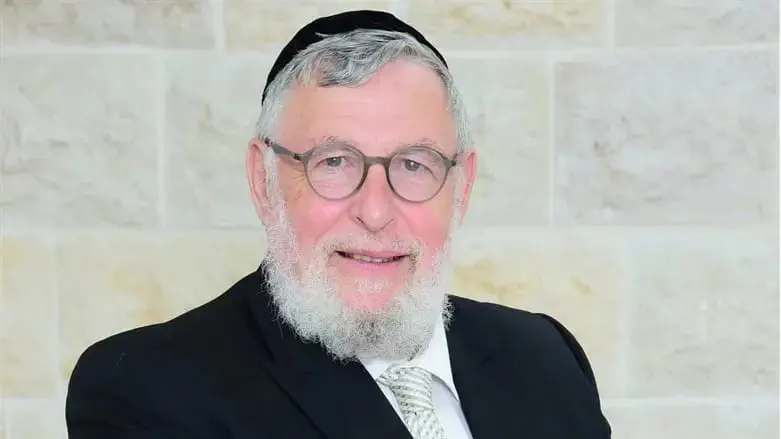
Rabbi Eliezer Simcha Weisz is a member of the Chief Rabbinate Council.