Parashat Shlach: (Diaspora)
A deliberate life
Torah is called Shalom and has the power to bring peace between the neshamah, soul, and guf, body.
Futures are built through achievement, through education, through leadership. Through the willingness to stand proudly and publicly as who we are. These people did just that.
Moses, Aaron and Samuel neither sought power nor exploited it. They served the people with humility and sacrifice.
Human beings rarely become resolute in their positions solely due to a perfect and brilliant logical argument. Korach knew that.
The key to victory and inheriting the land does not depend on the strength of the fortified cities, but on the measure of our devotion and faith in Hashem and His promises.

The struggle over Eretz Yisrael has never been solely a military or political contest. At its core, it is a test of faith, vision and national purpose.
One could bring countless examples showing how Rabbi Mordechai Eliyahu ZT"L followed the path of Moshe Rabbeinu and of all the righteous individuals throughout the generations who continued that path. Below is a selection in honor of his yahrzeit
The Tanya compacts four millennia of Jewish wisdom to answer the great personal and existential questions of life. It has revolutionized the way we think about G -d the human soul, the world and our place in it.
How the Baal Shem Tov saw 15 years into the future.
Less than two miles from where Jews were recently stabbed and Jewish ambulances were set alight, a community chose pride over fear.
A Sefer Torah's story that begins in the town of Eich near Worms, Germany, continues in New York, and becomes part of the post October 7th resurrection of a secular Gaza envelope kibbutz.

The greatest of the Tannaim and Amoraim worked to support themselves, making their Torah study their main occupation and their work secondary.
What is a great curse for our people? When those who hate you are found within you.
It is a mitzvah for every Jew to serve in the IDF. But he must learn and follow the appropriate halakhot.
A single gesture toward a baby reverberates throughout History.
Why did the Sages decide to add this particular paragraph about Tzitzit, out of the entire Torah, to the central prayer of Judaism?
We must rectify the ingratitude that brought about weeping for generations. Therefore, we must thank God for the great miracles that have occurred in our days.
First "provoke" followed by the next phrase asking 'How much longer will they not believe in me?' A survey of commentators explaining and contrasting the two dramatic verses.

True humility is a choice.
The core moral failure of the desert generation, and the corrective embodied by those who came next.

The spies looked at themselves through the eyes of those they were meant to confront. Once that happened, the battle was already lost.
Tzitzit is not merely a commandment - but a way of life that directs the gaze toward holiness and the land.
What was sinful about the words of the spies? Weren’t they supposed to give an accurate report of what they had seen? (Ramban)
Human beings have always had a remarkable ability to romanticize what they once desperately wanted to escape.

“We’re all better off, far better off, in the desert, without any distractions," they said. "Maybe one day when there is a Holy Temple in the Land, after Mashiach will have come, it will be time for us to enter the Land of Israel and possess it. But until then, we’re clearly better off remaining in the desert."
Commitment to truth should not prevent the community from living in peace and unity.
A fundamental teaching in Chassidut says that all existence is an expression of a single Divine reality.

When the festive Salute to Israel Parade concluded, the marchers returned to their homes - in the Diaspora.
This is a deliberate strategy designed to make European Jews feel exposed, targeted, and ultimately unwelcome. It says that their most sacred traditions can be criminalized at any moment with the stroke of a pen.
Standing before the same landscape, the spies and Joshua and Caleb reached opposite conclusions. The results were not long in coming.
Historically, it seems that the more accessible the sanctity of Judaism became, the more we were tempted by outside influences.
The Tanya compacts four millennia of Jewish wisdom to answer the great personal and existential questions of life. It has revolutionized the way we think about G -d the human soul, the world and our place in it.
This week, my book ‘Cheftzei Kodesh’ (‘Holy Items’) was published as part of ‘Peninei Halakha’ series, containing he laws of tzitzit, tefillin, mezuzah, Torah scroll, the writing of Sta"m, the honor of the synagogue and its construction, genizah, and the reading of the Torah.
The desert strips away the illusion that we are in charge. It reveals how little we actually control and how much energy we spend trying to manage and mitigate.
Love Your Fellow Jew!
The episode of the spies teaches that facts alone do not always determine conclusions. That is why responding to modern anti-Jewish bias with logic, history, or evidence so often proves ineffective.

The Narcissist & the Nazirite: Narcissism in Greek Mythology and the Talmud - a contrast in word view.
Why at the Red Sea crossing was Moses told, 'What are you crying out to me?', and why, in this passage, was the prayer for Miriam answered only partly?
Can we continue building when progress seems slow? Can we keep lighting the Menorah even when the room still feels dark?
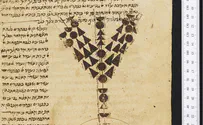
What is the method of purifying the Levites and why is it written after the offerings at the Tabernacle dedication? Commentators weigh in on the meanings below the surface.
Fortunate is the person who sets aside fixed times every day to study about guarding his speech.
There are temporary shortcomings but we work alongside Hashem to constantly grow and improve on the path to final completion.
I would write, weather permitting, while sitting on the row of 8 bombs while placing the Gemara and notebooks on the row above of 7 bombs.
A message of Jewish faith for Parashat Behaalotcha.
An extract from 'Bechayil UveRuach', the last book that Rav Haim Druckman approved for publication before he passed away less than a year before the start of the Gaza War. The title hints at the verse, “Not by might nor by power but by my spirit, says the God of Hosts" (Zecharia 4:6). And the army of Israel applies this principle, as it battles “mightily - with the spirit of God."
Shavuot is two days in the Diaspora, one day in Israel. Thus, whle Israel read the regular weekly portion, Naso, last Shabbat, (and will read Behaalotcha this coming Shabbat), Diaspora Jewry read a Shavuot portion last Shabbat and will read Naso this coming Shabbat.
The Rabbis say that, had Moshe led Bnei Yisrael into the Land, he would have built the Beit HaMikdash (Holy Temple), and it would have never been destroyed.
Hashem chose Avraham because he recognized what the world requires for its survival. Do we?
The Haftorah reminds us that redemption does not begin with spectacle. It begins quietly, often unexpectedly, when ordinary people accept extraordinary responsibility.
The Tanya compacts four millennia of Jewish wisdom to answer the great personal and existential questions of life. It has revolutionized the way we think about G -d the human soul, the world and our place in it.
The balance between continuity and individuality is one of Judaism’s great achievements and it comes to the fore in the parasha.
Before speaking about another person, we should ask ourselves one honest question: Am I truly going to help this person directly and privately, or am I simply using the language of “concern" to give myself something to discuss?
Tzvi Fishman speaks with Rabbi Yosef Mendelevich, pulling no punches about Diaspora Jewry's current situation and what the future holds in store.
When walls become a window,
Considering Torah learning’s status as a central mitzvah, we can easily understand that it earns us life in the next world.
We honor the divine soul and, by extension, the One who implanted it in the human body, by respecting the living as well as the deceased.
The greater the effort that is put in to the safeguarding of the Torah, the greater the spiritual import and potency of said decrees
It is a commandment to place an eruv tavshilin on the eve of the festival • This permits cooking and baking for the Sabbath on the festival • Even one who does not intend to cook for the Sabbath on the festival is commanded to place an eruv tavshilin.
The deeper meaning of "we will do and we will obey.".
Me - a rebel girl, long outta Borough Park, began to study a "bissel Toirah" later in life with the help of my dear friend Rivka Haut z"l. Here are some of the things we discerned in the Book of Ruth.
Note that the Bikurim declaration deals with agricultural produce, while ignoring the bigger implications of the Jewish nation and our great spiritual mission as Hashem‘s chosen people in Eretz Yisrael. Why?
Learning to seek the fire: we find many parallels between the story of the burning bush, the Sneh, and Matan Torah at Mount Sinai.
When heaven touches earth.

The Book of Ruth contains no commandments - but is a quintessential lesson for the generations in how and why an act of kindness is to be carried out.
Stop. Just for one day. Put it down. Zoom out. Look at your life from above the grind and ask yourself what’s actually there. What you’ve built, who you love, what you believe, where you’re going.

The Zohar praises the Tikkun of Shavuot, read during the night of the holiday, writing that through it one merits many spiritual levels. And the study of Torah and the Prophets crowns Hashem in His world.
At the time of the acceptance of the Torah, the Jews were totally united, with one goal and purpose; that unity was so sublime and pure
A Theology of Humility - both horizontally and vertically.

“You have chosen us from among all the nations, You have loved us and desired us.."

Sinai was the beginning. But Zion was always the destination.

The Tanya compacts four millennia of Jewish wisdom to answer the great personal and existential questions of life. It has revolutionized the way we think about G -d the human soul, the world and our place in it.
This minhag addresses the biggest psychological hurdle we face in our personal avodah (service of God) and spiritual growth: the trap of an "all-or-nothing" mindset.
What was G-d thinking? Choosing the Jews on the second of Sivan and offering the Torah to the Moabites on the third of Sivan? And not just the Moabites, but the Hittites, Canaanites, Egyptians, etc. How could G-d betray us like that?
A synagogue is a holy place, and one must conduct oneself within it with reverence • It is designated for sacred matters, for prayer and Torah • Whoever uses it for secular purposes, or behaves within it in a secular manner, disgraces its sanctity.
Are you searching for truth, or are you actually enjoying someone’s downfall in order to feel that you are on the “right" side?

And how to gain mastery of the whole Torah.
Because Yaakov chose Hashem to be his G-d, Hashem chose Israel - Yaakov’s nation - to be His special lot.
G-d did not reject His nation. Yes, were in exile for close on 2,000 years. Yes, even when we finally re-established independence in our ancestral homeland it was only in a fraction of the historical Land of Israel.
We have almost finished Counting the Omer and are coming close to the day we were at Mount Sinai.
Rosh Chodesh is about enabling connection and conversation. One of the ways this happens is when we reach out to Jews who are different from ourselves, across the lines that divide us.
Torah, like the desert, must be open and accessible to all of Am Yisrael, with purity, humility, and patience, so that the nation can return to its highest levels of holiness and spiritual greatness.
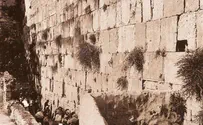
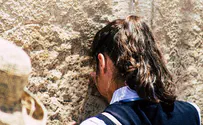
What is the significance of the Kotel? Why do Jews gather from around the world to pour out their hearts before this ancient wall of stone?
Like the moon, which wanes before it is renewed, the nation of Israel endured periods of concealment and decline but always held fast to the belief that restoration would come.
Above all, and within all, a nation needs a soul. The soul dwells here - in Jerusalem.

A key ingredient of receiving Torah in one’s life, is being a decent, person.
In six short days beginning on the 26th of Iyar, darkness gave way to radiant light. The fear of mass graves became songs of salvation and tears of thanksgiving. Everything changed with breathtaking speed, as though Heaven itself had opened before our eyes.
What is the significance of Yom Yerushalayim falling exactly one week before Shavuot?
The portion of Bamidbar presents the first census of the Jewish people as a national preparation for a holy war. From the verses, it emerges that 'military-age male' is not only a technical datum but a spiritual and national mission.
The return to Jerusalem in 1967 marked not only a military triumph but a stage in the ongoing restoration of Jewish sovereignty in our ancestral land. And perhaps that is the deeper lesson of Parshat Bamidbar for our time.
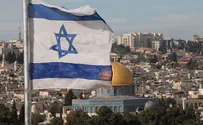
Fortunate are we, how good is our portion and our lot, that we stand in the gates of Jerusalem and see with our own eyes how “The Lord builds Jerusalem; He gathers the dispersed of Israel" (Psalms 147).
The holiness of the Land of Israel rose higher and higher with the liberation of Jerusalem, Judea, and Samaria from foreign rule.
Those of us who were born Jewish are not ordinarily described as Jews by choice. But we must always feel tht we have chosen the Torah.
Long before the language of modern science emerged, our Sages articulated a vision of reality in which human consciousness is not passive but deeply consequential.

It is Biblically forbidden to erase any of the Names by which God is called. Ideally, source sheets and pamphlets whose purpose is Torah study should be placed in genizah.
In our generation, “iron" has taken on an entirely new meaning.
What appears as repetition is never merely repetition. Each return to the text carried with it a subtle transformation, both of the material and of ourselves.
The Tanya compacts four millennia of Jewish wisdom to answer the great personal and existential questions of life. It has revolutionized the way we think about G -d the human soul, the world and our place in it.
Our nation’s ability to remain in its land is not a matter of geopolitical strength alone. Israel and Jerusalem have been entrusted to us, but we must act with moral responsibility in order to remain worthy of them.
G-d cares enough to discipline us. But He does not abandon us.
The difficulties and setbacks in rebuilding our homeland must not prevent us from singing songs of praise.
In a powerful thought on Parshat Behar-Bechukotai, the connection between the Avot and Eretz Yisrael takes center stage.
Letters are more than just elements of speech. They are the building blocks of creation.
Many great Rabbis have revealed that the murderous antagonism of the gentiles surfaces when the Jews fall in love with galut.
Libi came to our Shabbat table once.She was from a faraway country, a student who wanted to understand the Jewish people. She read books. She asked sharp questions. She said something I still remember.

Eretz Yisrael is more than a place on the map. It is a crucible in which the Jewish people are called upon to refine their identity and fulfill their mission.
Am Yisrael is the eternal nation, and the covenant which the Holy One Blessed be He made with us is an eternal and unbreakable covenant.
That one letter is also a word and writing four of them in a row also forms a word.
In a world of fake news and manipulation, this week’s piece recalls the importance of cognitive freedom and the risks of misinformation to public discourse.
We should feel that we have a “closer" relationship to Hashem when we stroll through the streets of Eretz Yisrael and the holy city of Yerushalayim (Jerusalem), and this should inspire us to a higher level of behavior.
The pairing of Behar-Bechukotai raises the question: were they originally defined as two parashot later joined when needed, or perhaps originally defined as a single parashah that sometimes had to be split? And what is the role of the Kohanim?
The answer depends on how we interpret the 'agra' mentioned in the Mishnah. What type of reward is it referring to?
This week's haftorah is a profound statement about resilience, about the ability to endure and even thrive amid adversity when one’s foundations are properly rooted.
We moved from existential fear as described in the parasha to the heights of national renewal, with the climax being the liberation and reunification of Jerusalem, together with the return to Yehudah and Shomron.
Some 250 Israeli families according to the Health Ministry, have had their fallen loved ones’ genetic material retrieved and preserved. What is the halakhic view on the use of a fallen soldier's zera?
Rabbi Kook: True holiness must learn to work with reality, not against it - descending into life with patience and love, refining it gradually toward its destined purpose.
From any tragedy, we must probe the root cause in order to rectify it. A Gemara provides a reason, yet a Midrash offers another.
All the words of the Torah are concerned with exalted matters and celestial secrets...
Online program based on HaGaon Rabbi Berkovits’ renowned curriculum
There is another type of secret-knowledge that, even if explained, would remain a secret. That is the theme of Lag Ba'Omer.
Why does Hashem’s decree to punish transgressors, the pupils of Rabbi Akiva, cause us to adopt some of the ways of mourners until Lag Ba'Omer?
Rabbi Shimon bar Yochai was prepared to suffer and to accept the attribute of judgment, so that the people of Israel not suffer and the attribute of mercy would shine upon them.

All doorways of the house and its rooms, bomb shelters, Jewish-owned prisons, hospitals, clinics, and nursing homes are obligated in a mezuzah, but not bathrooms and temporary dwellings.
Dr. Edith Eger: We have a choice: to pay attention to what we’ve lost or to pay attention to what we still have.
The body is not a discarded shell; it is a sanctified partner, refined through every mitzvah performed in life. The body and soul are not accidental companions; they are covenantal partners in a process that extends beyond a single lifetime.
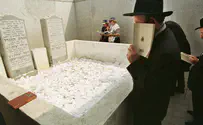
Maintaining the appropriate perspective on life is achievable through reflection on both the presence G-d as well as the significance of our existence.
G-d asks us to love one another as He loves us-to value others as He values us.
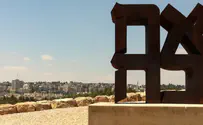
A “good name" is not a record of one’s spiritual and moral achievements.
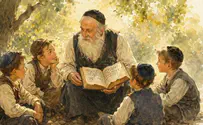
In Jewish tradition, the kohen is not merely a Temple functionary; he is a representative of the nation’s deepest aspirations.
Is there a connection between chulin meat and korban meat? Why do they share similar laws of slaughtering?
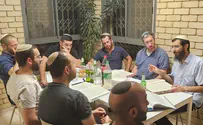
Why did G-d interrupt the sequence of the mitzvot of the Kohanim with the mitzvot of the Festivals?
The Iranian failure is not only political or moral. It is cognitive. It begins with a false perception of reality itself. In contrast, Judaism built a system in which spiritual leadership is commanded to keep its distance from death to protect the vitality of its foundations.
In a double expression in Parshat Emor, the Torah teaches an important lesson on the responsibility of adults to guide youth and the central role of refined speech and the importance of respectful communication and moral leadership within Am Yisrael.
This week's parasha speaks of sanctifying G-d's Name, Kiddush Hashem. At the Golder's Green attack, nobody intended to perform this commandment, but it shone forth from them.

The meaning of “holy" is entwined with the sanctification of the Divine Name. How is that done?
The gap between disqualifying a blemished Kohen from temple service and our deep appreciation for IDF wounded, such as the heroic conscript Ari Spitz, reveals a fundamental principle.
The entire verse uses a double expression :’say’, but why?
Jewish education must invest greater effort and resources in guiding our youth in this vital area: providing guidance before marriage.
“And they shall teach My people the difference between the holy and the profane and cause them to discern between the impure and the pure" (Ezekiel 44:23).
On the subject of cremation in Jewish Law, part II.
It is a mitzvah to establish a festive day of joy and thanksgiving to God on the day when salvation was granted to Israel.
In both cases, you know what you put in, but you don't know what comes out. Or is it not to simple...
The Tanya compacts four millennia of Jewish wisdom to answer the great personal and existential questions of life. It has revolutionized the way we think about G -d the human soul, the world and our place in it.
In an attempt to settle the debate over conscription, the justices are using small children as a means of punishing their parents.
We must work day and night as one nation to continue the ingathering, to continue the rebuilding, to continue all together in the battle to safeguard our inheritance from enemies without and within, striving alongside Hashem for the rebuilding of the Beit HaMikdash, may it be soon.
A bold framing. Perhaps even uncomfortable and problematic.. But one that creates the conditions for connection.
Stories to remember that took place in various bomb shelters (miklatim) across Eretz Yisrael in the recent war with Iran.
The Hebrew word for charity, tzedakah, derives from tzedek, meaning “justice."
How the saintly Rabbi Yaakov Moshe Charlap, rav of the celebrated Beit Knesset HaGra in Jerusalem, acted with regard to the Haftarah when Parashat Kedoshim was read without being preceded by Acharei Mot.
The scene the prophet depicts as one that shows that Redemption is here is so familiar in today’s Jerusalem that we don’t even recognize it as anything to get excited about.

The Torah portions of Acharei Mot and Kedoshim reveal the deeper role of Yom Kippur as the lasting day of forgiveness and true acceptance of the Torah, offering new insight into its connection with Shavuot.
In these terrible times of war, in these terrible times of killings and the murder of Jews-times of Acharei Mot-we still remain Kedoshim.
The Rambam teaches that we must say a blessing before we eat any food or enjoy pleasant aromas.

May the Mishnah we are about to learn inspire us to infuse all our relationships and gatherings with Torah study.
So why do so many religious Jews live in the Diaspora? One explanation is that after being expelled from Eretz Yisrael, during our long and oppressive years of wandering, our clear understanding of our original national mission became foggy and lost.
Could it be that what we commemorate on Yom Haatzma'ut is not merely a political milestone, but the unfolding of a prophetic promise?
A stark message to the nations: reality has changed, and the dream of erasing Israel has faded.
Various commentators are brought to bear on the reasons for the two fates for the two he-goats of Yom Kippur.
We already have a powerful and modern country, but we must remember and repeat that the goal is not only a material home; we must pour spirit and soul into the national enterprise.

The title is a phrase from Psalm 107, said at the start of the Yom Haatzma'ut evening service. What is its significance?
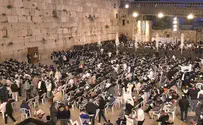
These wars themselves are stages of the Redemption. Our wars are not like all the other wars in the world. We are engaged in a long and difficult war against war itself, against the impurity and evil which degrades mankind into wielding the sword and shedding blood.
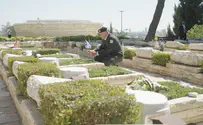
On Yom HaZikaron, as we stand in the depth of loss, we see what Rabbi Akiva shouted: We are one family. The soldiers currently on the front lines and those who have fallen do not check who is "religious enough" or "political enough.
Those who live in Israel sacrifice daily for the dream of Jewish peoplehood. We in the US, who do not yet live there, have a greater obligation to demonstrate that nothing, not ideology or geographical distance, can hold us apart.
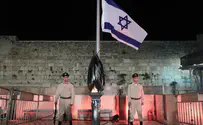
The word for "independence" in Hebrew, atsma'ut, has different possibiities for delving into its meaning.
The argument is an internal argument, within the family, like the arguments between Rabbi Akiva and Rabbi Tarfon and between Rashi and Tosafot.
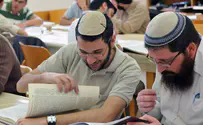
What does Passover-now behind us-ask of us today?
In our time, when the elevator has become the accepted way of entering homes, it is appropriate to affix a mezuzah there.
In our prayers, we often ask Hashem to bless us with יְשׁוּעָה וְנֶחָמָה, salvation and consolation. Throughout our history, as they do this week, the two come together.
The labor demanded of us is the labor of creation: to give voice to Torah, so that its light may spread and uplift the life of the nation.
The Tanya compacts four millennia of Jewish wisdom to answer the great personal and existential questions of life. It has revolutionized the way we think about G -d the human soul, the world and our place in it.
The Torah portions of Tazria and Metzora teach that true holiness requires balancing distance and closeness, as seen in the laws of purity that safeguard personal, family, and Temple sanctity.
Lessons from the Torah portions of Tazria and Metzora, the exact middle of the Torah, and how all three connect to the days of the Omer.
One of the centers of global anti-Semitism is found in the Vatican, which for generations has preached hatred of Israel.
Even the great Rabbi Akiva's pupils failed to keep "you shall love your neighbor as yourself."
Isaiah’s magnificent, inspiring prophecies are coming true before our very eyes. They are no longer a matter of faith: they are now tomorrow’s headlines.

Dvar Torah for Noahides: Israel and America are allies today not because they are identical, but because in this moment they serve a shared purpose.
A parent’s attachment to their child can become at odds with the imperative to act in the best interests of the child.

We remember a world that was destroyed, we look at the threats we face right now, and we are left with that same unanswered question: Why?
This week’s message deals with military conscription - in the United States of America...

Shabbat Rosh Chodesh is more than a calendrical coincidence, it is an opportunity.
Morris Engelson emphasized the divine Hand behind all the details, from his childhood in Vilna to his teenage years of hiding, to his ultimate escape.

In many cases, symptoms surface at the moment of recognition.
On Holocaust Memorial Day at Merkaz Harav Yeshiva decades ago, Rabbi Tzvi Yehuda Kook approached the question of the Holocaust from a perspective which embraces all of Jewish history.
The essential point is that Hashem is waiting for us to take the initiative, to desire and long for the return to Eretz Yisrael. He does not want us to wait for Him to bring us there.
Travelling to the death camps is not necessary to realize the horrors of the Holocaust. In fact, the practice should be stopped.

During the period of Counting the Omer, beginning during the Holiday of Freedom, we must come out on the right side of history, as individuals and as a nation.
How did King David spend his nights?
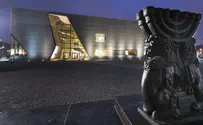
For Polish Jews who had seen the utter vulnerability of exile, the existence of a Jewish state represented a profound shift in Jewish history.
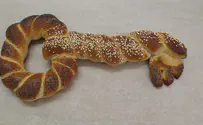
Ultimately, the Schlissel Challah is meant to focus our perspective. After a week of Matzah-the bread of humility-returning to regular bread represents a return to action.
The tragic deaths of Nadav and Avihu in Parashat Shemini warn of the terrible danger of humans following their own decrees instead of G-d’s, even when they have the holiest and most exalted of intentions.

Let us learn to look at these world developments through the lens of Chazal, our Sages.

While we aspire to draw closer to G-d, we must do so on His terms, not our own.
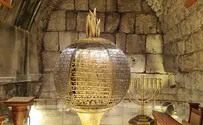
To act based on instinctive feelings of right and wrong, or even powerful religious inspiration, is to undermine the principle of Divine Revelation.
The eighth day marks a milestone in the history of Israel: the dwelling of the Divine Presence, immense joy alongside a moving tragedy that underscores the depth of holiness and responsibility.
A practice once unthinkable for a Jew is now often accepted casually by secular Jews, without serious thought about its spiritual, scientific, and moral dimensions. It is the difference between a melody gently fading into silence and an instrument smashed to pieces mid-song.
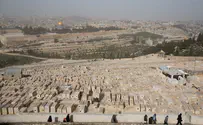
Then, the waters became the undoing of a mighty empire. Today, the waters have become a channel through which a dangerous power is being weakened and held back.
There is a moment when the call is not to learn, not to daven, not to deliberate. The call is to walk into the sea.

Certain leaders, certain regimes, and certain civilizations choose destruction over surrender - even when every rational calculation screams otherwise.

This is what every parent should teach his children this year during Pesach. This is what every Rabbi should teach his congregation. This is what every head of every Jewish organization should make his number one priority.
The Days of Mashiach consist of literally what has been happening in the State of Israel for 76 years, and literally what is happening in the State of Israel today.
Rav Soloveitchik’s decision to engage with Mizrachi-and through it, with the broader political and secular dimensions of Zionist nation-building-constitutes a significant departure from his 'Brisk' inheritance. But it has precedents in Jewish history.
"At this time, the State of Israel is not engaged in a war of choice. It is confronting an existential threat. The sweeping condemnation you made of 'those who wage war,' without distinction between aggressor and defender, risks creating a profound moral confusion."
Although we see how the public in Israel is divided into right and left, all of this is only from a superficial and external perspective.
The sound of explosions has ceased. We pray for the salvation of our nation, for a time of calm and security.
A ferocious wind lifted me from the sidewalk and hurled me into the gutter at the onset of rush-hour traffic. I survived and it changed my life.

Jews always have more questions. Here are four.

We celebrated the seder and will continue enjoying the holiday despite the missiiles and rockets. Yosef Mendelevich had a heroic seder in the gulag, but remained a prisoner for two more years.
The V’hi She’amdah song should remind us that Hashem allows adversaries to threaten us in order to distance us from them, and subsequently delivers us to inspire us to strengthen our relationship with Him..
I found chametz in my house on Pesach! 🚨What should I do?

What makes a person truly free?
The future of Jewish life will not be secured by persuading the world, but by inspiring our children.
Keith Siegel's request for his first Shabbat at home tells us something about the Jewish people and continuity.

We begin our Seder service with a modest invitation: “This is the bread of affliction which our fathers ate in the land of Egypt; all who are hungry - let them come and eat!." Why so meager?
The joy at the prospect of the seder, at noting the times below, and at keeping the holiday’s mitzvot is accompanied by prayers for the safety of our IDF soldiers fighting at various battle fronts for our safety and security.
Is the Pesach model of redemption rooted in passivity still the paradigm? The haftarah provides the answer.
The Seder can be seen as moving through a complete arc: identify the pain, share the story, embrace the journey, and let go into faith.
" Thus said the Holy One to Israel: My children, do I lack anything? What do I seek from you? I seek only that you love one another, and honor one another..."
Yosef’s coat represented separation. The bundle of hyssop represents humility and unity.
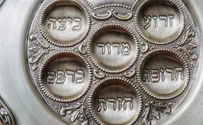
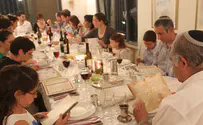
What is it about Pesach that makes it so special? It brings out so much good in people!
Read how the scientific and the spiritual, the equation and the symbol, converge perfectly in a single drop of water.

The Haftorah reminds us that the miracles of the past were only the beginning. What comes next is our responsibility.
Remember the miiracle in the days of King Hezekiah on Pesach and the joy it engendered.
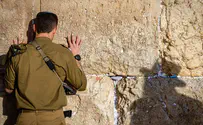
Part I: Words of faith for soldiers fighting for our people. Part II: Halakhot with additions for soldiers at the front
The Tanya compacts four millennia of Jewish wisdom to answer the great personal and existential questions of life. It has revolutionized the way we think about G -d the human soul, the world and our place in it.
The altar and its fire offer not only a model of ritual practice, but also a framework for thinking about the inner life, the offerings a method for transformation.
People in pain are not first asking to be rescued. They are asking not to feel alone. And God does not stand outside suffering.
Two brothers, one the galut and the other in Israel - and two very different seders.
Cleaning the kitchen for Pesach (Passover) should be done more carefully than cleaning the house, to ensure that not even a small crumb of chametz (leavened food) remains. Added links: OU guides to Passover and medications as well as Israeli Health Miinistry guide for medicatiions.
It’s as if we’re watching history echo in real time. And right now, that echo is getting harder and harder to ignore. Suddenly, the words of the Haggadah don’t feel abstract.

Although we were born and set apart in Egypt, our soul and our light and our purpose and our uniqueness are revealed in their full strength in the Land of Israel and Jerusalem.
Why does the Torah not require covering the blood after slaughter for cattle, sheep, and goats?
The Pesach sacrifice was a massive act of defiance against the idolatrous Egyptian oppressors. And the Haftarah-reading for Shabbat Hagadol is the very last prophetic vision ever.

From divine objects to living architects.
Is it permitted for three male soldiers and one female soldier - who is a driver or paramedic - to remain together in a Hummer (Humvee)?
When, chronologically, did our Parashah's first verses occur?
What made Moses the right person to lead the Exodus? Why did G-d choose him, and at what precise moment was his destiny sealed?
The thanksgiving offering teaches us that not only does deliverance require gratitude, but also the possibility of continuing to live and act in the world.
The essential task is not only behavioral correction, but internal scrutiny.
Shabbat Hagadol, prior to the holiday of our freedom, reaffirms our identity as the Jewish nation. Shabbat Shuva reaffirms our identity as a God-centered people. In their land.
The world today finds itself in a fog of confusion. Why would a regime, already weakened and under immense strain, choose to double down? Look back to the Exodus to understand. And note how Pharaoh 'kept his word' when negotiating.
This time in the year, which includes the Seder, more than any other time, celebrates the ability of Jewish families to come together. And this current time in Jewish history is an opportunity to share familial unity and natiional purpose.
It is precisely at the threshold between message and moment, that this special Haftorah’s relevance to our own time becomes unmistakable.
The Chafetz Chaim saw the approaching Redemption, and he gave instructions to prepare for it properly by studying the laws of sacrifices and the Temple rituals.
Hashem is concerned with the fate and direction of all people and wants us to offer them direction. Judaism and Jews are meant to impact more than just Jews.
Non run-of-the-mill halakhic questions that people recently asked the rabbi.
A synagogue is a place that a Jewish community has designated as a place of prayer to God. It played a central role in preserving Jewish identity throughout the exile, serving as a kind of spiritual extension that continues from the Temple and the Land of Israel. Using it for mundane purposes or behaving in it in a mundane manner desecrates its sanctity.
Shidduch lessons from Parashat HaNesi’im can help the shidduch crisis and lead to Nissuin - weddings!

Borrowing the title of Pete Seeger's song to hammer home a message to Diaspora Jewish leaders.
This year, Let Your Seder Year be Transformative!
Why did God command that we bring korbanot (Temple offerings)? What is the purpose of this form of serving God?
Korbanot (0fferings), the Mincha, and the Avodah of Vayikra.
Is there any organic connection between Parashat Vayikra, Nissan, and Purim?
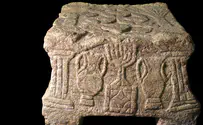
The korbanot in the Bet Mikdash - assuredly they were to unite worlds.
Those who give their lives for the Jewish people-the קדושים-occupy a place in heaven that no other creature can reach.
Reflections on the unifying secret of the Jewish people, on the shrunken letter that teaches us humility, and on the heroism that is revealed precisely in the 'valley of the shadow of death.'
The judgment of the nations of the world in the days of the Mashiach. Which nations are foremost and in what order?
How have we managed to transmit our tradition despite endless tribulations?
Realizing that we exist as the handiwork of our Maker must be at the forefront of our consciousness. This awareness keeps us humble and guards us from sin.

The covenant endures. The Jewish people may face criticism and reproach, but they are never abandoned.

G-d wants the real you-because only then can you experience the real G-d.
True, we are only at the beginning of the budding and blossoming of our People in our Land. But the day is not far off when we will merit to see and feel, face to face, the sweet fruits of the People of Israel in the Land of Israel.
Be of courage - our country is not received on a silver platter, but rather through war.
How does halakha define "the majority of Israel"? The answer will surprise you.
The Tanya compacts four millennia of Jewish wisdom to answer the great personal and existential questions of life. It has revolutionized the way we think about G -d the human soul, the world and our place in it.
Let’s explore how the ancient drama between Ishmael, Isaac, Esau, and Jacob is playing out on the global stage today.
When the Torah scroll is being carried, and also when it is lifted up, everyone who sees it must stand until the scroll is placed in its place in the ark, or on the bimah.
A Vayikra reflection in a time of War.
Ask yourself sincerely - how much do you want to make aliyah?
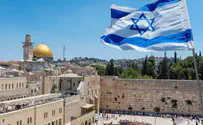
Samaria Rabbi David Dudkevitch recounts his halakhic question to Rabbi Shlomo Zalman Auerbach after a Molotov cocktail struck his car on the road to Shechem.
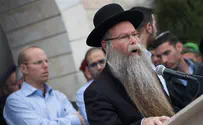
As we finished reading the Book of Exodus, its overall message becomes clear.
The Talmudic Sages' views on Persia.
Perhaps that is our challenge, right now. To maintain a touch of the angelic, of purity and holiness, in the midst of chaos and destruction.

Just as the Mishkan could only stand because every contribution was counted, so too the Jewish people grow strong when each person gives what they can, according to their abilities.
Rabbeinu Bachye explains, the very question is the answer-the Beit HaMikdash, and its predecessor, the Mishkan in the desert, was not merely a physical building; it was the repository of the collective psyche and soul of Am Yisrael, which allowed Hashem’s Shechinah to be more manifest in this physical and troubled world.

Gathering together, making sure all are accounted for, and planning ahead: this week's Torah readings parallel Israeli citizenry's response to the ubiquitous sirens that send us all to our shelters.
The story presented in the Torah is one of a holistic, pure, and ideal experience. No glitches, no politics, no accusations, no problems; a perfectly smooth ride. The Mdrash tells us the problems. So where is the truth?
To host G-d, you must make space in your heart.
It wasn't just the work itself that was done as Hashem commanded, it was also the way it was done.
Shabbat, the Tabernacle, circumcision, and temple service are foundations of holiness-but saving a life takes precedence over them.
Every national future must rest on something deeper than power alone.
The Mishkan is here to remind us of that. Hashem has brought presence to Space. Parashat Hachodesh tells us that this presence occurs in time.
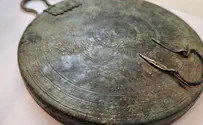
The mirrors ussd for the Mishkan had an exotic histtory.
In our present war with Iran we see how Amalek is being destroyed in this period between Purim and Passover.
At my Kiryat Moshe home, on Purim, students wondered why they will say 'next year in Jerusalem' in the Haggadah when they are already there...
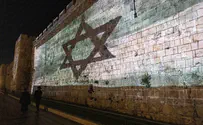
Happy are we, how good is our portion and the lot of our generation that we merited to return to the Land of Israel and to Jerusalem.
A tiny Caribbean island once had more Jews than all thirteen American colonies combined, and quietly saved thousands from the Holocaust.
Rav Elimelech of Lizensk reminds us that our connection with Hashem hinges upon our relationship with other people and our ability to focus on the good in each of them.
The Tanya compacts four millennia of Jewish wisdom to answer the great personal and existential questions of life. It has revolutionized the way we think about G -d the human soul, the world and our place in it.
The mitzvah of mezuzah grants protection and long life to the homeowners and their children.
A Parshat Zachor to remember for generations to come.
A woman of valor whose loss will be keenly felt by family, friends and the Borough Park kehillah she led with her late husband, the Halleiner Rov zts"l.

How did Moses learn the entire Torah in forty days?
The fact that Hashem performs miracles does not release us from responsibility. On the contrary, it obligates us even more to act with seriousness and commitment.
This past Shabbat, we witnessed tens of thousands of reservists across Israel change from their Shabbat clothing into the sacred uniform of the IDF. Fathers of young children heard the reading imploring us to remember the cruelty of Amalek, then left their families to answer the call once again.
What did our Sages mean when they said that the Mem and the Samekh in the Luchot stood miraculously?
We must remember the central place that the crime of idol worship occupies in Judaism.
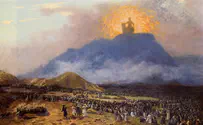
What evoked Moshe’s breaking of the Luchot, in fact, was his witnessing the great joy with which the sinners had embraced their mission
In a daring interpretation, classic to the Chassidic approach toward Judaism, Rabbi Levi Yitzchak becomes the great "advocate" for the Jewish people, as he always was.
This Shabbat is the confluence of three components of our calendar: the aftermath of Purim, Parashat Ki Tissa, and Shabbat Parah.
David, King of Israel, lives and endures.
Like the ashes of the red heifer, the destruction of Iran’s instruments of death can become the catalyst for cleansing.
Adv. Shalom Wasserteil explains how the mitzvah of the half-shekel places a world of holiness and charity against the money of Haman, who sought to destroy the Jewish people.
We should strive to extend the light of Purim, and the drawing together of hearts, throughout the entire year, but at the same time, we must remember that we are forbidden from being overly merciful toward our enemies.
If a siren sounds while we are reading the Megillah and we pause, do we start again or continue from where we left off?
A thousand years from now, the world may little resemble anything we can imagine. And yet, somewhere, Jewish children will celebrate Purim as they have for thousands of years. Read why,
Khomeini went the way of Haman, Israel continues to pound its enemies as recorded in the Megillah - and we thank G-d for our deliverance.
One more day of fighting, Esther begged Ahasueros. One more day of humility, she hoped. One more day of unity, she dreamed. Let us join her prayer and act upon it this year.
Purim and Yom Kippur, also called Yom Kippurim, are opposing mirror images of each other. Each provides the missing half that the other lacks and this year they merge as we celebrate in the midst of a war of survival.
“When there is a great war in the world, the power of Mashiach awakens."
My friends and brethren, the call of Queen Esther is relevant and applicable to this very moment. Let’s unite and be active in three areas to help this war succeed.
Stop arguing, just take a look at me!
The fourteenth of Adar was not random. It was repayment. G-d always pays His debts.
Although the events of Purim took place outside the Land of Israel, Purim is deeply connected to it.
A Deeper Dive into the Connection between the Ancient Serpent and the Evil of Amaleik
These special clothes indicate that the kohanim suffer from a fundamental dissonance.
“Remember what Amalek did to you on the way, after you left Egypt… you shall blot out the memory of Amalek from under heaven; do not forget."
What is the Torah's attitude toward clothing? Is there anything wrong with trying to look one’s best and constantly keeping up with the latest style?
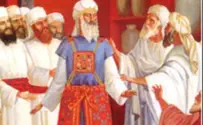
The Jewish people are a portable sanctuary. We are still here. Still learning. Still singing. Still blessing. Still arguing with love. Still raising Jewish children who will carry the flame forward. That is not sociology. That is not luck. That is Hashem holding us up.
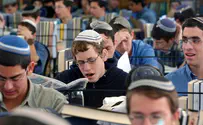
The salvation of Purim began quietly - not with a miracle, not with a battle, but with Shabbat.
Haman and Amalek represent the force that brings death and destruction into the world. Mordechai - connected to the Ketoret- represents the force that stops death and destruction.

A barrier is not social segregation but a spiritual foundation that guarantees the camp's sanctity and preserves its identity.
There are moments in Jewish history when compassion becomes cruelty.
Megillat Esther never once mentions G-d; Parashat Tetsave does not mention Moses; Amalek seemed to have disappeared from history. But G-d gives us the discernment to perceive them all.
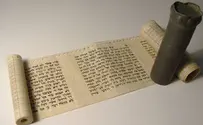
Hashem has no need for illumination, the mitzvah is solely for the honor and needs of Israel - and it also contains symbolism for daily life.
Every Jew should read Parashat Zachor and remember what Rabbi Joseph Ber Soloveitchik said about Amalek today.
There are many similarities between the return to Zion at the time of Ezra and today’s return to Zion.
![When the majority of Jews [dwell] in their Land...](https://2.a7.org/files/pictures/203x125/1055955.jpg?autocrop=1 "צילום: אייסטוק")
From the time of Moses until now, “Zayin Adar" affirms Judaism’s unwavering reverence for the sanctity of the human body, created in the image of G-d.
When there is room in the synagogue for all the worshippers, and there is no significant principled reason to establish an additional synagogue, it is forbidden to divide the community
A terrorist is not an ordinary pursuer intending to kill a specific individual, but someone who seeks to kill any Jew who happens to cross his path. How does halakha deal with that?
Joy acts like a proactive medicine for the mind. Happiness and worry simply cannot live in the same heart at the exact same moment.

The Tanya compacts four millennia of Jewish wisdom to answer the great personal and existential questions of life. It has revolutionized the way we think about G -d the human soul, the world and our place in it.
Halakha points in one direction. That said, the even bigger issue from a Torah perspective may be the missed opportunity for a traditional Jewish marriage and family.

The most powerful image is one that stands for our facing one another.
Our Sages teach us that as the month of Adar advances simcha (joy) increases.
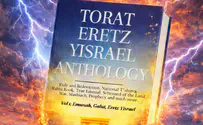
What is the significance of this unique animal, the Tachash? How are they like the Erev Rav?
Start the Party: Learning from an uncouth dictator How to celebrate Life.
Adar is suited for confronting the enemies of the Jews because of the joy of Israel during this month.
Through their deeds, which are pleasing before Him, the righteous themselves become the concrete sanctuary of Hashem.
The construction of the Mikdash/Mishkan/Tent of Meeting transformed us from a collection of families to a united nation, united in in our worship of G-d.
How the current Daf Yomi connects with the parasha we read in Shul.
The golden menorah teaches that all wisdom is directed toward the light of the Torah.
We did not simply remember the Temple. We organized our civilization around its absence.
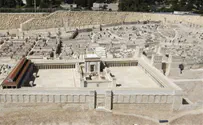
What is the meaning of the idea that G-d “dwells among us?" And why is the Mishkan built of donated materials, instead of G-d commanding the Jews to bring them?
What purpose did the Table serve and what need was there in the Sanctuary and in the Temple, that required a Table?

The ultimate goal of Jewish life isn't to be well-integrated or liked by our neighbors. It is for Judaism to be the centering fact of your life.
Our synagogues, like the Temple, must be a Beit Midrash, a Beit Tefilah and a Beit Kenesset.

The obliteration of Amalek and building the Beit Mikdash are two commandments Bnei Yisrael must keep upon entering Eretz Yisrael.
The permission not to make Aliyah applies only to the greatest Rabbis of the generation. How is that?
By seating the elders at the front of the synagogue, the entire congregation bestows honor upon the Torah and its Sages. Although we find various communities that practiced not seating the rabbis in the “east," it is proper to return to the original custom-in order to honor the Torah and increase its influence.
‘If you accept the ordinances, there will be peace amongst you, and you will then merit to acquire the Torah.’
A daughter's memorial tribute to her mother z"l, written as the saga of going through one's parents' home after their passing.
Tens of thousands of IDF reservist soldiers are experiencing feelings not unlike those of the Israelites leaving Sinai. How does the Torah deal with this?
Young religious Zionist Torah scholars connect the Torah Reading with the Land of Israel.
“The progress of human knowledge, and all of the results of human inventions - is all the work of God."
The Iranians are suffering from obsessive, compulsive hatred of the Jews and of Israel and do not hide their intention of using any and every means to eradicate the lives of 8 million Jews in Israel. Is it wise to wait and see?!
What is the difference between a G-d Who listens and a G-d Who partners?
When my reptilian brain goes wild, I need to help it see its owner.
Parshat Shekalim itself revolves around the half-shekel - a modest, equal contribution required of every individual, rich and poor alike, toward the communal service.
Shabbat Shekalim is the first of five special Shabbatot, over seven weeks.

This Shabbat, in addition to reading the parsha of Mishpatim, we will read the haftarah for Shekalim.
We cannot undo what has been lost. We cannot remove the pain from the bereaved. But we are commanded not to add to it.
Shabbat is not merely another commandment; it is an eternal sign of the covenant between God and Israel.
The ancient moral Torah laws on relations with young women form a stark contrast to the actions of progressive liberal Jeffrey Epstein and his associate Herbert Wexner.
To treat G-d’s creatures with justice and compassion is to affirm, through our daily conduct, that the world and humanity are the handiwork of Hashem.
King Yehoash shows us that Lasting institutions are built not through transactions, but through trust.
Does this commandment have any practical application, as do the other commandments of the parashah?
Should we have fought differentlY?
Thank God, we merit to see more and more people returning to tradition, and the day is not far when the entire people will return to its roots, and through this we will be fruitful and multiply from within - and from without, through a great aliyah.
To recite the Hallel prayer of thanksgiving or not to recite it, that is NOT the question.
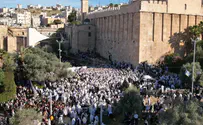
To fully grasp the concept of the Return, one must consider it in all its dimensions and at all of its levels.
Speech given at Mizrachi Melbourne this past Shabbat.
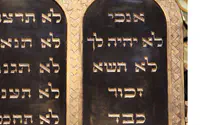
Humbling ourselves before G-d means strengthening ourselves before others.
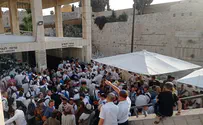
Why does it say ‘they journeyed from Rephidim and arrived in the desert’? After all, we know they were iin Rephidim beforehand from previous verses.

How did Moses first present the Torah and its laws to Israel?
How does the holiness of Sinai shape Jewish life across generations? The special message of an altar built without a sword or pride, and the deep bond between the Mikdash and the justice of the Sanhedrin.
During the days of Shovavim there are two primary actions, explained below.
Seventy-five years since Auschwitz and after two decades of incessant Islamic terrorism, the mountain is hanging over our heads once again. Wiill the world accept "I am the Lord your G-d/You shall not murder"?
Yitro’s positive perspective of the Jewish people was caused by his noticing the tremendous significance that the Jewish nation attached to their heritage
Israel united as one man before the Revelation at Mount Sinai, despite the differences between each tribe and every individual Jew.
We have two different opinions as to when Yitro joined, and Zipporah rejoined, the Children of Israel: shortly before the Giving of the Torah, or shortly after it.
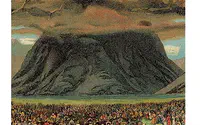
The crucial difference between Marah and Sinai.
G-d will tolerate many things from His servants. Becoming a prosecutor of Israel is not one of them.

The Torah records Yitro’s actions because they contain important lessons for all of us.

One can see in Seudat Yitro, celebrated by Tunisian Jews on the Thursday before Shabbat Parashat Yitro, an invitation to reconsider the boundaries of belonging and the possibility of lending an ear to wisdom that comes from outside.

Jewish life has evolved into a kaleidoscope of concepts, values, commentaries, hopes, halakhic decisions, conflicts, etc., where everyone is so sure of himself, but no one really has it right.
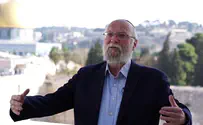
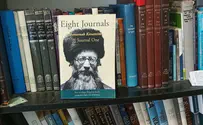
In the book “Eight Journals" Yaacov David Shulman has succeeded in remaining faithful to the Hebrew text while capturing the poetic style of Rabbi Kook’s often intricate prose.
The Tanya compacts four millennia of Jewish wisdom to answer the great personal and existential questions of life. It has revolutionized the way we think about G -d the human soul, the world and our place in it.
The Torah commanded every Jew to write a Torah scroll for himself. From the time that it was permitted to write the Oral Torah, the commandment is fulfilled through purchasing the books by means of which one actually studies Torah. Databases do not count as books.
“Rabbi," Rabbi Gold asked of Rav Kook, “why were you so deeply moved by the planting of a single tree?
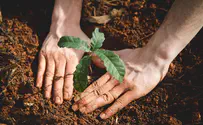
A person should approach military service with the understanding that it is a mitzva-one that overrides even considerations of danger to life, a mitzva whose value is beyond measure, no matter what his placement is.
The trees, except for the almond, look bare and bleak on Tu B'Shvat, but the sap is already rising inside. An important corollary for our personal and national lives.
Rabbi Abba said: you have no clearer sign of the End than this, as it is said: ‘But you, mountains of Israel, you shall give forth your branches and bear your fruit for My people Israel…
How hard is it to earn a living? As hard as building a marriage?

We only celebrate the Rosh Hashanah of trees, but not of other plants or even tree saplings. Why are trees more important than other vegetation?
Moshe’s retrieving of the body of Yosef would thereby serve as the cog in the wheel that would prepare Am Yisrael’s next leader, Yehoshua, after Moshe’s passing 40 years later.
Why does Jewish Law oppose men listening to a female singer? And why, then, did Miriam and the Israelite women sing at the Red Sea?
Let’s listen to what our children say. Often, they just comment on things. They say sweet nothings. But sometimes there’s something really perceptive. Like Miriam.
The story of the man who led Israel to victory, who defeated the enemy nations who were oppressing us - and never requested recognition.

In the name of all the citizens of the state, we express our gratitude to G-d who gave the government leaders the fortitude to withstand the heavy pressure and well-financed demonstrations and did not agree to endanger civilians in order to free the hostages.
The month of Shevat symbolizes a stage that focuses on the tree itself before the actual growth of the fruits.

The authority responsible for security in our beloved Land is the Israel Defense Forces - and only the IDF. Or the police. No private individual is permitted to take the law into his own hands.
The Prophetess Devora asks the tribes who did not join the fight against Sisera's forces when Israel was under threat, where were you? This is the question that many in Israel must now confront honestly. And it has nothing to do with the fact that the Israelites won without those tribes.
My sense is that many contemporary Jews, especially those who would identify as “liberal," might not be entirely comfortable with Moses' Song of the Sea. It is not in sync with a mindset that views war as an evil that “never solves anything." What is Judaism's view?
You fight-but not with fear. You fight with trust, knowing that the outcome is in His hands alone.
The Tanya compacts four millennia of Jewish wisdom to answer the great personal and existential questions of life. It has revolutionized the way we think about G -d the human soul, the world and our place in it.
Why did Hashem cause the Israelites to worry about lack of water, and - further - bring them to a place of bitter waters?

Excerpt from the book "I will hide My Face from them."
Joseph's bones were taken with the Jews when they left Egypt, the start of a tradition that we do not move on without our heroes. And Ran Gvili, who parallels the martyrs of Beitar, will be buried with dignity.
Tefillin are a sign for Israel-that is, a symbol and marker that expresses their very essence. The passages of the tefillin express the foundations of faith. One of these foundations is the centrality of the Land of Israel, which is mentioned many times in the tefillin.
An innovative grass roots initiative is educating and connecting our youth.

The burning bush is the eternal symbol of Jewish history. The bush is on fire, yet it is not consumed. And the State of Israel is the living proof.
God is looking for something else entirely. Opinion.

G-d's life changing message to Moses as he was afraid to confront Pharaoh.
Some people's life overplays competition and ego, forgetting about need and the most fitting arrangements.

It is not enough to free slaves. They must be trained for independence, courage, and aspiration.
The Exodus and the drowning of the Egyptians in the Red Sea were one and the same thing. One without the other is incomplete. A lesson for Hamas in our time.
Why is this fact of the non-barking dogs significant?
Why is it that God killed all the firstborns in Egypt and didn't suffice with simply killing Pharaoh’s firstborn son? The answer is as applicable today as it was then.
Tzvi LeTzaddik explains that in reality, every Jew during the time of exile suffered doubly-once for their own personal pain and again due to the fact that they witnessed their brethren suffering
Torah is never just history. It is a mirror of today - and a warning for tomorrow.
Jewish existence is not sustained by circumstance, but by promise.
We are in a transitional stage, in a period in which lights and shadows function together.
why did Moshe convey the message “ַכּחצת " “at approximately midnight"?
Rabbi Nebenzahl: Hashem made a mockery of Pharoah and the Egyptians, to obviate any possibility of a mistaken impression that there was that there was a battle between two forces.
Let us always be humble and ready to acknowledge our flaws. There is no such thing as a human being who never sins. We all act foolishly and make grave mistakes at some point in our lives.
Why did the Torah call the Jews who left Egypt an army?
This generation connects spiritually to the Land of Israel. That is the source of its willingness for self sacrifice in times of war.
Our sages say that the “light of Geulah shines upon those who recite this psalm." Why?
The Torah assumes Jewish life in Eretz Yisrael.
If we understood even a fraction of the true universal influence of the meeting of the Jewish Neshama (soul) with the Holy Land, an influence which infuses a higher life to all existence, we would not ask that question.
What keeps Diaspora Jewry from getting on that aliya plane?
How does one deal with non-attendance at a non-halakhic wedding without causing a hopeless rift in the family?

The Tanya compacts four millennia of Jewish wisdom to answer the great personal and existential questions of life. It has revolutionized the way we think about G -d the human soul, the world and our place in it.
If we had to point to one question that touches many of the sugyot, what would that be?
Redemption begins when I stop making peace with the lies.
When people refuse to see what is happening-when they ignore tension, brush away pain, deny blame, or pretend problems will vanish-the damage grows quietly until it is too late.
Two special jewels symbolize two special traits of the Jewish people.
We cry out to the Heavens “Ad Motai", how much longer do we have to suffer in Exile, why does evil continue to befall us and why have you not saved and redeemed Your people?
Certainly, the world still has much room for improvement, but it is in a process of continuous and ongoing advancement.
Do we show gratitude to someone who helped us if he also benefitted? What does it signify to show gratitude to inanimate objects as Moses did?
Commentators interpret the meaning of the words used to foretell the Exodus and the Israelites' becoming G-d's chosen nation.
A disagreement between the Ramban and the Ibn Ezra.
The four words of Redemption allude not only to the Exodus from Egypt, but also to the departure from the subjugation of the four kingdoms that ruled over Israel.
What can the ancient prophecy about Pharaoh and dating back over 2500 years tell us about our own world? Quite a bit.

We have to build our homeland in the Name of Hashem, the G-d of Israel.
Haamek Davar notes that the Torah’s describing the wife of Elazar in these Pesukim is designed to teach that she contributed greatly to Elazar’s lofty status-hence, they were blessed with a child as great as Pinchas.
If antisemitism looks like this during prosperity, what will happen when the inevitable downturn arrives?
This principle of unity transforming individuals into something qualitatively different is beautifully mirrored in Judaism.

Rabbi Eliezer Melamed answers a halakhic question, stating: "Explain that despite your love for him, you will not come to his wedding, because it is forbidden according to the Jewish faith".
Klal Yisrael is built in living rooms, at Shabbos tables, in bedtime Shema, in stories told on a grandparent’s knee. The chain rests with us.

Either man accepts God’s authority as the Legislator of moral norms, or he will eventually fail in all attempts to create a moral society.
Why are the physical traits of the Land emphasized the first time Hashem talks about it to Moshe? Young Religious Zionistt Torah scholars provide answers.
How did Pharaoh’s daughter know that the baby in the Nile was a Hebrew child?
What do these enigmatic names - ‘I Will Be Who I Will Be’ and ‘I Will Be’ - mean?
The prolific Torah luminary whose Mishne Torah, Sefer Hamitzvot, Guide to the Perplexed, Letter to Yemen's Jews, and more light up the ages, is brought to life in Israel during the week of his yahrzeit, with the high point an annual three day Rambam Conference.
The Rabbis in the Midrash, always sensitive to nuance, focus our attention on the enigmatic words: "G-d saw that Moses turned to see, so He called out to him from amidst the bush." What does that symbolize?

Moshe as a baby, non-supervised milk, and the food that builds a Jew.
We live in an age of unprecedented Jewish freedom and unprecedented Jewish disappearance. The Haftorah tells us that those who have disappeared are not lost forever.
The midwives saw to it that a healthy body was accompanied by a healthy soul. So must we.
Hopes which are destroyed cause deeper despair than complete hopelessness. The Jews had hoped for a new Pharaoh who would ease their lot, but the opposite occurred. Where to turn?
How to gain from a crisis.
There is a struggle here over the source of shefa - the flow of blessing - in the world.

Our sages teach that public embarrassment is akin to bloodshed, yet it is far easier to ignore it, to go about our business and pretend nothing happened. We think why should I get involved and put myself at risk?

Commentators analyze the symbolism of the burning bush.
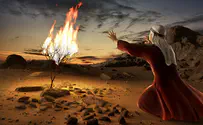
Moshe’s name conveyed a lifelong mission: to oppose injustice and to fight on behalf of the helpless.
Were it Halakhically permissible, we would have to recite Hallel every day here in Hashem’s Holy Land!
Every tyrant who oppresses his citizens and does evil is also an enemy of Israel - from Pharaoh all the way to Maduro and Khomenei.
Jewish communities of Ashkenaz, Sepharad, and the Yemenites each read a different prophecy as the haftarah for Parshat Shemot, with each focusing on a distinct aspect of this redemptive process.
The Tanya compacts four millennia of Jewish wisdom to answer the great personal and existential questions of life. It has revolutionized the way we think about G -d the human soul, the world and our place in it.
The mitzvah of tzitzit particularly expresses faith and the unique destiny of Israel. The most honorable garment is the four-cornered fringed tallit which expresses all the latent powers within the person and within the world.
Just remember, the future of Am Yisrael and Torat Yisrael are in Eretz Yisrael, and we are fortunate enough to live in the historic generation of kibbutz galuyot.
The writing of the Septuagint was celebrated by many, yet our sages describe this moment as darkness descending on the world. Why?
Hashem is sending a coded message of encouragement for the Jewish nation.
There is a dire need to teach the truth to all Am Yisrael, both in Israel and in the Diaspora.

We are not asking for more. We are asking that the chain remain unbroken.
Much good can result from recalling the punishment for wrongdoing, even if this motivation may appear beneath one’s spiritual stature.
What true leadersship looks like.
Why was Yehuda chosen to lead? For many reasons, but first and foremost, a leader has to be able to stand up and jump into action to tackle threats, without consideration of the fallout or personal risk.
What is the difference between a blessing given through the hands and a blessing given through the knees?
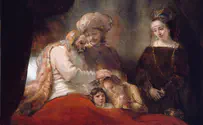
"...Thus, the true source of the tension between Yehuda and Yosef was this clash between an emphasis on Chessed, versus an emphasis on Torah..."
Why did Jacob ask to be buried in Israel? See what the commentators have to say.
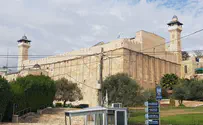
There is disagreement among our commentators if these are prophecies of the times of the mashiach, or if they refer to other events.
There is profound humility in King David’s words. For all his achievements, he frames his legacy not around military victories or political triumphs, but around covenant.
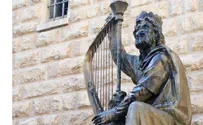
God does not do anything by accident. Not now. Not last year, not a thousand years ago. Not ever.
It is not good for a victim to replay the horror he experienced and to keep active the pain he has gone through. He must instead remove the traumatic event from active consciousness.

The Midrash identifies Manasseh and Ephraim not only as concrete individuals, but also their descendants Yehoshua and Gideon. What is that based on?
If a swastika on a wall provokes outrage while an interfaith wedding invites applause, our moral compass is dangerously off course.

Israel’s political, intelligence and diplomatic corps along with the media must remember they are in the employ of victory on the battlefield and security during peace time.
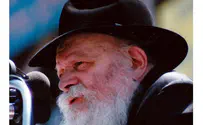
Hashem gives each person a role, a mission, a contribution. Ephraim receives leadership; Menashe receives honor. One is not at the expense of the other.
One of the four fasts mourning the Temple's destruction, today marks the day the Babylonian siege of Jerusalem began.
The Levites were the officers responsible for the fulfillment of the commandments of war. From here we learn that yeshiva students may not be exempted from army service by claiming that they are like Levites
As I sit and study looking at the falling snow, I realize that each figure in Bereshit, which we will finish reading this coming Shabbat, is a bridge; each figure is a link in the destined chain. As we all are.

Just as Joseph's brothers were reconciled and unified and spoke one with another, also in our generation, the People of Israel, who are being gathered from among the nations, must become unified in the Land of Israel.
Meta-mitzvot are necessary because the Torah cannot possibly address every circumstance people encounter. Kedushah is an example.
The Tanya compacts four millennia of Jewish wisdom to answer the great personal and existential questions of life. It has revolutionized the way we think about G -d the human soul, the world and our place in it.
Why did Yaakov send Yehuda to Egypt before he descended there to see his son Yosef at last?
"The Jewish people are crowned with two qualities, Eidut (testimony) and Torah, one seen in Joseph and the other in Judah."
"I Am Who I Am, Because You Sold Me."
We have witnessed the resurrection of the dry bones. We have seen the ashes of Auschwitz giving rise to the miracle that is the State of Israel. In the past two years, through trauma, loss, and uncertainty, the Jewish people have survived. But endurance is not the final goal.
Yosef had been nearly killed, sold as a slave, and spent years in an Egyptian dungeon because of his brothers’ aspersions; his father, Yaakov, was grieving and suffering for 22 years-and yet, despite all of the above, Yosef understood that it is still more worthwhile not to embarrass his brothers, and reveal himself to Yaakov.
The temptation to despair is strong. But Torah teaches that we cannot remain there. We must act responsibly, together, and with unity.
How Yossef is showing and hinting to Yaakov how he dealt with the Egyptian world successfully.
The prophet clarifies: Unity demands shared purpose, honest self-examination and recommitment to what binds us together.
This is perhaps the most dramatic narrative in the entire Torah. Why did Yosef suddenly conclude the charade?
In the end, Rachel and Leah are is not a competition, but a single system.
Last week we celebrated Hanukkah, the Festival of Lights - which is all about Miracles. Why are miracles so important? Watch and find out.

Eight Jews stood in a Soviet courtroom like upright candles and declared their loyalty to the Jewish people. It happened during the dark days of Communism when that could mean exile to Siberia or worse. A true story.
There is really no way to leave a state of depression unless one has the courage and boldness to dedicate their energies to developing and honing their talents and doing something worthwhile for society.
We are now in transition, from Hannukah, the holiday of light and celebration, to a day of fasting and mourning. How do we do that?

The primary role of the members of the Tribe of Levi is to lead the army spiritually, and see to its disciplined behavior.
As in Miketz, after two years of war, we look back and glance at what is happening. It feels like a dream. And it goes on - like a prophecy.

In Judaism, there is a core and ancient teaching that we should strive to learn an important lesson from every experience in our lives, especially when that experience is connected to a significant and Divinely inspired holiday like Hanukkah. What we learn from olive oil.
There is no guarantee that our enemies will no longer attack us here in Israel - but at least their sadistic joy is guaranteed to be short-lived and thoroughly repaid. And one day we will sing a Psalm for the coming of Mashiach.

Hanukkah does not offer simple answers, nor does it lessen the pain. It asks something deeper of us: to hold on to faith even when matters are unclear and the Hand of G-d seems concealed.
The interpreter has a key function in the realization of a dream: his analysis can determine how the dream will come to pass.
We already know that everything that was created with man, was worthy of existing - except for the foreskin, as the Torah commanded us to remove it.
There are three awe-inspiring similarities between Yosef and the Hanukkah lights, starting with his name.
The prophet does not deny the danger. He transcends it.
When Mashiach comes, we will realize that we are currently in a dream. Our life is a living paradox, yet it seems to make sense to us as if it were normal.

From the Yeshiva's Beit Midrash in the Arab Quarter (actually the Old Jewish Quarter) of the Old City, Rabbi Aviner talks about miracles, why we don't say Hallel on Purim, and more.
Someone asked me if there is any way that we can forgive the Australian government and what it would take for them to regain trust of Australian Jewry. So, let’s talk about Yosef.
What was the real conflict?
When one signs onto idolatry, they are in fact [subconsciously or consciously] worshipping their own self interest; the idolatry is just an external rationalization of the undertaken path. Judaism, however, requires “Bittul", or self-awareness that there is one true G-d, Hashem, to whom we must pledge our devotion,
Grappling with questions of faith, forging a heightened awareness of God’s presence in daily life, and making the Creator accessible to the tens of thousands of Jews who thirst for His voice must stand at the very top of our educational agenda, but it is not on this one.
Rashi explains in the name of the Sifrei that the light of God’s countenance “gives you grace.”
How should Yosef have dealt with the Chief Butler so that his plight would be remembered after interpreting the two prisoners' dreams?
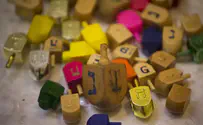
The four letters on the dreidel are not the same in Israel and the Diaspora. They tell us something we should pay attention to.
It is all too easy to look around us and feel hopeless...
It's time for a Hanukkah that simply says: As a Jew, I am the inheritor of Jews who fought for the political independence of the Jewish state. I am a Zionist just like Judah the Maccabee. Op-ed.
When darkness strikes one corner of the Jewish world, the shadows are felt in the heart of every single Jew globally. Your pain is deeply, personally our pain.
Why does the blessing mention one light when we light an ascending number of candles on the holiday?
Words of encouragement for Hanukkah.
The Tanya compacts four millennia of Jewish wisdom to answer the great personal and existential questions of life. It has revolutionized the way we think about G -d the human soul, the world and our place in it.
The victory in war and the dedication of the altar are one and the same. And in our time we have been privileged to see both.
Numerous Kohanim and the Levites participated in the wars of Israel. Even before they participated in wars as regular soldiers, they led the soldiers of Israel in their fighting.
The eternal challenge of Jewish leadership is knowing when to stand firm and when to acknowledge reality, when to pursue the ideal and when compromise is necessary.
Rav Yitzchok Hutner's thoughts on the significance of the Maccabees' victory over the Greeks: 'The rekindling of the Temple Menorah on Hanukkah represents a new era of Torah transmission.'
“Peace will prevail in the future,” Rabbi Kook concludes, “when people come to recognize clearly that all of the different, individual lights are truly one single light." And who would lead them?
Why did Joseph go to the brothers he knew hated him - and why did Jacob send him, knowing the same?
Sometimes what I perceive to be good for me could actually be bad, and what I think is bad could actually be something absolutely extraordinary for me.
The many impure sources of Redemption are a defense against the Satan - the adversary, whose purpose is to prevent the Redemption from coming into the world.
The Parsha shows us how individuals can go astray, The Haftorah shows us how nations do.

Yaakov thought there was no need for a future exile after all he had gone through. The Medrash explains.
The prophet Jeremiah brings G-d's comforting words to Mother Rachel, but how can she find comfort when the promise of redemption is far into the future?
The point of the Torah is not that great people are saints who never do wrong. They are ordinary humans who are imperfect beings and capable of serious mistakes.
In this parasha, we learn about Judah, the leader of the tribe that will give the Israelites the kingdom of David and ultimately, the Messiah.
A disagreement does not undo our connection. A quarrel cannot touch the neshamah within.
The Tanya compacts four millennia of Jewish wisdom to answer the great personal and existential questions of life. It has revolutionized the way we think about G -d the human soul, the world and our place in it.
G-d assured Yaakov that Eisav’s rule will eventually end. All Yaakov had to do was to ascend the ladder in his dream himself, and he would prevent this version of history from ever happening. Yet Yaakov refused to ascend the ladder.
The Maggid of Mezritch's yahrzeit is also the day the Alter Rebbe was released from Czarist prison - and the day that, many years later, Rabbi Moshe Tzvi Neria, founder of the Bnai Akiva yeshiva network, returned his soul to his Maker. Here are their stories.
Look at Joseph and his brothers as a model. The spark of holiness within every Jewish soul can bring people back together no matter what their differences.
My Jewish brethren, come to Eretz Yisrael - here you will know that you are alive, living a life that is worthy of its name, in the land of life.
This day marks the “birth” of Chabad Chassidism, when the long-hidden secrets of Judaism emerged from the womb of mysticism to illuminate and transform the totality of Jewish life.

What defines Eisav? Is it the vicious Jew-hatred which has defined so much of Christian civilisation? Or is it the genuine Christian love and support for Jews and for Israel that we have seen, particularly in this current war?
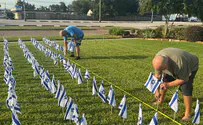
According to many halakhic authorities, the Torah obligation for men is to wear tefillin every day for just a brief moment. Others argue that one is obligated to wear tefillin all day, as was customary in the time of the Mishnah and Talmud.
Read how the human brain-arguably the most complex physical structure in the known universe-reflects the same archetypal numerical framework that Jewish mysticism describes spiritually.
The brit is how we identify ourselves as Hashem’s people and is a symbol of our relationship with Him. And of what that signifies in our personal lives.
“And I Will Remove the Sin of That Land in One Day”
Every human being is invited into a hero’s journey, maybe not quite as dramatic as Yosef’s or the Maccabees,’ but equally holy.
The prohibition of gid ha-nasheh is meant to project a broad ethical aspiration, beyond the issue of how we should treat animals.
“For Israel Shall Be Your Name.”
Standing at the crossroads, the Torah reminds us that hatred of the Jew has never been cured by Jewish self-erasure. It has never been softened by Jewish timidity.
One of the greatest of all minchas is actually, the ring that the groom gives to a bride under the chuppah. In order to show that he loves and cares for her.
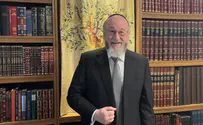
Why the insane obsession with Israel and Jews?
Their return is happening now. It is not accidental. It is not demographic or sociological. It is prophetic. And with prophecy comes responsibility.
As a response to the violation of their sister, Shimon and Levi proceed to destroy the city of Shechem. The commentaries seek to explain the rationale for their behavior.
In the midst of the many tragic events in the parasha, Hashem speaks to Yaakov. What is the underlying message in the timing of His words?
We know the problems. We can preach. We can wish for solutions. But none of that brings change. Each of us must take initiative. Start where we can. Do what we can.

Nothing is more important for the survival and welfare of mankind than the ability of enemies to resolve their grievances and to genuinely forgive one another.
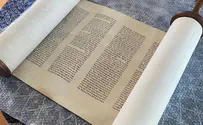
Couldn't Yaakov simply avoided his brother?
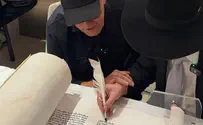
Does Am Yisrael deserve the Brachot? Do we live up to the title we hold? Are we fulfilling our mission as the chosen nation?

Do we have the resolve to look past the opinions of others and seek the core truth of every person and situation?
The answer is a function of the country's needs.
Rav Kook asserted that in the era of Revival when Diaspora Jews begin to return to Zion in large numbers, the truncated Torah of Exile must be replaced with a Redemption-filled Torah of Light, of Eretz Yisrael, the "Redeeming Torah." This book opens the door to that light.
In the harsh reality he faced, Yehudah did the best he could, say some commentators. At the very least, he saved Yosef from death. Yehudah is praised for recognizing what was achievable. But others criticize him and feel he could have achieved more.
Reading about Yaacov’s marriages to Leah and Rachel is an appropriate time to recall some of the duties incumbent upon Jewish husbands.
Parashat Vayetzei's Ashkenazi and Sepharadi haftorahs are back to back in the book of Hoshea, but have different themes.
Although I am a Hebrew speaker, I traveled to the USA, in order to teach Torah, meet our Jewish brethren, learn about their strengths and the challenges they face, and counteract the negative picture of Israel in the media by describing the gooness of the Land of Israel.
When someone is in harmony, they connect to the soul's source, which exists beyond the limits of linear time. They operate at the level of "thought," which is instant and limitless.

Modeling is the only authentic and impactful form of education.
Whether the Jew is wealthy or poor, mighty or weak, it seems we face our troubles in isolation. Not during the Holocaust, not in 1948, noy today. Except that we are never actually alone.
Is this the country we have been waiting for? Absolutely! It’s not yet total light, but it has a lot of light.
Each of the three daily prayers has its own special nature.
One cannot deny Mamdani’s contribution to the efforts of encouraging Jews to return home.
When hatred becomes normal, when lies replace truth, and when the “faces” around us change, the Torah teaches us to recognize it. That is what Yaakov saw before he returned to Eretz Yisrael.
These are challenging times for our people, and for all good people.
In the end, they parted, by making a covenant - at Laban’s behest - between them, but what did Laban really want?
In this week's parasha, Leah thanks G-d when Yehuda is born and we thank G-d every morning before we get out of bed.
It was not about Kashrut or Shabbat or prayer, but something deeper and more pervasive.

There is a deep, ongoing tension within Am Yisrael regarding which tribe represents the proper approach to the Shechina, and which tribe should host the Mikdash.

May we take this poignant lesson to heart, and understand that Eretz Yisrael cannot be bargained for. It is our land, and the vision and desire of millions of our brethren, over thousands of years of Jewish history, have always rested on the Land of Israel.
Learning how to live one's life by emulating the deeds and words of a great man, a man of extraordinary humility, drive and moral clarity, a leader who carried Klal Yisrael in his heart.
Jews who are invited to the homes of non-Jewish acquaintances for a Thanksgiving meal should keep the Purim story in mind. Yes, it's your life, but the Torah includes the rules on how to live it.
![Guess who's coming for [Thanksgiving] dinner?](https://2.a7.org/files/pictures/203x125/1204437.jpg?autocrop=1 "Courtesy")
Yaakov Avinu reminds us that wherever a Jew may be, his inner compass must point to Eretz Yisrael.

In departing from his parents, Yaakov was in fact obeying their wishes and thus fulfilling the commandment to honor one’s parents. Why then should the Sages say that the length of his absence is a cause for punishment?
Life without familiar faces is difficult - even for great people.
The War of Gog and Magog is described in Ezekiel, Chapter 38, as a war in which all the nations of the world rise up against us, and with God’s help we are victorious.
The Tanya compacts four millennia of Jewish wisdom to answer the great personal and existential questions of life. It has revolutionized the way we think about G -d the human soul, the world and our place in it.
The Rebbe said in a letter written to someone inquiring about homosexuality, “if it were beyond human control, Hashem would not have made it a sin.”

Developments in Christian theological thought, and changing attitudes among Jews about engaging with others, may finally have us moving beyond the ancient conflict between Jews and Christians.
Every Jewish male is commanded to write a Torah scroll for himself. Today the practice is to fulfill the commandment of writing a Torah scroll in partnership. A woman too may study from the sacred Torah scroll.