
“Remember the days of old; consider the years of many generations" - What Has Changed in Our Generation, and What Do We Need to Understand?
This year, Parshat Haazinu will be read on Shabbat Shuvah, 8 Tishrei 5787. In Shirat Haazinu, Moshe Rabbeinu says:
“זְכֹר יְמוֹת עוֹלָם, בִּינוּ שְׁנוֹת דֹּר וָדֹר; שְׁאַל אָבִיךָ וְיַגֵּדְךָ, זְקֵנֶיךָ וְיֹאמְרוּ לָךְ"
(Devarim 32:7)
“Remember the days of old; consider the years of many generations. Ask your father, and he will tell you; your elders, and they will tell you."
Zechor yemot olam, binu shenot dor vador; she’al avicha veyagedecha, zekenecha veyomru lach.
At first glance, the meaning of “Zechor yemot olam" - “Remember the days of old" seems clear. The Torah tells us to remember the past, to know where we came from and what we received from the generations before us. The Torah and mesorah by which we live have been passed down from generation to generation. We therefore have a responsibility to know what the earlier generations preserved for us and what they received from their own fathers and teachers.
But the Torah does not stop with remembering the past. Immediately after “Zechor yemot olam" it says, “Binu shenot dor vador" - “Consider the years of many generations." There is another message here: we are also meant to look at the changes that have taken place from one generation to the next and try to understand them. What has changed? Why has it changed? And what can this teach us about the generation in which we live?
At this point, Rabbi Shmuel Bornstein of Sochatchov, the second Sochatchover Rebbe and author of the Shem Mishmuel, quotes the Ibn Ezra in his commentary on Parshas Haazinu from 5678 (1918). He writes:
“נראה לפרש עפ"י דברי אבן עזרא דשם שנה נגזר מלשון שינוי"
“Nir'eh lefaresh al pi divrei Ibn Ezra, de-shem shanah nigzar milashon shinui."
“It appears that this can be understood based on the words of the Ibn Ezra: the word shanah, meaning ‘year,’ is connected to the word shinui, meaning ‘change.’"
He then makes an important point. It is not enough simply to recognize that generations change. We have to look for the source of the change, especially for a “שינוי קל שנעשה בין הדורות שלא הרגישו שבשביל שינוי קל כזה ירדו פלאים" - a small change that takes place from one generation to the next, without people realizing that such a small change could eventually lead to a serious decline.
This is a powerful idea. A spiritual decline does not necessarily begin with a major decision or a dramatic break with the past. Sometimes it begins with something small, almost too small to notice. Only later do we see where that change has led.
Here we need to distinguish between change and progress.
Not everything new is negative, and not everything that existed in the past is necessarily better. There are changes that can help us in our Torah lives, in learning, education, work and running our homes. The world changes, and we need to know how to make use of the good that it offers.
But not every change is progress. The question is not only what has changed, but where the change is taking us.
If something strengthens our Torah life and our family, it can be a blessing. But if a change gradually weakens our commitment to Torah, blurs boundaries, or changes what we consider proper and normal in a Jewish home, the fact that we have become accustomed to it does not make it good.
This has particular significance in the world in which we live.
A Torah-observant Jewish community today lives in a very different world from the one in which our parents and grandparents lived. Information and influences that were once far removed from the home can now enter it very easily. Children and teenagers are exposed to realities that earlier generations never had to deal with.
At the same time, there have never been so many opportunities to live a life of Torah and mitzvos. We have batei midrash and yeshivos, schools and other educational institutions, shiurim and sefarim, Jewish communities and countless opportunities to learn and daven.
And yet, sadly, we also see Jews moving away from Torah and mitzvos, and some even leaving religious Jewish life altogether. How can this happen?
Perhaps part of the answer is found in the words of the Shem Mishmuel.
We tend to notice that something has gone wrong only when the results are already clear. The Shem Mishmuel teaches us to look earlier, when the change is still small.
It may be a tefillah b'tzibbur that was once taken for granted but gradually becomes something we can skip when it is inconvenient. It may be a regular time for Torah learning that was once part of the daily routine but is slowly pushed aside by other activities. It may be Shabbat becoming a little less peaceful and special. Or it may be something that was once considered inappropriate for a Jewish home but gradually becomes, “It’s not such a big deal."
The same thing can happen with technology and the constant flow of information.
Something may enter our lives for a specific purpose and then gradually take up more and more space until it becomes a regular part of everyday life. At first, it may be difficult to notice any real change. Only later do we realize that it has affected our daily routine, the atmosphere in our homes, and even what we expect from ourselves and from our children.
This leads to a simple question that each of us can ask ourselves:
What has entered my life in recent years that has become so normal to me that I no longer stop to examine it?
This does not mean that we should be suspicious of everything new. Quite the opposite. We need to understand the world in which we live and make use of the good that it offers.
But at the same time, we need to stop from time to time and ask:
Is this really helping me, my family and our Torah life - or has it simply become comfortable and familiar?
This is also part of the deeper meaning of the words:
“שאל אביך ויגדך, זקניך ויאמרו לך" - “Ask your father, and he will tell you; your elders, and they will tell you."
Earlier generations can give us a point of reference. They can tell us what was taken for granted in a Jewish home, what they would not give up, and which things that seem completely normal to us today were simply not part of their lives.
But the Torah is not asking us to live in the past.
“Binu shenot dor vador" also requires us to understand the reality in which our children are growing up. They are dealing with a different world. Our responsibility is therefore to understand that world without losing the ability to distinguish between what we can adopt and what requires a clear boundary.
And this is especially relevant on Shabbat Shuvah.
The Aseres Yemei Teshuvah are a time to stop and think. Teshuvah is not only a decision to correct a serious transgression. Sometimes teshuvah begins by recognizing a small habit that has changed, something that we once took seriously but no longer do in quite the same way, or an influence that entered our lives gradually.
That is why the words “Zechor yemot olam, binu shenot dor vador" are so appropriate for Shabbat Shuvah.
They invite us to make a cheshbon hanefesh not only about the things we have done, but also about the direction in which we are going.
The practical message is simple: do not wait until the problem becomes big.
Each of us can choose one thing in our life or in our home that we have simply become accustomed to and stop to ask:
Is this really good for us? Does it strengthen our home and our connection to Torah? Is this how we would want our home to look ten years from now?
If the answer is yes, then we have something to be thankful for and something in which to strengthen ourselves.
And if we recognize something that needs to change, it is better to correct it while it is still small, before it becomes a permanent part of our lives.
Shlomo HaMelech says:
“דּוֹר הוֹלֵךְ וְדוֹר בָּא"
“A generation goes, and a generation comes."
(Koheles 1:4)
Generations change and the world around us changes. Our task is not to stop change, but to know how to distinguish between a change that is progress and a change that takes us away from what we received.
“זכור ימות עולם, בינו שנות דור ודור; שאל אביך ויגדך, זקניך ויאמרו לך."
“Remember the days of old; consider the years of many generations. Ask your father, and he will tell you; your elders, and they will tell you."
On Shabbat Shuvah, we should take these words into our everyday lives: remember what we received, understand what has changed, and honestly examine where the changes in our lives are taking us.
Sometimes a major change begins with something very small.
And therefore, a major correction can also begin with a small decision - to notice, to examine, and to make the correction while there is still time.
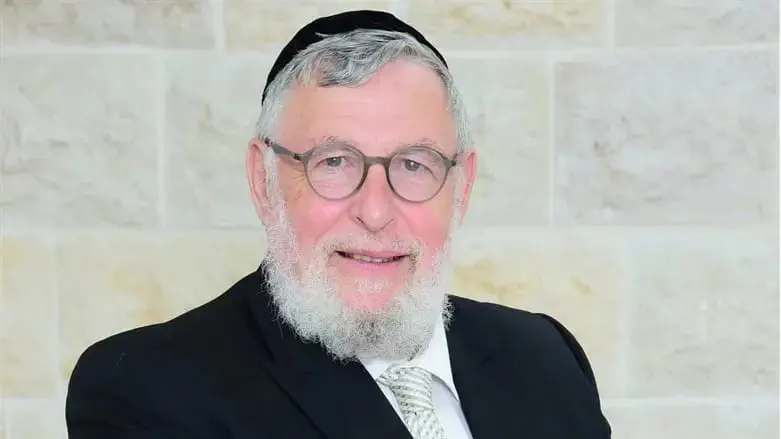
Rabbi Eliezer Simcha Weisz is a member of the Israeli Chief Rabbinate's Rabbinic Council.
Gmar Chatima Tovah