
Rabbi Eliezer Simcha Weisz is a member of Israel's Chief Rabbinate Council
We are now in the midst of Elul, the month when a Jew is called upon to pause, look inward, and make an inner accounting, cheshbon hanefesh, as we prepare for Rosh Hashanah and Yom Kippur. The sound of the shofar reminds us that these days are approaching, and that we cannot enter them without asking ourselves honestly where we stand, what we have done well, and what we still need to improve.
A cheshbon hanefesh is first and foremost personal. But there are times when we must also look beyond ourselves and ask whether there are matters affecting all Jews, Klal Yisrael, that require us to take an honest accounting.
This year, that question is particularly painful.
We are living in Eretz Yisrael at a time when so much is at stake. The security and future of the country concern us all, while the Torah world itself is facing tremendous pressures and challenges. At such a time, one would hope that the different communities within the Torah world, with their different traditions and approaches, would do everything possible to strengthen what unites us and avoid anything that adds to division within Klal Yisrael.
We have not yet succeeded in doing so as we should.
This does not mean that our differences should be ignored. There are genuine differences within the Torah world, some of them concerning matters of great importance. Gedolei Yisrael and different communities may have different approaches to the questions facing us. The Torah itself contains many disagreements, and there is nothing wrong with a serious disagreement when it is conducted properly and remains within the framework of Torah.
The question is not whether we will have differences.
The question is what those differences will do to us.
Will they remain disagreements in Torah between Jews who share the same Torah and mesorah, or will they become a source of division that weakens the responsibility we should have toward one another?
Parshat Ki Tavo gives us an important lesson about this.
When Bnei Yisrael were preparing to enter Eretz Yisrael, Moshe Rabbeinu commanded them concerning Har (Mount) Gerizim and Har Eival. The Torah says:
"וְהָיָה כִּי תַעֲבֹרוּ אֶת הַיַּרְדֵּן, תָּקִימוּ אֶת הָאֲבָנִים הָאֵלֶּה אֲשֶׁר אָנֹכִי מְצַוֶּה אֶתְכֶם הַיּוֹם בְּהַר עֵיבָל... וּבָנִיתָ שָּׁם מִזְבֵּחַ לַה' אֱלֹקֶיךָ, מִזְבַּח אֲבָנִים..."
(Devarim 27:4-5)
The Torah then describes the division of the tribes:
"אֵלֶּה יַעַמְדוּ לְבָרֵךְ אֶת הָעָם עַל הַר גְּרִזִים... וְאֵלֶּה יַעַמְדוּ עַל הַקְּלָלָה בְּהַר עֵיבָל."
(Devarim 27:12-13)
Six tribes stood on Har Gerizim and six on Har Eival. They were not standing in the same place, and they were not even standing on the same mountain. A valley lay between them, with the Levites standing in the middle and proclaiming the words of the Torah.
And yet, they were one Klal Yisrael.
The Torah emphasizes the two mountains. There was a difference in where the tribes stood, but there was no difference in their identity. They were not two nations or two groups that no longer belonged to one another. They were one Klal Yisrael, standing before HaKadosh Baruch Hu and hearing the words of His Torah.
There is also something remarkable happening on these mountains in our own time.
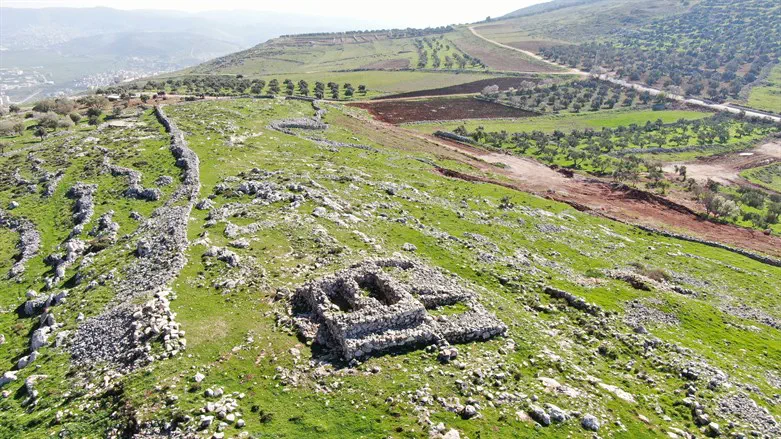
This year, for the first time, a yeshiva has been established on Har Eival. There is already a yeshiva on Har Gerizim, and now there is a yeshiva on Har Eival as well.
It is a beautiful thought: Torah being learned on both mountains.
The two mountains that stood before Bnei Yisrael at the beginning of their life in Eretz Yisrael are once again places where Torah is being learned. May these yeshivot flourish, and may their Torah be a source of blessing for Eretz Yisrael and for all of Klal Yisrael.
Perhaps there is something especially fitting about this happening דווקא in Elul. The mountains may be different, but the Torah being learned upon them is one Torah, and those learning it are part of one Klal Yisrael.
There is another detail that makes the message even more striking.
The altar, mizbe’ach, was built specifically on Har Eival, the mountain upon which the curses were proclaimed. The Torah continues:
"מִזְבַּח אֱלֹקֶיךָ... וְהַעֲלִיתָ עָלָיו עוֹלוֹת לַה' אֱלֹקֶיךָ. וְזָבַחְתָּ שְׁלָמִים וְאָכַלְתָּ שָׁם, וְשָׂמַחְתָּ לִפְנֵי ה' אֱלֹקֶיךָ."
(Devarim 27:5-7)
There was a mizbe’ach on Har Eival. Offerings were brought there. Shelamim were eaten there, and Bnei Yisrael rejoiced before Hashem.
Precisely on the mountain associated with the Tochachah, the words of warning, there was a mizbe’ach. There was service of Hashem, offerings and joy.
Bnei Yisrael stood on two mountains, but they had one mizbe’ach.
That is a message we cannot afford to overlook.
We, too, may stand on different "mountains." We may have different approaches, belong to different communities, follow different Torah leaders, and have different views about difficult questions facing the Jewish people.
But the mizbe’ach must remain one.
Our recognition that we are all part of Klal Yisrael, and that we are responsible for one another, must not disappear because of our differences.
The Torah continues:
"וַיְדַבֵּר מֹשֶׁה וְהַכֹּהֲנִים הַלְוִיִּם אֶל כָּל יִשְׂרָאֵל לֵאמֹר: הַסְכֵּת וּשְׁמַע יִשְׂרָאֵל, הַיּוֹם הַזֶּה נִהְיֵיתָ לְעָם לַה' אֱלֹקֶיךָ." (Devarim 27:9)
The Torah emphasizes: "אל כל ישראל" - to all Israel.
The two mountains did not create two nations. Bnei Yisrael remained one people.
The Gemara in Sotah (37b) teaches that this gathering was connected to the principle of responsibility for one another, expressed in the words: "כל ישראל ערבים זה בזה."
Bnei Yisrael did not have to be identical in order to accept responsibility for one another. They did not have to stand on one mountain. They stood in different places, heard the words of the Torah, and nevertheless accepted responsibility for one another.
That is a message we need today.
The Torah does not require every Jew to have the same opinion. Chazal, our Sages, certainly did not live that way. The Mishnah in Avot (5:17) distinguishes between a disagreement for the sake of Heaven, l’shem Shamayim, and one that is not, giving the disagreements between Hillel and Shammai as the classic example.
The Gemara in Eruvin (13b) tells us that the students of Beit Hillel would present the words of Beit Shammai before their own. They disagreed in halakhah, but they respected the fact that another Torah position could exist.
And in Yevamot (14b) we find something even more remarkable. Despite their many disagreements in halakhah, Beit Hillel and Beit Shammai continued to marry into one another's families and to take part in one another's celebrations.
Their disagreements in Torah did not become a division between Jews.
There are serious disagreements within the Torah world concerning some of the major questions facing us today. There are differences regarding the relationship between the Torah world and the State, regarding military service, regarding the responsibilities of different parts of society, and regarding the proper way to protect and strengthen the Torah world.
These are not small questions. They deserve to be taken seriously. They cannot be resolved through slogans, and certainly not by dismissing a Jew simply because he sees the matter differently. Such questions require Torah knowledge, wisdom, calm judgment and careful thought.
But whatever position we hold, we must ask ourselves:
Have our disagreements reached a point where they weaken the responsibility we should feel toward one another?
At a time when so much is at stake in Eretz Yisrael, this question should be part of our cheshbon hanefesh.
During Elul, we are accustomed to looking inward. We ask ourselves what we did during the past year, where we failed, and what we need to accept upon ourselves for the coming year.
But perhaps we should also ask:
What have I done to strengthen Klal Yisrael?
When I speak about a Jew with whom I disagree, do I remember that he is still part of Klal Yisrael and included in "כל ישראל ערבים זה בזה"?
When I disagree with another community, do I remember that my responsibility toward its members does not disappear because I disagree with them?
And when I am convinced that my own path is correct, am I able to recognize that another Jew may also be acting מתוך נאמנות לתורה - out of loyalty to Torah - even though he has reached a different conclusion?
These are difficult questions. But that is precisely why they belong in a cheshbon hanefesh.
There are, Baruch Hashem, many things that unite us. We are committed to Torah and mitzvot, to Torah min HaShamayim and to the mesorah of Klal Yisrael. We want our children and grandchildren to remain committed to Torah, to build homes of Torah and Yirat Shamayim, and to continue the tradition we received from previous generations.
These are not small things. They are reminders of what we share.
Perhaps this is also part of the message of the Tochachah in Parshat Ki Tavo, which we read before Rosh Hashanah. The Gemara in Megillah (31b) tells us that Ezra HaSofer established that the Tochachah of Mishneh Torah should be read before Rosh Hashanah:
"כדי שתכלה שנה וקללותיה."
"So that the year and its curses should come to an end."
The Tochachah is part of our preparation for the Day of Judgment, Yom HaDin. We hear the words of the Torah and are meant to ask ourselves: What needs to change? What needs to be corrected? What should we not carry with us into another year?
That is the work of Elul.
Our cheshbon hanefesh should therefore not be limited to our personal conduct. We should also consider how we relate to other Jews.
Do my words bring people closer together, or do they add to division? When I disagree with another Jew, do I remember the responsibility we share? Have I been careful not to turn a disagreement in Torah into personal rejection of another Jew?
No one can answer these questions for us. Each person must answer them for himself.
The event, the maamad, of Har Gerizim and Har Eival does not teach us that differences must disappear. On the contrary, the Torah itself preserves the distinction. Bnei Yisrael stood on two mountains.
The lesson is that differences do not cancel our responsibility toward one another.
A Jew remains responsible for another Jew even when they are not standing on the same mountain.
We cannot allow every disagreement within the Torah world to become another reason for division. At the same time, we do not need to pretend that serious disagreements do not exist. The Torah demands that we take important questions seriously, but it also demands that we know the difference between a disagreement in Torah and a breakdown in the relationship between one Jew and another.
-We can disagree without speaking with contempt.
-We can defend a position without assuming that anyone who holds another position lacks Yirat Shamayim or does not care about Torah.
-We can remain loyal to the guidance of our Rabbanim while recognizing that another Jew may also be acting מתוך נאמנות לתורה - out of loyalty to Torah - and following a different approach.
That is part of what areivut means.
The Torah did not erase the two mountains. It did not tell one group to come down from its mountain and join the other. It did not say that everyone must think alike.
It showed us that Bnei Yisrael can stand in different places and still remain one Klal Yisrael.
One Torah.
One mesorah.
One responsibility toward one another.
And one mizbe’ach.
That is the message we should carry with us into Elul.
If "כל ישראל ערבים זה בזה," then the way I relate to another Jew is also part of my avodat Hashem.
We do not have to make everyone agree with us. We may never succeed in doing so.
But we do have to remember that disagreement does not cancel responsibility.
The mountains can remain two mountains. Different communities can follow different paths and remain loyal to their Torah leaders.
But Klal Yisrael remains Klal Yisrael.
And we all stand before the same HaKadosh Baruch Hu.
The Torah commanded that the mizbe’ach be built specifically on Har Eival, the mountain of the Tochachah. Even there, in the midst of words of warning, there was a place for service of Hashem, for korbanot, for shelamim and for rejoiicing, "וְשָׂמַחְתָּ לִפְנֵי ה' אֱלֹקֶיךָ."
There is a message here for us as well.
When the situation is difficult, our response cannot be to add more division. We must return to Torah, to serving Hashem, and to the responsibility we have toward one another.
As we approach Rosh Hashanah, perhaps one of the commitments we should consider is to be more careful in the way we speak about another Jew, especially a Jew with whom we disagree.
We cannot control every political decision, every public debate or every disagreement between communities. But we can control our own words, our own attitude and our own behavior.
We can choose whether to add to the division or to strengthen the areivut.
Perhaps this is part of the cheshbon hanefesh we learn from Har Gerizim and Har Eival:
Two mountains, but one Klal Yisrael.
Different tribes, but one Torah.
Different opinions, but one responsibility.
And above all:
One mizbe’ach.
As we stand in the midst of Elul and prepare for the Yom HaDin, each of us should ask himself a simple but important question:
Are we doing enough to truly live by the words, "כל ישראל ערבים זה בזה"?
This is not a question for the leaders of Klal Yisrael alone.
It is a question for every one of us.
תכלה שנה וקללותיה, תחל שנה וברכותיה.
"May the year and its curses come to an end, may the new year and its blessings begin."