
The moment Pesach ends, the Jewish home undergoes a rapid change . we move from the "bread of poverty" found in the Haggadah-the bread of miracles-back to the world of chametz. This transition is more than just a change in diet; it symbolizes our return to the world of hishtadlut (personal effort) and the practical need to earn a living.
But this moment also holds a new beginning. Just as we are meticulously careful with our customs during Pesach, we should start the period immediately after the Chag with that same dedication. That same seriousness and loyalty to tradition shouldn't be left behind; it should stay with us throughout the year, for as it is said: "A Jewish custom is Torah".
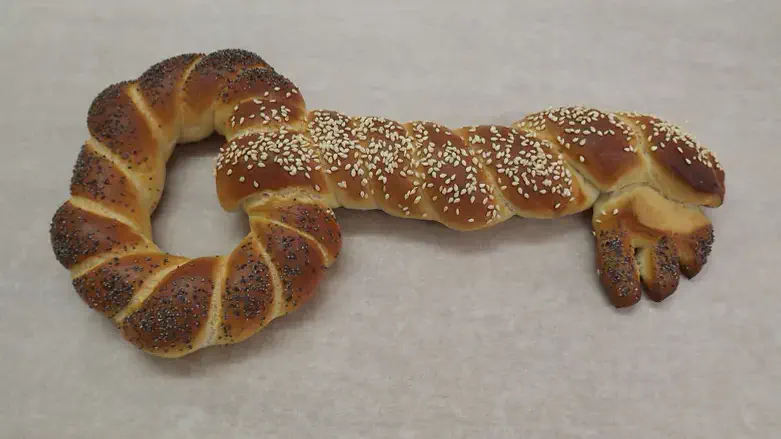
On the first Shabbat after Pesach, as families prepare for the day of rest, many observe an ancient custom, a well-known tradition: baking "Schlissel Challah" (Key Challah). Whether the dough is shaped like a key or a real key is wrapped and hidden inside the loaf before baking, the message is sharp and clear: remember where our bread really comes from.
When the Manna Ceased
The origin of this custom is found in the Book of Joshua. When the Jewish people entered the Land of Israel, the Manna-which had miraculously fed them in the desert-stopped falling immediately after that first Pesach. From that moment on, they had to begin the work of plowing, sowing, and reaping.
The "Schlissel" represents this change. It is our way of saying that even though we go out to work and put in our hishtadlut, the "gates" of livelihood remain in the hands of the Almighty. We do our part during the week, but He is the One who opens the door for us.
"A Jewish Custom is like Torah"
While some may see these traditions as "stories of the past," the Ohev Yisrael of Apt taught that "a Jewish custom is Torah". He explained that during Pesach, there is a unique spiritual "opening" in the heavens that we don't feel during the rest of the year.
The great lesson here is not to leave this level of care only for the days of Pesach. If we are careful about every small detail during the Chag, it is a call to start the following months with that same reverence for all Jewish customs.
The Key Challah we bake for the first Shabbat after Pesach is a way to keep this connection alive. It reminds us that the spiritual growth from the Seder night should stay with us when we return to the office or the shop on Monday morning.
The Hint Within the Challah
Chassidic works offer a beautiful hint connecting the Challah to G-d's attribute of Mercy. In Gematria, the word Challah (חלה) equals 43.
This is the exact numerical value of the "filling" of G-d's Name in a specific structure that symbolizes mercy:
• Yod (י-ו-ד): 20
• Heh (ה-א): 6
• Vav (ו-ו): 12
• Heh (ה-א): 5
• Total: 43
This reminds us that the food on our table isn't just the result of hard work; it comes from Siyata D’Shmaya (Heavenly assistance).
The Bottom Line
Ultimately, the Schlissel Challah is meant to focus our perspective. After a week of Matzah-the bread of humility-returning to regular bread represents a return to action.
But it isn't just a return to routine; it’s a fresh start: beginning the time after the Chag with the same devotion to tradition that guided us through the holiday. This custom ensures we don't mistakenly think that "my power and the might of my hand" brought us success. It is a simple, quiet way to say: we do our work, but we ask the Master of the World to open the door for a year of health, success, and abundance.