
In 5727 (1967), the whole world seemed to change before our eyes. After the great miracle of Israel’s survival and the astonishing victory of the Six-Day War, I left my yeshiva in England and came straight to Eretz Yisrael. I arrived just after the war ended to begin learning there, but nothing could prepare me for what I saw with my own eyes. I was no longer reading history in newspapers or hearing about it from far away. I was living inside it. And because I witnessed those days myself, I feel there is a mitzvah to tell the story and pass it on.
To understand what those days felt like, one must remember the terrible fear in the weeks before the war. It had been only twenty-two years since the destruction of European Jewry. Around me were Holocaust survivors and children of survivors. The memories were still raw and painful. The air itself felt filled with the fear of another churban. When Gamal Abdel Nasser spoke about “throwing the Jews into the sea," nobody heard empty words. We heard the echo of the threats that had once come from Europe before the Holocaust. Many truly believed another destruction was standing at the door.
The Jewish world felt painfully alone. France, under President Charles de Gaulle, had been Israel’s closest friend and chief supplier of weapons. Yet at the moment of danger he turned away, declared an embargo, and announced that France would remain “neutral in word and deed." The United Nations removed its forces from Sinai as though Jewish lives meant nothing. Everywhere there was a feeling that the Jewish people had been abandoned and surrounded.
Yet even in those frightening days, we saw clearly that the Guardian of Israel neither slumbers nor sleeps. The fear was so real that the Rabbinate began marking public parks, including Gan Meir in Tel Aviv, as places for mass graves. The same grass where children played was being prepared for the burial of thousands. In England, we listened to every news report with trembling hearts, terrified of what the next day might bring.
And then, in six short days beginning on the 26th of Iyar, darkness gave way to radiant light. The fear of mass graves became songs of salvation and tears of thanksgiving. Everything changed with breathtaking speed, as though Heaven itself had opened before our eyes.
Even in the difficult war we face today, we witness great miracles, though many are hidden behind the confusion and pain of the moment. The lesson of the Six-Day War remains alive within me: whether miracles are open for all to see or hidden beneath the surface, the hand of Hashem is always there.
In 5727 (1967), the miracle was impossible to deny. Even Jews who were far from religion felt they were witnessing something beyond nature. People did not see only a military victory; they saw the Finger of G-d.
Then came the 28th of Iyar, the day Jerusalem was reunited. For nineteen years Jews could not enter the Old City. Suddenly the gates were open again. Walking through Jaffa Gate was not simply entering a city. It felt like walking into the heart of Jewish history and prayer. Every stone seemed to cry. Every step felt holy.
I often think about the story of the two soldiers standing at the Kotel in those first days after the liberation of Jerusalem - one religious and one not. Both stood there weeping bitterly. The religious soldier asked his friend, “Why are you crying?" And the other answered, “I am crying because I do not even know why I am crying."
That is the Jewish soul. Deep inside every Jew there burns a spark that can never be extinguished. Jerusalem reaches into that hidden place and awakens it. No matter who a Jew is or where he has been, the soul remembers.
This is the meaning of ירושלים הבנויה כעיר שחוברה לה יחדיו - a city joined together. Jerusalem joins together heaven and earth, past and present, one Jew with another. It was never meant to be divided, because it lives inside the heart of every Jew.
For those of us who witnessed those days, the memory remains a source of strength and life. When times are difficult, we return in our hearts to those moments when darkness suddenly became light. We saw with our own eyes that even when graves are being prepared, salvation can come in an instant, because the Guardian of Israel lives forever.
That is our duty: to remember, to tell, and never to lose faith. The Eternal Nation returned to its land not bowed in fear, but standing tall and alive. And just as Hashem brought us from terror to salvation in those days, so too may He shine His face upon His people in our days and bring protection, unity, and peace to all Israel.
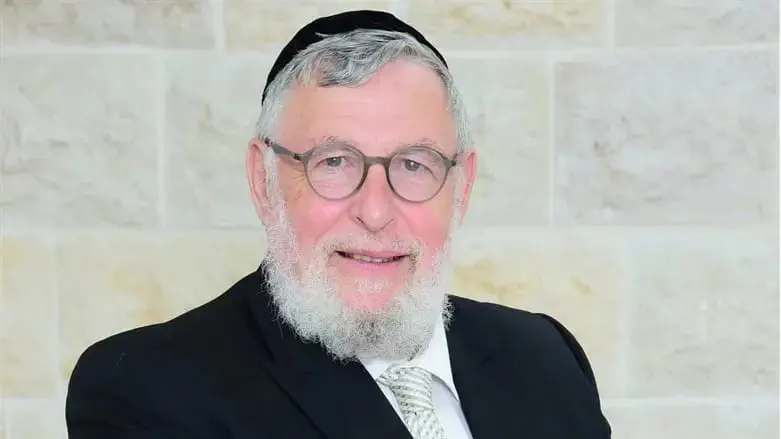
Rabbi Eliezer Simcha Weisz is a member of the Chief Rabbinate Council of Israel.