Dvar Haftorah-Vayetze:
When strength becomes a weakness
It is not prosperity that Hosea condemns. It is the response to it.
It is not prosperity that Hosea condemns. It is the response to it.

The Jewish claim to Eretz Yisrael did not begin with modern diplomacy, nor was it granted by an international institution.

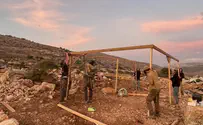
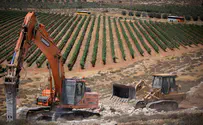
Why would anyone deliberately destroy a source of water in a land where every drop counts? Something remarkably similar happened in Gaza in 2005, after Israel withdrew from the territory and expelled its Jewish communities.
The question in the Haftorah is "How have You loved us?" and the answer is one we must appreciate.

David had once shown the courage to stand before Goliath, armed with little more than a sling and his faith in Hashem. Yet years later, he apparently could not bring himself to challenge his own son.

The Jewish bond with Hebron began with Avraham's own life there, was strengthened by his purchase of the Cave of Machpelah, and became a source of faith for generations after him.

Campaign pledges are easy to make. The harder part comes when the election is over and the cameras are gone. Those entrusted with leadership must never lose sight of the people they are supposed to serve.

What does the Akeidah, the binding of Yitzchak, have to do with Gaza?

The Sefat Emet explains that Hashem's call of Lech Lecha is not directed exclusively to Avraham. It is a call that goes out to everyone, all the time. You just have to be willing to hear it.
Noach had a duty not only to prepare for his own survival, but to give others the chance to save themselves. But there would never be enough room for that.

The exile is finite, measured in time. But its end will show Hashem's endless and unmeasurable mercy.

The danger begins when disagreement changes the way we see the person on the other side. The story of David and Jonathan, read this week, is model for difference between friends.

Three years ago, on Simchat Torah, Jewish dances were violently interrupted by the savages of Hamas. Some of those who danced before October 7 will never dance with us again.
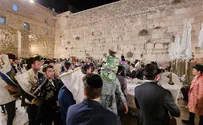
On Shemini Atzeret, as we hear the Haftorah’s account of King Solomon and the Jewish people celebrating at the newly built Temple, those ancient verses take on a new immediacy.

The chapter begins with nations coming against Jerusalem. It ends with a world in which they recognize the G-d of Israel and ascend to His city.

Words matter enormously. Yom Kippur is filled with them. We confess, pray, plead and ask to be forgiven. But our words have to result in something.

The holiest day of the year does not arrive without warning.

What we can learn from the story of Hannah, which we read as the Haftorah for the first day of Rosh Hashanah.

The Jewish people of tomorrow are growing up in the homes and classrooms of today.

Survival is not enough. There is also an obligation to preserve the truth about what happened.

Nitzavim promises that G-d will bring us back. VaYelech tells Yehoshua that he must lead the people in taking possession of the Land - and that is in our hands.
The past tells us only how long we have already waited. It cannot tell us how quickly things may change.
The farmer does not simply bring his fruit to Jerusalem. He tells a story.
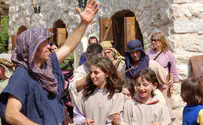
Isaiah’s message was one of consolation, but also of responsibility.

The Torah's lesson is one Israel learned tragically on October 7: Do not mistake quiet for a permanent change in the intentions of those who wish us harm.
We are expected to rise, to rebuild and to act.
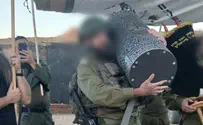
Our generation has been given something Jews prayed for over the course of centuries: the ability to defend ourselves in our own land.

For generations, some tried to frighten Jews away from their faith. Others tried to argue them out of it. The Malbim finds the strength to prevail prophesied in this week's Haftorah.
The test comes when falsehood is persuasive, when it is wrapped in emotion, reinforced by success and presented by someone who appears impossible to dismiss.

The renewal of the Land mirrors the renewal of the nation.

Parshat Eikev reminds us that humility is not the enemy of achievement but its proper companion.
The first territory a Jew must defend in a crisis is his own consciousness.

Great powers compete for influence, and commentators confidently predict how history will unfold. But the Jewish people have heard such predictions before.

As we prepare to sit on the floor on Tisha B’Av and mourn the destruction of Jerusalem, we should not view the day merely as a commemoration of ancient tragedy. It is also a summons to action.

Long before talking heads on television debated who belongs where, G-d entrusted the Golan and Bashan to the people of Israel.
Repentance is not merely about correcting mistakes. It is about rediscovering the love that once defined our relationship with our Creator.
Life is a journey, but Judaism insists that it must also have a destination.

The daughters of Tzelophchad and the mission of Jeremiah.
Not slogans. Not gestures. Not hollow religiosity. But a life rooted in moral seriousness, compassion and humility before Heaven. It is written plain and clear.

The modern State of Israel did not create the Jewish connection to the land. It restored Jewish sovereignty in the birthplace of Jewish civilization. A similar argument is made to the Ammonites in the Haftorah.

After years of experiencing miracles, they had stopped noticing them.

Human beings possess a remarkable ability to convince themselves that selfish motives are actually noble ones.

Moses, Aaron and Samuel neither sought power nor exploited it. They served the people with humility and sacrifice.

The struggle over Eretz Yisrael has never been solely a military or political contest. At its core, it is a test of faith, vision and national purpose.
Human beings have always had a remarkable ability to romanticize what they once desperately wanted to escape.
Standing before the same landscape, the spies and Joshua and Caleb reached opposite conclusions. The results were not long in coming.
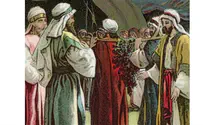
Can we continue building when progress seems slow? Can we keep lighting the Menorah even when the room still feels dark?

The Haftorah reminds us that redemption does not begin with spectacle. It begins quietly, often unexpectedly, when ordinary people accept extraordinary responsibility.

The balance between continuity and individuality is one of Judaism’s great achievements and it comes to the fore in the parasha.
When heaven touches earth.

Sinai was the beginning. But Zion was always the destination.
Like the moon, which wanes before it is renewed, the nation of Israel endured periods of concealment and decline but always held fast to the belief that restoration would come.

The return to Jerusalem in 1967 marked not only a military triumph but a stage in the ongoing restoration of Jewish sovereignty in our ancestral land. And perhaps that is the deeper lesson of Parshat Bamidbar for our time.

Eretz Yisrael is more than a place on the map. It is a crucible in which the Jewish people are called upon to refine their identity and fulfill their mission.
This week's haftorah is a profound statement about resilience, about the ability to endure and even thrive amid adversity when one’s foundations are properly rooted.
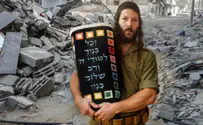
“And they shall teach My people the difference between the holy and the profane and cause them to discern between the impure and the pure" (Ezekiel 44:23).

Could it be that what we commemorate on Yom Haatzma'ut is not merely a political milestone, but the unfolding of a prophetic promise?

Shabbat Rosh Chodesh is more than a calendrical coincidence, it is an opportunity.
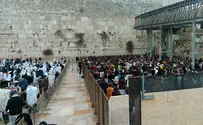
While we aspire to draw closer to G-d, we must do so on His terms, not our own.

The Haftorah reminds us that the miracles of the past were only the beginning. What comes next is our responsibility.