
This Shabbat, Jews around the world begin reading the Book of Numbers, known in Hebrew as Bamidbar, literally “in the wilderness." At first glance, the opening portion can appear dry and technical, filled with census figures, tribal arrangements and logistical details concerning the Israelite encampment in the desert.
But beneath the surface lies a profound and timeless message, one that resonates with particular force as this week we mark Yom Yerushalayim, the anniversary of Jerusalem’s reunification during the Six Day War in June 1967.
For Parshat Bamidbar is not merely about counting people. It is about understanding who we are, where we belong and what it means to journey together toward a shared destiny.
The Torah opens the portion with G-d commanding Moses: “Take a census of the entire assembly of the Children of Israel according to their families and their fathers’ households, by number of names" (Numbers 1:2). The nation is counted tribe by tribe, family by family, individual by individual.
Rashi (Rabbi Shlomo Yitzchaki, 1040-1105) famously explains that G-d counted the Israelites repeatedly because of His love for them. Much as a person continually counts a precious treasure, so too did the Almighty count His people.
The idea is striking: the Torah reminds us that every Jew matters. Every soul counts. Every individual possesses inherent worth and dignity.
And yet the census in Bamidbar was not conducted merely to affirm personal value. It also served a national purpose. The people were organized into camps surrounding the Tabernacle, each tribe assigned its place and banner, all united around a sacred center.
The message could not be clearer: Jewish identity is not meant to exist in isolation. We are part of something larger than ourselves, members of a people bound together by covenant, history and faith.
Indeed, this duality between the individual and the collective lies at the heart of the Jewish story.
For nearly two millennia, the Jewish people wandered through the wilderness of exile, scattered across continents and dispersed among the nations. Communities rose and fell. Empires came and went. Yet despite persecution, expulsions and massacres, the Jewish people endured.
And always, at the center of our national consciousness, stood Jerusalem.
Three times daily, Jews prayed facing Zion. At every wedding, a glass was shattered in memory of the city’s destruction. At the conclusion of the Passover Seder and the Yom Kippur service, generations declared with hope and longing: “Next year in Jerusalem."
It was not merely a slogan. It was the beating heart of Jewish memory.
And then came June 1967.
Against overwhelming odds, Israel achieved a miraculous victory in the Six Day War. And on the third day of the fighting, Jewish paratroopers broke through to the Old City of Jerusalem, returning the Jewish people to our holiest sites after nineteen years of Jordanian occupation.
Among them was Yoram Zamush, a company commander in Battalion 71 of the IDF Paratroop Brigade, whose remarkable story captures the deeper meaning of Jerusalem’s liberation. On the very day that he helped lead Jewish soldiers into the fight to retake the city, Zamush was marking his twenty-fifth birthday. Yet the date carried another haunting significance: exactly twenty-five years earlier, nineteen members of his family had been murdered by the Nazis in the Lodz Ghetto and thrown into a mass grave.
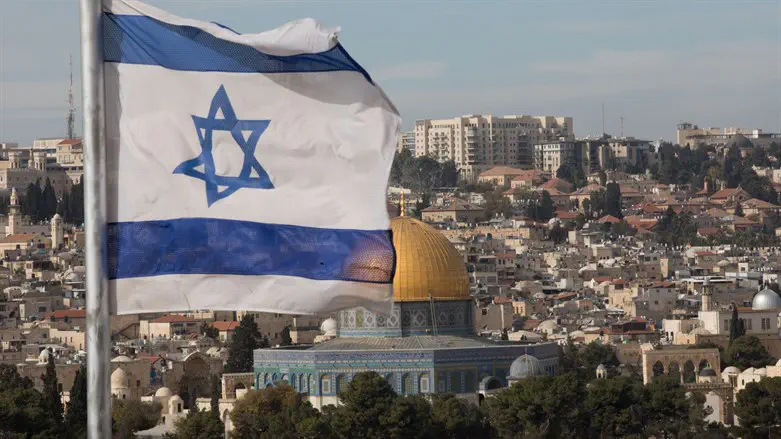
Before heading into battle, Zamush had stopped with his men in the Jerusalem home of the Cohen family. Hearing where they were headed, the grandmother handed him a hand-drawn Israeli flag that she had brought with her upon making Aliyah in 1947. “If you reach the Temple Mount and the Western Wall," she told him, “raise this flag there." Zamush carried the flag with him into fierce combat, during which one-third of his unit fell. And when he finally reached the Temple Mount, he unfurled it over the site, marking the first time in nearly two thousand years that a symbol of Jewish sovereignty had returned to Judaism’s most sacred site.
Later, Zamush reflected on the moment and said that he felt the Jewish people had finally “settled a score with the soldiers of Titus," becoming the first armed Jews to walk freely atop the Temple Mount since the destruction of the Second Temple.
His story encapsulates the Jewish journey across the centuries.
Just as the Israelites in the wilderness organized themselves around the Mishkan, the spiritual core of the nation, so too has the Jewish people throughout history oriented itself toward Jerusalem, the eternal capital of Israel and the site of the Holy Temple.
The desert generation in Bamidbar was preparing to enter the Land of Israel and establish a sovereign Jewish presence in the homeland promised to Abraham, Isaac and Jacob. Their census was not merely administrative; it was preparatory to nationhood.
Likewise, the return to Jerusalem in 1967 marked not only a military triumph but a stage in the ongoing restoration of Jewish sovereignty in our ancestral land.
And perhaps that is the deeper lesson of Parshat Bamidbar for our time.
The Jewish people are never truly lost so long as we remain centered on what unites us: our faith, our history and our connection to Zion and Jerusalem.
Today, as Israel faces threats from enemies near and far, and as divisions sometimes fracture our society from within, the message of Bamidbar is more urgent than ever. Like the tribes encamped around the Tabernacle, we may each possess our own banner, identity and perspective. But we must never forget that we remain part of one people, journeying together through history.
And Jerusalem is the point toward which we all turn.
On Yom Yerushalayim, as we celebrate the reunification of Israel’s capital, we would do well to remember the enduring lesson of Parshat Bamidbar: A nation survives not merely by counting its people, but by ensuring that its people remain connected to their common center.
For as long as Jerusalem remains in our hearts, the Jewish people will never lose their way.