
Few prophetic visions are as stirring, hopeful and quietly revolutionary as the Haftorah for Parshat Behaalotcha.
Drawn from Zechariah (2:14-4:7), it opens with a dramatic call: “Sing and rejoice, O daughter of Zion, for behold, I am coming and I will dwell among you says the Lord."
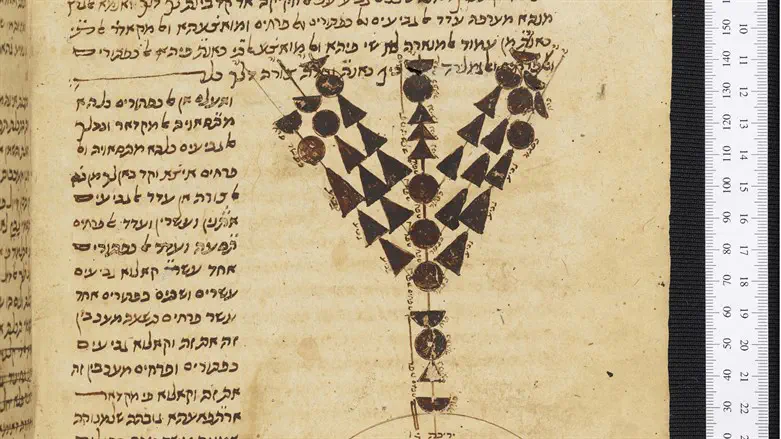
At first glance, the connection to the parsha appears straightforward. Behaalotcha begins with the lighting of the Menorah in the Mishkan, while the Haftorah features Zechariah’s famous vision of a golden Menorah.
But as is so often the case, the deeper connection lies not in the object itself but in what it represents.
The Menorah is more than a lamp. It is a symbol of hope.
Consider the context.
Zechariah is prophesying during a challenging chapter in Jewish history. A relatively small portion of the Jewish people had returned from Babylonian exile, and reality fell far short of expectations. Jerusalem was in ruins. Work on the Second Temple had commenced, but it had not yet been rebuilt. The people were poor, vulnerable and surrounded by hostility.
This was not redemption as they had imagined it.
After generations of longing, they expected triumph. Instead they found rubble.
And that is precisely when Zechariah receives his vision.
Before him stands a magnificent golden Menorah, radiant and alive. Beside it are two olive trees supplying it with a continuous flow of oil.
The message was unmistakable: do not judge the future by the limitations of the present.
The rebuilding of the Jewish people would not depend solely on military strength, political influence or material resources.
As the prophet declares in one of the most famous verses in the Bible: “Not by might and not by power, but by My spirit, says the Lord of Hosts" (Zechariah 4:6).
That verse is often misunderstood.
It does not reject effort, strength or action. Judaism has never glorified passivity. The Jewish people fought wars, built cities, cultivated land and defended themselves.
Rather, the prophet is reminding us that physical means alone cannot explain Jewish survival or Jewish destiny.
Something greater is always at work.
That message resonates powerfully in our own time.
We live in an age obsessed with metrics. People measure success by followers, influence, headlines and quarterly results. Nations count missiles and economic data. Individuals compare careers, salaries and status.
And when immediate results fail to appear, discouragement quickly follows.
But the Haftorah teaches something profoundly countercultural: do not confuse delay with defeat and do not mistake difficulty for abandonment.
In other words, do not assume that because redemption is incomplete, it is absent.
After all, the Jewish story has never unfolded in a straight line.
Abraham began as a solitary voice in a world of idols. Moses confronted the greatest empire on earth with little more than faith and conviction.
The return to Zion in Zechariah’s day seemed fragile and uncertain. And yet each step became part of something immeasurably larger.
And that is the lesson of the Menorah. A flame looks small, but its light spreads, just as.a single act of courage inspires countless others.
That is why the Torah introduces the lighting of the Menorah at the opening of Behaalotcha with the phrase, “When you raise up the lamps."
As Rashi (Rabbi Shlomo Yitzchaki, 1040-1105) explains, the flame had to be kindled until it could rise on its own.
That is not merely a technical instruction - it is a philosophy of life.
Our task is not always to finish the process. Sometimes our role is simply to ignite it.
A teacher may never see the full impact of a lesson, parents may not immediately witness the fruits of their sacrifices and leaders often labor for years before results become visible.
But if they kindle the flame properly, the light continues long after they step away.
Zechariah understood this.
Standing amid uncertainty and disappointment, he did not tell the people to lower their expectations.
He told them to raise their vision, to look beyond the broken stones around them and imagine what could still emerge.
And perhaps that is the enduring challenge of the Haftorah: can we see possibility where others see obstacles?
Can we continue building when progress seems slow?
Can we keep lighting the Menorah even when the room still feels dark?
Jewish history suggests that we can. And that we must.
Again and again, our people have refused to surrender to appearances. We carried faith through exile, rebuilt after destruction and chose hope over despair.
The Menorah in Zechariah’s vision still burns.
Its message still endures.
And it still calls to each of us: light the flame. Raise it high.
And never underestimate what even a small act of faith can illuminate.