
The Haftorah of Beshalach, taken from Judges 4:4-5:31, is centered around Israel’s triumph over its enemies. But its real power lies not in its tale of victory, but in the accountability it demands.
Indeed, our Haftorah does something remarkable: it names names. Not just heroes, but absentees. Not just those who fought, but those who consciously chose not to.
After Israel’s defeat of Sisera, the Canaanite commander, the prophetess Devorah does not settle for celebration alone. Instead, she conducts a reckoning. Tribe by tribe, she catalogs who answered the call to arms and who remained safely on the sidelines while others went to war on their behalf.
“Zevulun is a people that risked its life unto death, and Naphtali on the open heights" (5:18), she proclaims. These tribes showed up. They mobilized. They understood that Jewish survival demands no less.
And then come the others.
Reuben lingered among its sheep, Dan stayed with its ships and Asher sat comfortably by the coast (5:15-17). As the Radak (Rabbi David Kimhi, 1160-1235) explains, Devorah is pointedly asking, “how can you sit there and not be concerned for Israel’s war... and not come to help them in this war?".
To Devorah, no excuses are accepted. No allowances are made. The song of Devorah in the Haftorah is harsh precisely because the stakes were existential. When the nation was under threat, opting out was nothing less than a moral failure.
This scenario is not just a matter of ancient history. It is also an argument unfolding in our own era, in real time.
Israel today faces enemies no less ruthless than Sisera and the Canaanites. Missiles, terror tunnels and jihadist militias do not discriminate between religious and secular, right and left. And yet, once again, the burden of defending Israel is not being shared equally.
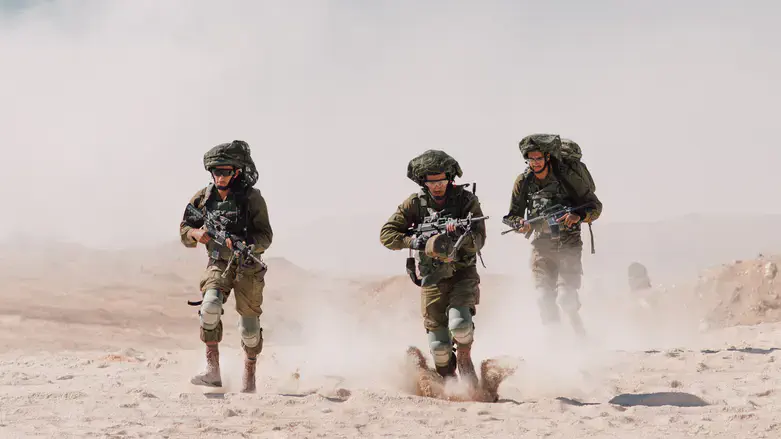
A segment of Israeli society - largely comprising traditional, Religious-Zionist and secular Jews - carries the overwhelming weight of military service. They serve multiple tours of reserve duty, give the best years of their lives to the country, bury friends and return repeatedly to the battlefield.
Meanwhile, large portions of the Israeli public do not.
For decades, the Haredi exemption from the IDF was justified as a temporary arrangement. Torah study, it was argued, was its own form of protection. But temporary arrangements have a way of hardening into permanent entitlements. What was once exceptional has become institutionalized non-participation.
The result is a society drifting toward the very dynamic Devorah condemned.
Those who fight are praised rhetorically but left to shoulder the burden alone. Those who abstain are shielded from consequence. And the idea of collective responsibility slowly erodes.
Devorah would have none of this.
Her song does not speak in sociological terms. It does not ask whether nonparticipants are sincere or ideologically motivated. It asks one simple, brutal question: when Israel was under threat, where were you?
This is the question that many in Israel must now confront honestly.
A state cannot endure when its defense is obligatory for some but optional for others. And no amount of spiritual language can disguise the fact that Torah scholars, like dockworkers and software engineers, live under the same missile threat as everyone else.
Judaism has never sanctified exemption from responsibility. On the contrary, it sanctifies participation. King David fought. The Hasmoneans fought. Even scholars put down their books when Jewish survival was on the line.
The Haftorah of Beshalach insists that unity is not measured by slogans or symbols, but by shared risk.
This is not an argument against Torah study, nor against dissent. It is an argument against insulation, against the idea that some Jews exist primarily to be protected by others.
Devorah’s message is timeless because it is uncomfortable. Nations fall not only because of external threats, but because too many people convince themselves that someone else will handle them.
Zevulun and Naphtali understood something that must be relearned: freedom is worth fighting for and it must be defended.
The question facing large sections of Israeli society today is the same one Devorah posed thousands of years ago. When the call came: did you answer or did you stay home?
Ultimately, a nation survives not because some are willing to fight, but because everyone understands that survival is the responsibility of all.