
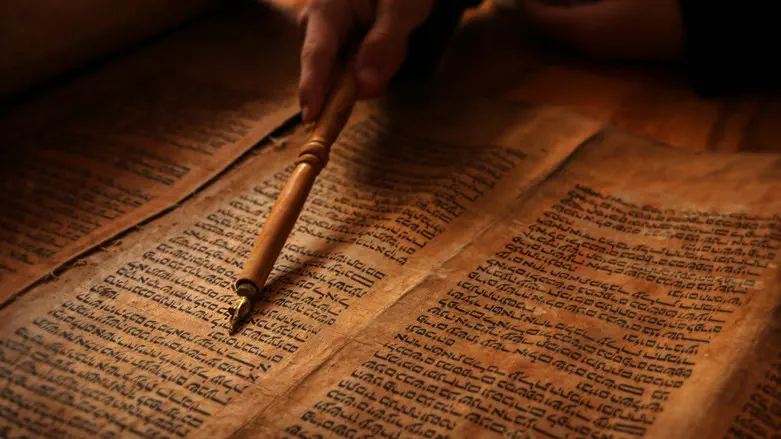
One of the most puzzling sections in the Torah appears near the end of Parshat Naso.
The leaders of the twelve tribes of Israel bring offerings for the dedication in the desert of the Mishkan, the Tabernacle.
But there is something unusual about the text. Every offering is exactly the same, and yet instead of describing the gift once and stating that the remaining tribes followed suit, the Torah repeats the entire list twelve separate times over the course of 72 verses.
Generally speaking, the Torah is very economical in its use of language, so this seems almost incomprehensible. Elsewhere, sweeping historical developments are conveyed in just a handful of verses. Entire decades can pass in a paragraph. Why devote so much precious space to repeating identical details?
The commentators suggest that the answer lies beneath the surface. Although each prince brought the same physical offering, each did so with his own intentions, perspective and inner world. Outwardly, the acts appeared identical. Spiritually, they were entirely distinct.
The Torah therefore records each one individually.
This reflects a profound Jewish insight: repetition does not diminish meaning. Properly understood, repetition is one of the ways meaning is created.
That idea stands in sharp contrast to the assumptions of contemporary culture, which prizes novelty above nearly everything else. New experiences, new technologies, new content and new achievements constantly compete for our attention. Routine is often viewed as uninspiring and repetition as evidence of stagnation.
But Judaism has long understood that many of the deepest things in life are usually built through repetition.
Consider how Jewish life actually functions.
Shabbat arrives every week. Prayers are repeated every day. The festivals return every year. The words of the Shema are recited morning and evening.
At first glance, this structure might seem repetitive but in reality it is transformative.
Because no prayer is exactly the same, and no Shabbat is experienced exactly the same.
The words we recite may remain constant, but the person encountering them changes.
A teenager reciting Kiddush experiences it differently than a parent. A person praying in joy experiences the same words differently than someone praying in grief. A nation emerging from triumph celebrates differently than one recovering from tragedy.
The ritual remains the same, but we do not.
That may be why the Torah preserves the offerings of each tribal leader separately.
The princes could have approached the dedication competitively. They could have tried to distinguish themselves through larger gifts or more elaborate displays. Instead, each accepted the discipline of participating in something shared.
Each contributed in the same way while bringing something uniquely his own.
That balance between continuity and individuality is one of Judaism’s great achievements.
Our tradition does not require us to reinvent ourselves constantly. Nor does it erase individuality.
Rather, it provides a stable framework within which individual meaning can emerge.
This lesson feels especially important today.
Many people struggle with the feeling that their lives lack significance because change comes slowly. We expect dramatic breakthroughs and visible milestones. When progress feels incremental, discouragement sets in.
But most worthwhile things develop over time and through repetition. Trust in a relationship is built through repeated acts of reliability. Character is formed through repeated choices.
Even history itself is shaped this way.
The Jewish people did not survive thousands of years through occasional moments of heroism alone. We endured because generation after generation continued doing ordinary things with extraordinary consistency.
Another Shabbat night.
Another page of Torah learning.
Another prayer.
Another act of kindness.
Another commitment renewed.
Parashat Naso reminds us that what appears repetitive from the outside may in fact be deeply significant beneath the surface.
The tribal leaders brought identical offerings, but the Torah refused to reduce them to a single entry.
Because G-d does not see people as interchangeable.
Every act and intention matters.
Every repetition carries within it the possibility of renewal.
Sometimes we imagine that meaning comes only from doing something different.
Parshat Naso suggests otherwise and in doing so, it underlines an important lesson: very often in life, meaning comes from returning once again to what matters most and bringing to it a deeper measure of ourselves.