
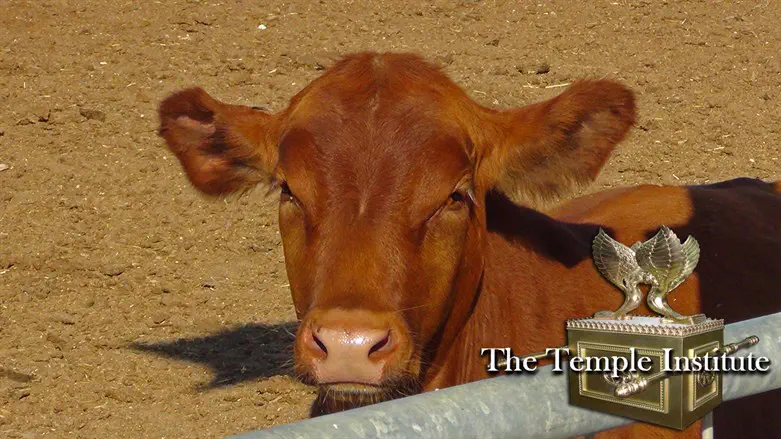
In this week’s special Torah reading of Parshat Parah, which is read on the Shabbat after Purim, we confront one of the most mysterious commandments in the five books of Moses: the ritual of the red heifer. An entirely red cow is slaughtered, burned and reduced to ashes, which are then mixed with water and sprinkled upon those who have been defiled by contact with death. It is a “chok", a decree beyond human logic. And yet its purpose is clear: to cleanse, to purify, to restore a people so that they may once again stand before G-d.
The accompanying Haftorah from Ezekiel (36:16-38) echoes and expands this theme. Addressing a nation steeped in corruption and exile, the prophet conveys a Divine promise: “And I will sprinkle pure water upon you, and you shall be purified… from all your impurities and from all your idols I will cleanse you" (36:25). This is no mere ritual cleansing. It is a national rebirth. “I will give you a new heart and put a new spirit within you" (36:26). It is the language of moral clarity, of renewal after rot, of restoration after decay.
Today, that ancient message reverberates not as metaphor but as reality.
On February 28, 2026, the United States and Israel launched a coordinated military campaign against the Islamic Republic of Iran. In a decisive opening strike, allied forces crippled key elements of Iran’s military infrastructure and command structure. Among the most consequential outcomes was the elimination of the regime’s supreme leader, Ayatollah Ali Khamenei - a modern-day Haman, the architect of decades of terror, repression and genocidal incitement against the Jewish state.
The regime responded as expected, unleashing ballistic missiles and drones at Israeli cities and U.S. assets across the region. Sirens wailed in Tel Aviv. Interceptors streaked across the night sky. The Middle East stands in the throes of a widening war.
And yet, this is not a war of choice for Washington and Jerusalem. It is a war of necessity.
For more than four decades, the regime in Tehran has exported revolution, armed proxies, financed terror and relentlessly pursued nuclear and ballistic capabilities while openly calling for Israel’s destruction and chanting “Death to America." It has drenched Israel, Syria, Lebanon and Yemen in blood. It has crushed its own people with brutality. It has turned an ancient and proud civilization into a launching pad for fanaticism.
Diplomacy was tried. Sanctions were imposed. Red lines were drawn and redrawn. But there comes a moment when evil, left unchecked, metastasizes. There comes a point when moral clarity demands action. When deterrence fails, purification requires fire.
Parshat Parah teaches that impurity associated with death cannot be ignored. It contaminates. It spreads. It bars entry into the sacred unless confronted directly. The ashes of the Red Heifer - born of destruction - become the instrument of renewal.
So too in our time.
The Iranian regime is not merely a geopolitical adversary. It is a source of moral contamination in the region, a regime that sanctifies martyrdom, glorifies annihilation and builds its legitimacy on hatred. Allowing such a force to edge toward nuclear capability would have been sheer madness.
Ezekiel does not promise purification without upheaval. He speaks to a people who had endured destruction and exile precisely because corruption had been allowed to fester. The sprinkling of pure water comes after confrontation with reality, after the stripping away of illusion.
For years, many in the West indulged the belief that the regime in Tehran could be moderated, incentivized or reasoned into abandoning its apocalyptic ambitions. That illusion has now been shattered - not by rhetoric, but by action.
The elimination of the regime’s supreme leader is more than a tactical achievement. It is a strategic and moral statement: that those who dedicate their lives to threatening genocide cannot assume immunity behind bunkers and slogans. It signals to tyrants everywhere that there are consequences for sustained aggression.
Like the ashes of the red heifer, the destruction of Iran’s instruments of death can become the catalyst for cleansing. The objective is not conquest. It is the removal of a mortal threat and the forging of a new future for Israelis who deserve to live without the shadow of annihilation, for Americans whose interests have long been targeted, and yes, for the Iranian people themselves, who have suffered under the suffocating grip of the ayatollahs.
Purification is rarely gentle. It is often searing. But it is indispensable.
The Haftorah concludes with a vision of rebuilt cities, cultivated fields and a restored people. “The desolate land shall be tilled… and they shall say: This land that was desolate has become like the Garden of Eden" (36:34-35). Renewal follows the removal of defilement.
As this war unfolds, we must not succumb to moral confusion or false equivalence. The struggle against the Iranian regime is not simply another round in an endless regional rivalry. It is a confrontation with a force that has sown instability and death for decades.
May America and Israel’s leaders have the fortitude to see this through. May the necessary fire of this moment give way to the sprinkling of pure water, to a Middle East cleansed of the most dangerous source of its toxicity. And may the courage to act decisively today open the door to a safer, freer and more just tomorrow for us all.