Parashat Eikev:
Why we are chosen
We were chosen, but non-Jews should not believe that they are completely relieved of the responsibility of observing Mitzvot.
We were chosen, but non-Jews should not believe that they are completely relieved of the responsibility of observing Mitzvot.

Both adding to and subtracting from the Mitzvot fall into the same category of effectuating alterations in the Divine system of commandments.
The Torah does not necessarily have to remain the exclusive province of the Creator. A miraculous transformation can occur, and it can become the Torah of man.
When someone expresses a new theory on a significant matter for consideration, the reflexive response is often, “Where is it written?" or “Who said that?"
Chukat is the saddest parasha in the entire Torah. And Parashat Balak contains a fascinating and unusual story that illustrates how Jew-hatred is deeply rooted in human existence.
Am Yisrael does not only operate in terms of practical considerations. An important religious element is involved in political developments.
What was sinful about the words of the spies? Weren’t they supposed to give an accurate report of what they had seen? (Ramban)
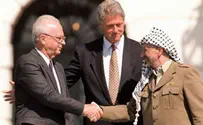
The Rabbis say that, had Moshe led Bnei Yisrael into the Land, he would have built the Beit HaMikdash (Holy Temple), and it would have never been destroyed.

We honor the divine soul and, by extension, the One who implanted it in the human body, by respecting the living as well as the deceased.
Those of us who were born Jewish are not ordinarily described as Jews by choice. But we must always feel tht we have chosen the Torah.

We should feel that we have a “closer" relationship to Hashem when we stroll through the streets of Eretz Yisrael and the holy city of Yerushalayim (Jerusalem), and this should inspire us to a higher level of behavior.
Jewish education must invest greater effort and resources in guiding our youth in this vital area: providing guidance before marriage.

The Rambam teaches that we must say a blessing before we eat any food or enjoy pleasant aromas.

A parent’s attachment to their child can become at odds with the imperative to act in the best interests of the child.

To act based on instinctive feelings of right and wrong, or even powerful religious inspiration, is to undermine the principle of Divine Revelation.
The essential task is not only behavioral correction, but internal scrutiny.

Realizing that we exist as the handiwork of our Maker must be at the forefront of our consciousness. This awareness keeps us humble and guards us from sin.

The mirrors ussd for the Mishkan had an exotic histtory.

We must remember the central place that the crime of idol worship occupies in Judaism.
What is the Torah's attitude toward clothing? Is there anything wrong with trying to look one’s best and constantly keeping up with the latest style?
What is the meaning of the idea that G-d “dwells among us?" And why is the Mishkan built of donated materials, instead of G-d commanding the Jews to bring them?

To treat G-d’s creatures with justice and compassion is to affirm, through our daily conduct, that the world and humanity are the handiwork of Hashem.
The Torah records Yitro’s actions because they contain important lessons for all of us.

My sense is that many contemporary Jews, especially those who would identify as “liberal," might not be entirely comfortable with Moses' Song of the Sea. It is not in sync with a mindset that views war as an evil that “never solves anything." What is Judaism's view?

Let us always be humble and ready to acknowledge our flaws. There is no such thing as a human being who never sins. We all act foolishly and make grave mistakes at some point in our lives.
A disagreement between the Ramban and the Ibn Ezra.
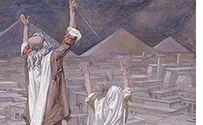
Moshe’s name conveyed a lifelong mission: to oppose injustice and to fight on behalf of the helpless.
It is not good for a victim to replay the horror he experienced and to keep active the pain he has gone through. He must instead remove the traumatic event from active consciousness.

This is perhaps the most dramatic narrative in the entire Torah. Why did Yosef suddenly conclude the charade?
How should Yosef have dealt with the Chief Butler so that his plight would be remembered after interpreting the two prisoners' dreams?
The point of the Torah is not that great people are saints who never do wrong. They are ordinary humans who are imperfect beings and capable of serious mistakes.
Nothing is more important for the survival and welfare of mankind than the ability of enemies to resolve their grievances and to genuinely forgive one another.
In departing from his parents, Yaakov was in fact obeying their wishes and thus fulfilling the commandment to honor one’s parents. Why then should the Sages say that the length of his absence is a cause for punishment?

We all confront many situations in which it is tempting to put a spin on things and manipulate the facts so that they are more in line with our interests or prevent catastrophe. Are we allowed to do so?

Life confronts us with the Absolute and the Ideal. The former leaves no place for compromise; the latter demands that we be flexible. The parasha shows us the differrence.
The study of Torah, when undertaken with humbleness and dedication, can lead one to a special encounter with HaKadosh Baruch Hu.
Avraham and Sara are the exemplars of Divine service, models who we must strive to emulate.

Granted that the world could not have come into being without Him, once created, can it persist on its own, independent of His sustaining Providence?
If Man was created without the capacity for shame, why would it suddenly emerge as a result of prohibited eating?
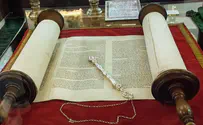
The Song of Ha'azinu is a testament of Jewish Destiny.
The mitzvah of Hakhel: A national gathering with larger dimensions.

What did Moshe seek to convey by telling us that the Torah is “not in heaven” or “on the other side of the sea”?
Only Hashem could have authored a book that accurately foretold the future course of Jewish existence.
What is the reason for the harsh limitation on Ammonites and Moabites?
If there is a case in which a poor person loses to a significantly wealthy one, the true verdict must be delivered. However, the matter should not end there.
There are material consequences in addition to the spiritual ones that ensue from one’s embrace or rejection of Torah.
I am. Few peoples have contributed as much to the advancement of human knowledge and ethics as the Jews.

Sometimes, we may have fallen deeply in love with someone who is just “unsuitable” for us. The feeling can be so compelling that we might rush into a disastrous marriage simply because we cannot see beyond our fantasies.
The Book of Devarim teaches us about the importance of rebuke and the attitude we must assume toward it.
To understand the phenomenon of a refuge city more clearly, we must fully appreciate the great value that the Torah attaches to the preservation of human life.
Most people automatically and mindlessly associate religion with unconditional compassion. The Talmud, however, teaches that in the proper context, vengeance against evil can be a virtuous and necessary response.
Could Bilam really wreak havoc on the Jews? What exactly is the power of a curse? Can a human by the mere verbalization of certain words effectuate changes in the real world?
Rashi seems to be saying that the sin of Moshe consisted in his deviating from the command of Hashem to speak to the rock instead of hitting it. But why would Moshe, the faithful servant, not do exactly what he was told?
If we are willing to face a painful truth, we can learn a very important lesson from this. There is no guarantee that a very learned person will also be a great Tzadik (righteous person).
On the most basic level, the Sin of the Spies was that they were overcome by fear and communicated their despair to the nation. The lessons of this episode are very relevant to the current situation.

There are times when we must be able to control our urge to criticize.
There are many potential factors that could rob a person of the full benefits of the numerous blessings that might have come his way.

The fourth Book of the Torah begins on a certain high note, but turns out to be the saddest and most disappointing in the entire Torah. On the other hand, it has high points.

Yes, there is an unbreakable bond between Hashem and the Jewish people.
There is a clear distinction between what is expected of the ordinary Jew and what is demanded of the Kohen.