Acharei Mot: What does "living" by the commandments really mean?
People display their religiosity in diverse ways, but perhaps the words "live by them" reveal how God wants us to build an observant life.
People display their religiosity in diverse ways, but perhaps the words "live by them" reveal how God wants us to build an observant life.
Torah truth must permeate a person’s mundane life.
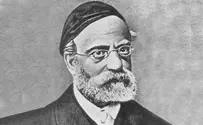
There are two ways to understand this mitzva and both are not easy to perform.
A collection of commentaries on tsaraat of a house. The Alsheich Hakadosh says: This affliction should be considered by us, as a gift from Hashem. Why?

It appears that the ability of the Jews to take the pagan representation of the Egyptian society in full view, and prepare it for sacrifice 4 days later, may have been a greater miracle than anything that had occurred up until that moment.
What is the significance of the emphasis on curing the tzara'at instead of the person? And how does it connect to the plague of the firstborn, and the seder night itself?
For while we have fought for and earned the Land of Israel, and the practice of Jewish life has returned to Zion, we cannot say that our Jewish brothers and sisters in Israel are truly free.

From the month of Nisan, we are taught that it is not just during times of sorrow that we should empathise with others, it is also when they are happy.
The laws of tzaraas are incomprehensible if we adopt the general translation.
Are speakers of lashon ha’ra not found amongst the nations? Why then don’t we find that they are afflicted by tzaraat?
God demands we live a life of good deeds towards others and this upholds the world. Therefore, many commandments in the Torah are commandments of interpersonal nature.
Young Religious Zionist Torah scholars connect the Torah Reading with the Land of Israel.
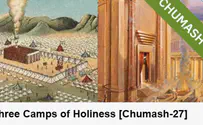
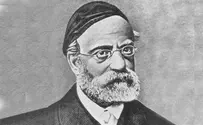
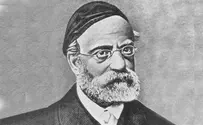
Israel' first Chief Rabbi and iconic leader of Religious Zionism: To understand Moses’ unusual instructions for mourning his nephews, we must examine the Talmudic account of the passing of Rabbi Yehudah HaNasi.
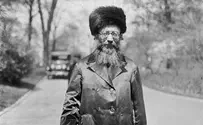
Aharon's sin with the Golden Calf was not in its creation but in forcing G-d to judge the Jews as willful sinners.
Why are Aharon and his sons not allowed to mourn the deaths of Nadav and Avihu? Why is it different than the customary practices of kohanim who must mourn their seven close relatives? And how is this relevant to what our nation has faced for the past six months?
In pre-computer times, the scribes knew how many words and how many letters there were in the entire Torah.
An analysis of the non kosher animals mentioned in the parasha is connected to the four questions - and Redemption. This will be the final exile, after which we will never again be defeated or exiled from our Land.

We are all eighth day Jews. What does that mean?
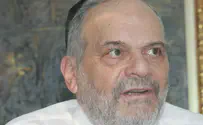
The Prophetic Books are not more “ethical” than the Pentateuch.
Yaakov did not cease his studies of the 613 Mitzvot, and when one learns about a Mitzvah, credit is given for actually fulfilling that commandment!
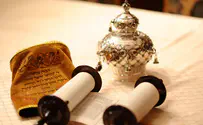
While the Torah does introduce new aspects, the repetition prompts us to question the Torah's approach - why does it not consolidate these discussions into a single section?
The word "tsav" is found only concerning the Korban Tamid. Why?
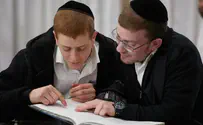
What it says on the tin should be what you find within it.
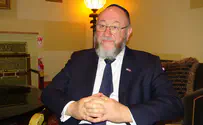
Our mission and our ancestors’ mission are one and the same.
Our Sages expound the word ‘Saying’ in the first pasuk in several ways, feeling that it is superfluous, as immediately after it - in the second pasuk - the Torah again says:’Speak to Bnei Israel, and say to them.’
Young religious Zionist Torah scholars connect the parasha and the Holy Land.
How does the small 'aleph' in the first work of Vayikra - a minor nuance - contribute to the deeper meaning? And why is the book named after its first word? Join us as we uncover the connection between Vayikra, Shabbat Zachor, and Purim.

Animosity is often better than indifference.
As we conclude the book of Shemot and the construction of the Mishkan, Hashem instructs Moshe to set it up. A notable emphasis is placed on the verb "setting up" (קום) in the Torah.
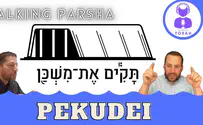
The book of Shemot ends on a triumphant note.
In human behavior and thought, time is as important as wealth or location or the accomplishment of any human deeds.
Why does Moshe introduce Bezalel by saying, 'Look?' Where was Bezalel summoned, and what meaning does his summoning have for us today?
Israel's first Chief Rabbi: Moses, it turns out, was fabulously wealthy. Why is that significant?
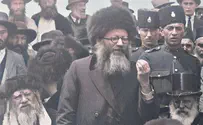
In the final passages of the Parsha, Moshe descends from Mount Sinai carrying the new Luchot. However, his return is marked by a striking physical transformation.
The Torah enables us to rise above the natural order.
The stones on the shoulders of the apron, and the stones on the breastplate, both serve as reminders. What significance does this hold? And why the emphasis on remembrance?
Young Religious Zionist Torah scholars teach the connections between this week's Torah Reading and the Holy Land.
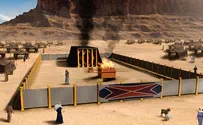
The Jewish lamb is happy, joyful, and virile – not meek.
iI is the combining of the physical and the spiritual facets that are necessary for true redemption and we see it in the IDF soldiers today.
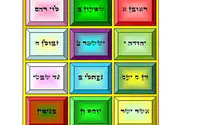
The Mishkan’s construction is described at length, down to the finest detail. What, in fact, is the importance of these small details?
Israel's first Chief Rabbi: Walls of iron are different from walls of stone, and each suits a different period of Jewish history.
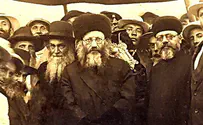
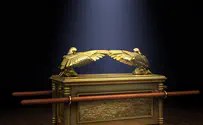
This week, we embark on constructing the Mishkan as Hashem instructs Moshe on crafting its various vessels. Amidst the holiest sanctuaries, besides the Ark and Kruvim, we encounter a lesser-known vessel: the Kaporet.
Young religious Zionist Torah scholars find connections to the Land of Israel in the Torah reading.
Where is the Ark of the Covenant?
The State of Israel will never come to the point of Shimshon, because when push comes to shove, we will use all the weapons at our disposal to kill our enemies.
Commentaries expound on the meaning of the verse "take for me" instead of "give to me" in this week's parasha on the building of the Tabnernacle.

The menorah teaches us how to live our lives.
Young religious Zionist Torah scholars teach the connection between the weekly Torah reading and the Land of Israel. New series: Rabbi Yehuda Halevy's Book of the Kuzari.
After the Torah is given, G-d mentions sending an angel to lead the Jewish People. But after the Golden Calf, the same offer is made, and the Jewish People respond with an outcry. Why does the mention of an angel evoke varied responses? What is this 'malach' about?
The goal is not to sit at Har Sinai, eat Mannah and bask in the light of Hashem but rather to create a real, down to earth just society.
When I study the Torah and come to “know” G-d’s thinking as well as Adam knew Eve, G-d is present in my mind.
An unusual law in Parshas Mishpatim makes the case for the divine authorship of the Torah.
Our enemies anti-truth forces us into defensive mode, explaining how we couldn't have perpetrated the atrocities of which they accuse us and distracts us from calling them to account for their own behavior. It doesn't have to be that way. Op-ed.
Neither the heart nor the deed is sufficient. G-d wants both.
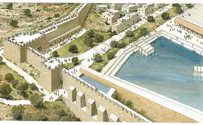
Why did the Israelites connect the Red Sea with the Temple?
Only in Israel, where we have a holisitc identity as a people, do mitzvot take on their full meaning, as we build a society committed to the ideals of Judaism. In Gaza: Pidyon haben by means of tefillin.
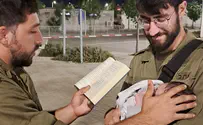
Religious Zionist Torah scholars find connections to Eretz Yisrael in the Torah reading for Shabbat.
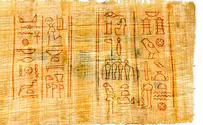
As the plagues intensify in Egypt, the plague of darkness stands out as a unique phenomenon. Unlike the fiery hail or the me
Tell your children what you believe and why.
If the intention of Pharaoh's magicians is to demonstrate parity with Moshe, why don't they counteract his miracles instead of duplicating them?