

G-d wants piety, not ritualistic deeds. That’s what many Christians and Reform Jews claim. They acknowledge that the Torah contains many ritualistic mitzvos, but they argue that these mitzvos belong to a more “primitive” Judaism that we no longer need practice.
They claim to be the heirs of the Biblical prophets who railed against unrepentant people offering sacrifices to G-d. “‘Why do I need your numerous sacrifices,’ says the Lord. ‘I am full of elevation offerings of rams and the fat of fattened cattle; I delight not in the blood of bulls, sheep, and goats’” (Isaiah 1:11).
According to these detractors of Orthodox Judaism, hostility toward ritualistic sacrifices first emerged among the prophets of the Bible. Before then, Judaism’s approach to sacrifices largely mirrored that of paganism. Sacrifices were gifts to appease the power(s) in heaven, and inner religiously was therefore irrelevant.
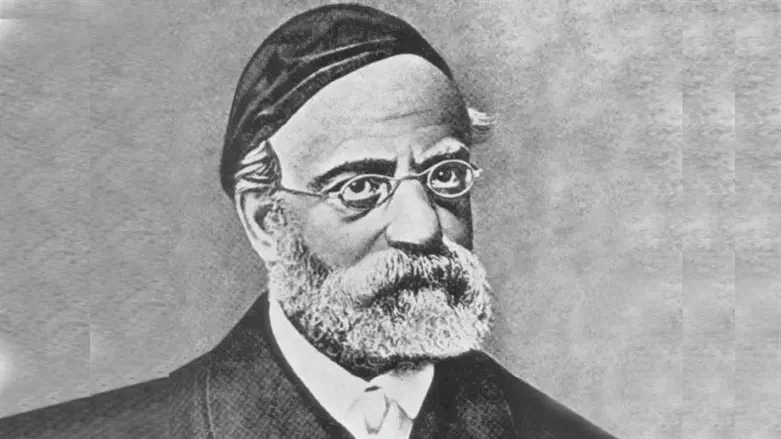
In his commentary to this week’s parsha, Rav Samson Raphael Hirsch dismisses this account of the “evolution” of Judaism as utter nonsense. Judaism never regarded sacrifices as essentially a bribe by which man gets what he wants. G-d always demanded that piety accompany it.
That’s why 3,000 years before the prophets lived, G-d already rejected a sacrifice that wasn’t offered with the proper mindset. He accepted Hevel’s korban but rejected Kayin’s. And 40 years before the Jews entered the Promised Land, G-d struck Nadav and Avihu dead for offering an unapproved offering.
Their punishment occurred at the inauguration celebration of the Mishkan “at the same moment that [a] fire had come down to express G-d’s satisfaction with the offering of the people,” Rav Hirsch writes. “[A]t the very first appearance of offerings [in the Kayin and Hevel story], and…at every fresh introduction of them, reference is made, by deed or word, to a rejected offering next to an accepted one.” Hevel’s accepted offering next to the rejected one of Kayin. The people’s accepted offering next to the rejected one of Nadav and Avihu.
These juxtapositions, writes Rav Hirsch, cut the “ground from under the feet of that blasphemous erroneous opinion with which the reform aspirations of our time love to pride themselves – that the insight into the merely relative worth of offerings only belonged to the progressive time of the Prophets who had advanced beyond the lower standpoint of the Pentateuch.”
Judaism has always demanded both – outward performance and inner piety.
Rav Samson Raphael Hirsch (1808-1888) – head of the Jewish community in Frankfurt, Germany for over 35 years – was a prolific writer whose ideas, passion, and brilliance helped save German Jewry from the onslaught of modernity.
Elliot Resnick, PhD, is the host of “The Elliot Resnick Show” and the editor of an upcoming work on etymological explanations in Rav Samson Raphael Hirsch’s commentary on Chumash.
...