
Parshat Ha’azinu: The makings of a brachah
Parshat Ha’azinu teaches why the words of our prophets and sages carry the force of a Divine command - and why we recite blessings on rabbinic mitzvot.
Parshat Ha’azinu teaches why the words of our prophets and sages carry the force of a Divine command - and why we recite blessings on rabbinic mitzvot.
Hashem, our loving Father, does not turn away from the echoing plea from His children

If the giving of the Torah still is impactful and offers guidance for Hashem’s Nation, then, on a deep level, all of our souls remain united
Because the wisdom behind the Mitzvah of Para Adumah will be too lofty for any mortal, Satan and his minions will attempt to use this Mitzvah as a cudgel against the divine nature of Am Yisrael’s existence
Hashem arranged the forces of purity and impurity to work in tandem
What does the Torah mean when Moshe communicates that the prophet must be 'Like me'?
Moshe's call to choose blessing "today" reminds us that even in the challenging era before Moshiach, every sincere mitzvah has tremendous value and can help bring the final redemption.
This week's Torah portion presents the only two blessings that are Biblical commandments.
Reflecting on the war against Midian, this week's Torah portion highlights the extraordinary miracle that not a single Jewish soldier was lost in battle, drawing a timeless lesson about the power of Jewish unity and the heavy cost of internal division.
This G-dly covenant of peace included the fact that Pinchas was destined to be renamed the great prophet Eliyahu
Israel's true strength lies not in military might or international support, but in faith in Hashem and spiritual resolve.
Korach’s downfall was caused by virtue of the fact that he did not perceive his children’s ultimate destiny
Moshe felt the need to pray for Yehoshua to, despite his humility, understand the bigger picture
The deepest secrets of the Torah cannot be understood without the wisdom of music
The greater the effort that is put in to the safeguarding of the Torah, the greater the spiritual import and potency of said decrees
At the time of the acceptance of the Torah, the Jews were totally united, with one goal and purpose; that unity was so sublime and pure
Torah, like the desert, must be open and accessible to all of Am Yisrael, with purity, humility, and patience, so that the nation can return to its highest levels of holiness and spiritual greatness.
In a powerful thought on Parshat Behar-Bechukotai, the connection between the Avot and Eretz Yisrael takes center stage.
In a double expression in Parshat Emor, the Torah teaches an important lesson on the responsibility of adults to guide youth and the central role of refined speech and the importance of respectful communication and moral leadership within Am Yisrael.
The Torah portions of Acharei Mot and Kedoshim reveal the deeper role of Yom Kippur as the lasting day of forgiveness and true acceptance of the Torah, offering new insight into its connection with Shavuot.
Lessons from the Torah portions of Tazria and Metzora, the exact middle of the Torah, and how all three connect to the days of the Omer.
Rabbeinu Bachye explains, the very question is the answer-the Beit HaMikdash, and its predecessor, the Mishkan in the desert, was not merely a physical building; it was the repository of the collective psyche and soul of Am Yisrael, which allowed Hashem’s Shechinah to be more manifest in this physical and troubled world.

What evoked Moshe’s breaking of the Luchot, in fact, was his witnessing the great joy with which the sinners had embraced their mission
A Deeper Dive into the Connection between the Ancient Serpent and the Evil of Amaleik
Yitro’s positive perspective of the Jewish people was caused by his noticing the tremendous significance that the Jewish nation attached to their heritage
Moshe’s retrieving of the body of Yosef would thereby serve as the cog in the wheel that would prepare Am Yisrael’s next leader, Yehoshua, after Moshe’s passing 40 years later.
Tzvi LeTzaddik explains that in reality, every Jew during the time of exile suffered doubly-once for their own personal pain and again due to the fact that they witnessed their brethren suffering
Haamek Davar notes that the Torah’s describing the wife of Elazar in these Pesukim is designed to teach that she contributed greatly to Elazar’s lofty status-hence, they were blessed with a child as great as Pinchas.
"...Thus, the true source of the tension between Yehuda and Yosef was this clash between an emphasis on Chessed, versus an emphasis on Torah..."
Yosef had been nearly killed, sold as a slave, and spent years in an Egyptian dungeon because of his brothers’ aspersions; his father, Yaakov, was grieving and suffering for 22 years-and yet, despite all of the above, Yosef understood that it is still more worthwhile not to embarrass his brothers, and reveal himself to Yaakov.
When one signs onto idolatry, they are in fact [subconsciously or consciously] worshipping their own self interest; the idolatry is just an external rationalization of the undertaken path. Judaism, however, requires “Bittul", or self-awareness that there is one true G-d, Hashem, to whom we must pledge our devotion,
As a response to the violation of their sister, Shimon and Levi proceed to destroy the city of Shechem. The commentaries seek to explain the rationale for their behavior.
May we take this poignant lesson to heart, and understand that Eretz Yisrael cannot be bargained for. It is our land, and the vision and desire of millions of our brethren, over thousands of years of Jewish history, have always rested on the Land of Israel.
Seforno notes, that Jewish custom at the circumcision of a child is to leave a chair unoccupied to represent a designated makom for the Shechinah [Hashem’s earthly presence].
Avraham was not going to be, like Noach and Adam, born of a world where it was just him and his wife; rather, they were going to be the progenitor and catalyst of a new people
As the time for Moshiach’s arrival swiftly approaches, one can’t help but notice the utter insanity that surrounds philosophy and what is considered educated thought in today’s world.
As we begin the Torah with Bereishit, we are reminded by the Netziv that our forefathers' uprightness contrasts with the baseless hatred that led to the destruction of the Second Temple, urging us to embrace unity and respect.
Based on the pattern expressed earlier of connecting the ending and beginning of the Torah, we notice that the last letter of the Torah, and the first letter of the Torah, combine to form the word “Le”v”--the Hebrew word for Heart! Undoubtedly, the Torah is expressing that the foundation that circulates lifeblood to the Jewish people is the Torah, the very essence of our existence.

"...With this background in mind, the Rambam’s comments in Chapt. 7 Halachah 1 [Laws of Repentance] are all the more remarkable. Rambam writes: “Since free choice is granted to all men as explained, a person should always strive to do Teshuvah."
Chid”a explains, however, that a gift that is accepted by Hashem Himself is, in reality, a source of pride and joy for the giver; thus Hashem’s accepting of the offering serves as the greatest pleasure for the benefactor, and therefore they are considered a “taker” in this scenario.
Ramban explains that the Ben Sorer Umoreh’s actions violate the fundamental backbone and spirit of the entirety of the Torah - 'Kedoshim ti’yhu - You shall be a holy people.'
Thus, because the Torah commands us not to veer from the words of our sages, it is inherently considered a command from Hashem to follow the words of our Torah scholars, and therefore, the blessing made on Rabbinic Mitzvot can be considered as commanded by Hashem, by virtue of the fact that Hashem commands us to listen to the Sages!
Coming a few weeks after the tragic day of Tisha’a Ba’av, where we recall the destruction of G-d’s holy temples, a small measure of comfort can be gleaned from the above idea
The Torah says “Do not add to the matter that I command you, and do not detract from it; to guard the commandments of Hashem your G-d that I command you”, so how do we relate to the teachings of our sages?
The Torah emphasizes the profound power and responsibility of speech through the laws of nedarim, teaching us that individuals have the ability to create with their words and reflecting a deep connection between speech, commitment, & responsibility.
The introductory phrase that tells us that Bilaam “Raised his declaration” appears to be unnecessary, as well as a somewhat mystifying description of what occurred, and is noticed by the commentaries.
This Mitzvah serves to illuminate to us that the Torah, at its core, is divine wisdom.
Moshe understood that this effort on the part of Korach in reality stood to undermine the entire Torah
We can glean from the sacrifice of the day a poignant perspective as to how to relate to the learning of the Torah.

The Torah commentator, the Alshich Hakadosh, bothered by this very issue, offers, that Shemittah astoundingly serves as the rebuttal to the claims of the Jew-haters and fools that sneer at our right to the land of Israel, and claim that the land of Israel was stolen by the Jews.
The Rokeach [and Nachal Kedumim] point out, that Yitzchak lived one year for each hour of his existence until Avraham circumcised him-thus, he lived 180 years.
We can suggest that the foundation of the entire Torah rests on the declaration of pure and simple faith that we proclaim twice a day—“Shema Yisrael, Ad-onai Elo-henu Ad-onai Echad”, which, when done properly, empowers the Jewish people to defeat the machinations of the Yetzer Hara.
We, with the benefit of hindsight, can only be in awe of the divine revelations that were expressed by our great commentators, and how accurately history has borne out the events that were foretold in their writings.
Although we currently are lacking the Beit Hamikdash, we still have the beauty and joy of Shabbat to invigorate our souls.
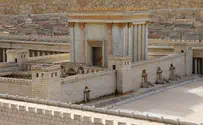
The most critical lesson of Purim that our generation can take from the story of Esther is the need for Jewish Unity, above all else.

In our generation, and those immediately prior, we can note similarities to the Purim story

A unique perspective on the Parsha offers a further glimpse into the depravity that is the International Courts
The entirety of the splitting of the sea was in the merit of Yoseph, and the sacrifices that Yosef made.
In order to become a “convert”, a National Identity must be established.
The Neshamot of the Shevatim accompanied and shielded their descendants during the teeth of the Egyptian exile.