
The natural world obeys fixed rules. Combine more than a tiny piece of sodium with water and an explosion will follow – every single time (as my friends and I discovered in high school after ignoring our chemistry teacher’s instructions). Neither the sodium nor the water can opt not to explode. They have no free will.
We humans are different. We govern our own behavior. Yes, moods, passions, and prior events orient us toward certain paths, but ultimately we’re in control. The godly element in us can transcend the purely physical element.
That’s one of the lessons of the Ten Commandments. The Midrash famously relates that the samech and mem sofis on the luchos floated in midair. That was possible because the letters stood above the natural order. They were engraved on the luchos (Shemos 32:16), but Pirkei Avos suggests that we should read the Hebrew word for engraved – charus – as cherus, which means freedom. In other words, we should read Shemos 32:16 as telling us that the letters on the luchos stood “in free mastery over the Tablets,” writes Rav Samson Raphael Hirsch.
But the letters did even more than that. They actually “bore and held the Tablets.” They made the luchos light (possibly even weightless), enabling Moshe to carry them. When the sin of the Golden Calf caused the letters to fly upward to heaven, Moshe suddenly found the luchos unbearably heavy and was forced to drop them, according to the Midrash.
All these miracles teach us about man’s ability to soar above the determinism of nature’s laws:
“Just as the writing of the Divine Testimony [was] not only independent of the material [i.e., the luchos] but raise[d] the material serving it to its own level of freedom above the ordinary laws of nature that govern matter, so too human beings who take upon themselves the spirit of this writing and make themselves the representatives of this spirit are raised, borne, and held by this very spirit itself above the blind force of ‘you must,’ the lack of free will which clings to all matter – i.e., they become free.”
All of us can rise above the rules of inexorable nature, but to do so, we must cling to that which is not subject to these rules: the letters of the Torah.
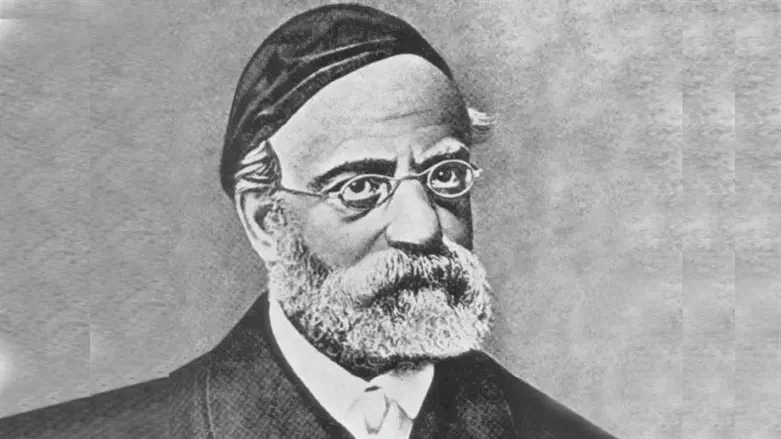
Rav Samson Raphael Hirsch (1808-1888) – head of the Jewish community in Frankfurt, Germany for over 35 years – was a prolific writer whose ideas, passion, and brilliance helped save German Jewry from the onslaught of modernity.
Elliot Resnick, PhD, is the host of “The Elliot Resnick Show” and the editor of an upcoming work on etymological explanations in Rav Samson Raphael Hirsch’s commentary on Chumash.
...