

Ten times on Yom Kippur, the kohen gadol washed his hands and feet. Every time he doffed his golden garments and donned his white ones – or vice versa – he sanctified his hands and feet with water from the kiyor.
Interestingly, he also washed these limbs at the end of Yom Kippur, right before he removed his Yom Kippur clothing for the last time and put on his weekday clothing. Why? Sanctification – kiddush yadayim v’raglayim – is only necessary before performing a service in the Temple. What “service” did the kohen gadol perform by switching out of his yom tov clothing and putting on weekday attire?
Rav Samson Raphael Hirsch answers: The washing of the kohen gadol’s hands and feet at this moment teaches us “that the whole life inside the Sanctuary and all the rituals that are performed in it only have meaning and value in the concrete life outside the Sanctuary which is to be based on the spirit gained within it, and that what is striven for in the bigdei kodesh must wait for its true meaning for what is accomplished in the bigdei chol.”
For this reason, Rav Hirsch calls the very last kiddush yadayim v’raglayim of Yom Kippur “the most significant.”
Many are the lessons we learn and moments of inspiration we experience in a beis medrash or beis knesses. But they must never remain there. A study hall or shul (which means “school” in German, as Rav Hirsch points out in his Nineteen Letters) is only truly successful if we – its students – apply the lessons we learn within its walls to our daily life outside them.
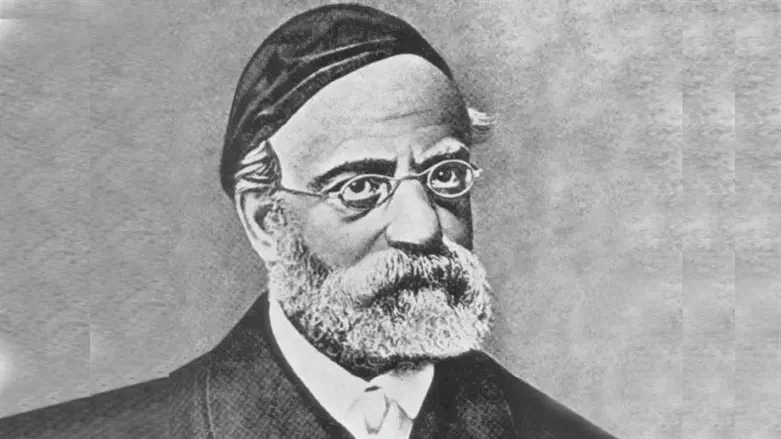
Rav Samson Raphael Hirsch (1808-1888) – head of the Jewish community in Frankfurt, Germany for over 35 years – was a prolific writer whose ideas, passion, and brilliance helped save German Jewry from the onslaught of modernity.
Elliot Resnick, PhD, is the host of “The Elliot Resnick Show” and the editor of an upcoming work on etymological explanations in Rav Samson Raphael Hirsch’s commentary on Chumash.
...