
On June 5, 2000, Lord Jonathan Sacks – the former chief rabbi of Great Britain – delivered a lecture in Windsor Castle in which he said the following:
“To live in such a place [Windsor Castle], so steeped in history, is to want to know how it came to be and why. …I would learn about how it began, in the days of William the Conqueror…. I would find that it had been rebuilt several times…in the days of Henry II, Henry III, and Edward III. In the course of learning this history I would…know that I had entered into a set of obligations – a moral relationship – with its past and future. …
“The very fact that the castle was here would tell me that its previous owners had endeavored to preserve it, protect it, and at times enhance it so that it could be handed on to future generations. They had vested their hopes in me, that I too would guard it and hand it on in turn to those who come after me.”
Modern man likes to think of himself as autonomous, free to act as he wishes. He rejects the notion that he has an obligation to those who came before him. Judaism, however, doesn’t. Quite the opposite, in fact. Every night in the Beis Hamikdash, after the day’s service was completed, a kohen would take some of the ashes from the korban tamid and place them neatly beside the eastern side of the mizbe’ach in preparation for the next day’s service (Leviticus 6:3). Why?
According to Rav Samson Raphael Hirsch, these ashes reminded all who saw them that the “Jewish ‘Today’ has to take its mission from the hand of its ‘Yesterday.’” He elaborates:
“Today brings no new mission; it has only to carry out, ever afresh, the mission that yesterday too was to accomplish. The very last Jewish grandchild stands there, before G-d, with the same mission of life that his first ancestors bore, and every day adds his contribution to all its predecessors in the whole passing of the centuries.”
Rav Hirsch suggests that this explanation for the ashes’ careful placement beside the mizbe’ach accounts for why misusing these ashes constitutes me’ilah even after the kohen properly deposits them there (which is an exception to the rule that kol shena’asah mitzvaso, ein bo mishum me’ilah). Since the ashes serve as a “remembrance of the past for all the future, it has a never-ending kedushah.”
Hashem created us all as individuals with independent minds. But that doesn’t mean we should live untethered to the past. We are all links in a long chain, and the daily placement of the previous day’s ashes next to the mizbe’ach reminded us of this fact.
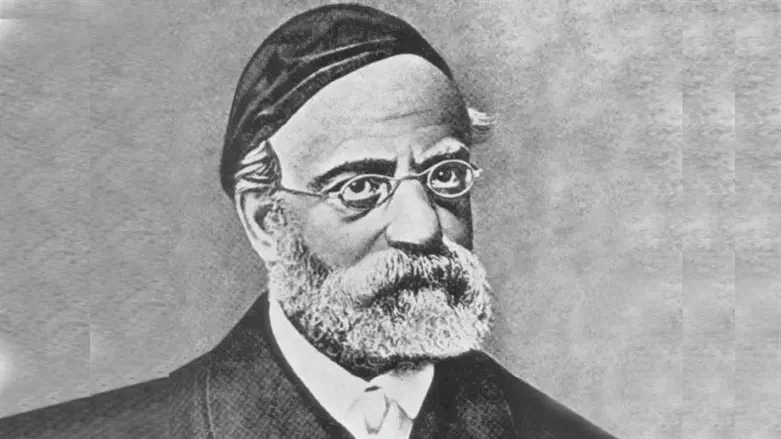
Rav Samson Raphael Hirsch (1808-1888) – head of the Jewish community in Frankfurt, Germany for over 35 years – was a prolific writer whose ideas, passion, and brilliance helped save German Jewry from the onslaught of modernity.
Elliot Resnick, PhD, is the host of “The Elliot Resnick Show” and the editor of an upcoming work on etymological explanations in Rav Samson Raphael Hirsch’s commentary on Chumash.
...