Eradicating Impurities from Eretz Yisrael
Am Yisrael is poised to eradicate the tuma (impurities) from Eretz Yisrael.
Am Yisrael is poised to eradicate the tuma (impurities) from Eretz Yisrael.
What is the significance of the rainbow? What purpose does it serve, and what does it truly mean?
Religious Zionists study conneitions to the Holy Land in the parasha.
This week for Bereshit, we tried to understand, when Hashem says "let's create a man in our image" - who's He talking to?
If the Torah is a sefer of mitzvot, why does the Torah start with Creation and not the first mitzvah?
The wonderful Torah supporting partnership of Zebulun and Asher is explored y various Torah Sages as we prepare for Simchat Torah.
What is the essence of Moshe's farewell message to Am Yisrael just before his passing?

Venture into the depths of Shirat Ha'azinu, a poetic & profound masterpiece, & peel back the many layers & levels hidden in a single verse.

Religious Zionist scholars connect the parasha with the Land of Israel.
In order to believe in G-d, one must be willing to accept that we don’t know the whole story.
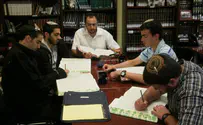
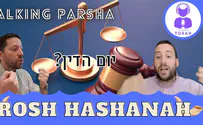
In this episode, we delve into the profound concept of Rosh Hashanah as the Day of Judgment.
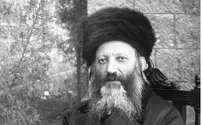
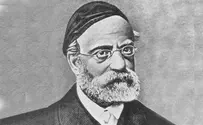
Israel's first Chief Rabbi: "Guard your pinteleh Yid"- your spark of yiddishkeit.
Why does Moshe posit that the surrounding nations will question, while Am Yisrael do not? And what does, 'the concealed is for G-d,' mean?

“In matters of style, swim with the current; in matters of principle, stand like a rock.” --Thomas Jefferson

Life is more than the absence of death.
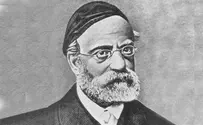
As we read our Parasha approaching the Day of Judgement, it guides us as to the ‘life’ for which we should fervently plead, on that Day.
When the Klausenburger Rebbe demanded the curses be read aloud.
Which has permanent reality?
Moshe discusses the miracles witnessed yet asserts that Hashem did not grant them the heart to comprehend and the eyes to perceive.
“No one is useless in this world who lightens the burdens of another.” ― Charles Dickens

Younr religioius Zionist Torah scholars study the connections between the parasha and the Land of Israel.
The commandment to both remember and erase raises an immediate paradox. How can one remember while simultaneously erasing?
Commentaries weigh in on how waging war against enemies is what is ‘upright in the eyes of Hashem’.
Marriage is much more than a physical union.
Life is indeed a very narrow slippery bridge whose floor is broken, but Hashem provided the Jewish nation with protective side rails.
In this week's exploration, we delve into the initial verses of the Parsha, with a spotlight on the renowned proclamation to pursue justice.

Learn how the Torah guarantees that justice is administered - and a comparison to Israel's court system.
These are the calls of Elul, Rosh Hashana, and Yom Kippur - awaken to your responsibilities, as the Rambam writes (Tshuva chapter 3).
If Judaism Is immutable, how can it be relevant?
Young religious Zionist Torah scholars connect each Torah Reading with the Land of Israel.
Never forget this great lesson of the Torah – “Tzedek, tzedek tirdof,” – “Justice, justice you shall pursue.

If something is important to you, you know its magnitude.

The late Menachem Begin is often quoted as saying there are judges in Jerusalem, but the phrase is taken out of context.
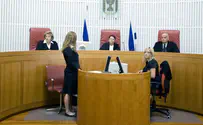
Judaism is the NATIONAL CONSTITUTION of the Jewish NATION. And that can only come about in the Land of Israel.

Career coaching in the parasha: Shoftim: The buck stops here!

With what perspective can judges administer punishment for sins?
Young religious Zionist scholars find the connections to the the Holy Land in the parasha.
Moshe articulates our nation's mission statement - but associates it with apparently unrelated commandments. Why?
True, we have returned home - a giant leap towards the goal, however there are deep pitfalls still in front of us.
What is the fate of Jews today who are already in the galut and refuse to reunite with Yerushalayim and Eretz Yisrael?
Young Israeli religious Zionist Torah scholars on the parasha's connection to the Land of Israel.
What words, advice, or events are burnished in fire within you that you wish to pass down?

What lies at the heart of the relationship between Shabbat and honoring your parents?

Israel's first Chief Rabbi: What happened to the broken tablets?
What did Moses say that caused our ancestors to change their minds?
In this week's video, we delve into Parashat Devarim, where Moshe revisits the story of establishing Am Yisrael's justice system.

Moshe received the Torah at Sinai forty years prior to his speech.Why does he share his words only now?
Moshe rebuked them only a short while before his death. From whom did he learn this? From Yaakov. Why did Yaakov wait to rebuke his sons?
We aren’t the only people to whom G-d assigned a land.
In this week's video, we delve into the story of the 2.5 tribes who approach Moshe with a request to settle east of the Jordan River.
Young Religious Zionist Torah scholars connect this week's Torah reading with the Land of Israel.
Various commentators weigh in on the power of speech.

"Our children, our wives, our flocks" -The tribes striving for work-family balance.

Those who don't, will remain in the desert.

Why does the Torah list all 42 of these stations? What does this list add to our knowledge or understanding?
Our environment sets a tone for our lives.
Tolerance is lauded in the modern West, but it isn’t always a virtue in Judaism.
The direct adjacency of Milchemet Midian and the story of B’nei Gad and Reuven tell us that we need to peer deeper.
Uncover the profound lessons within their story as we explore the motivations and actions of these extraordinary women.

Israel's first Chief Rabbi: Why does the Torah point out Pinchas’ lineage twice?