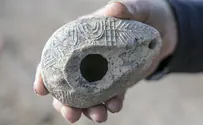
Zealotry - for Hashem
Zealotry, like every other aspect of a Jew's life, has halakhic boundaries and limitations..
Zealotry, like every other aspect of a Jew's life, has halakhic boundaries and limitations..
Thoughts on Parshat Pinchas.

A look at Zimri and what his messianic hopes tell us.
Young religious Zionist Torah scholars: Why did the Torah require the division of the Land of Israel to be done specifically by a lot?
To what degree will we be missed when we’re not there?
In this parasha, women affirm their rights by respectfully turning to Moshe Rabbenu, who carefully addresses the question halakhically.

On the surface, the Torah appears to play a game of chance in one of the most important decisions our people ever made, dividing the land.

Young religious Zionist Torah scholars explain the vese|: How goodly are your tents, Jacob....
Why is this week's Torah portion named after Balak, when Bilaam is such a significant presence in the story?

"Tell me who your friends are"...Strive for win-win relationships at work and beyond .

Three questions with one answer.
What is the real sin of Moses and Aaron that keeps them from entering the land?
The double parashah which communities in exile will read this week, Chukkat-Balak, can happen only in exile, never in Israel.
Insights into the Torah readings Chukat (Diaspora) and Balak (Israel)
Delve into the captivating story of the Nachash Nechoshet, the Copper Snake, in this week's intriguing video.
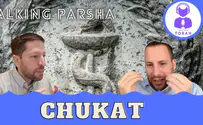
Why did Hashem command Moshe to make the lifeless serpent, and to raise it on a pole?

Managing generational diversity.
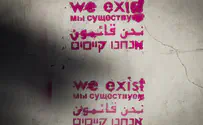
Let there be life!
Humour is wonderful, but humour can also be dangerous.
The almond tree' symbolizes the spirit of the tribe of Levi. How?
Young religious Zionist Torah scholars connect the parsha to Eretz Yisrael: Why was Moshe's punishment not entering the Land of Israel?
A unique collection of essays by contemporary renowned rabbis on the parasha.
How could Moses be sure his threat would work?
Young religious Zionist Torah scholars find lessons in the parsha related to the Holy Land.
While Korach's name takes center stage, others, including Datan and Aviram, are also mentioned amidst the chaos. What makes them stand out?
There is a surprising reason that Moshe changed the name of one of the spies and not the others.
Four messages from the parasha for graduates.

Why does the Torah present this seemingly random commandment immediately after one of the most well-known stories of sin and consequence?
A single gesture toward a baby reverberates throughout History.
Didn't everyone know there would be trouble?
We should never forget that whatever it is we’re doing or saying in life, it’s never totally off the record, because the mic is always on.
This week's Torah portion in the Diaspora, *Behaalotcha*, the third parasha in the book of Numbers, was read in Israel this past Shabbat..

Is ascetisim what is requested from us?
Why did Am Yisrael require trumpets for gathering and signaling their departure? How do the trumpets impact our relationship with Hashem?
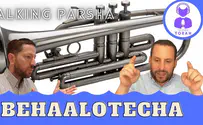
Why in Parashat Behaalotcha, trumpets are blown in war, while in Parashat Ki Teitzei victory is not dependent upon blowing the trumpets?
How can we implore Hashem to grant us favor when the Torah teaches us that He neither shows favoritism nor accepts bribes?
Parashat Naso contains the laws of the Sotah - a woman suspected of adultery,
A selection of well-known contemporary commentators on the parasha and the upcoming holiday.
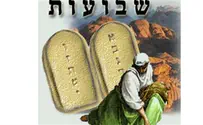
For Jerusalem Day. The paratroopers weeping at the Western Wall have become a symbol.(Note: An insight on the parsha is included at the end)
Shmitta is the most difficult mitzva.What special relevance does the Mitzvah of Shemitah have to Har Sinai?.
Selected readings on the parasha by well known contemporary rabbinic figures.

The “Tochacha” (reproach and admonition) in parashat Bechukotai. What is missing?
The story of the Jewish people: Our tears are always mixed with joy and our joy is always laden with a heavy dose of accompanying tears.
A selection of popular modern-day commentators on the parasha.
Only grain from Israel may be used in the Omer and the Two Loaves offerings.
Why does the Torah discuss the holidays and then follow it with seemingly unrelated subjects? And what does this teach us about ourselves?

From the moment we’re born, whether we like it or not, we’re all living in a fishbowl – people are noticing us.
Words from the Torah that are not easy to apply/:
Israel's first Ashkenazic Chief Rabbi: There is a joy that is far greater than the sensory pleasures experienced when consuming food.
Rabbi Tarfon said:'I would be amazed, if there is any person in this generation who will accept rebuke;' And what would we say?

Young religiious Zionist Torah scholars teach connections to the Land in the parasha.

One cannot pick and choose mitzvot.
If we’re alive, it means G-d wants us to be alive, and we must “serve Him with all our might."
it appears that Hashem's agenda for our nation does not stop with a thin strip of land at the eastern end of the Mediterranean Sea.
How do we live "through" the mitzvot?
What shames you most: The story of the 4 lepers in our own lives.
What is the significance of this connection?
Why does the Torah mention the commandment of circumcision only incidentally? Why not expand more on it, if it's so important?
Young Israeli Torah scholars in Religious Zionist yeshivas: Why do the laws of tzara’at of houses apply exclusively in Eretz Yisrael?
Dvar Torah for Parashat Shemini: This week the Chief Rabbi explains the hidden depth of numbers in Jewish teaching.