

If a married woman commits adultery, she and her paramour are sentenced to death by strangulation. If, however, she was merely “engaged” (meaning, she had only completed the first stage of halakhic marriage, known as eirusin), she and her accomplice are sentenced to death by stoning (if she was a besulah).
Stoning is a more severe form of punishment than strangulation, so why is an unfaithful semi-married woman – who was never even intimate with her husband – stoned if an unfaithful fully married woman is strangulated? Shouldn’t the reverse be the case?
Rav Samson Raphael Hirsch answers this question, in part, by arguing that the basis of marriage is, not sexual intimacy, but a “purely mental and spiritual expression of will.” Indeed, this expression is what “makes marriage into marriage.”
Modern society glorifies physical gratification. Indeed, this glorification lies at the heart of the LGBT movement. That’s why it refuses to even consider the possibility of marriage between a man and a woman without total physical attraction and satisfaction.
The Torah of course sanctions physical intimacy between man and wife, but it sees the basis of marriage as other than physical. By punishing “the sin against eirusin (at naarah besulah) with the worst form of punishment, sekilah, [the Torah] significantly stresses the spiritual moral factor, uninfluenced by the physical one, as the fundamental factor of Jewish marriage.”
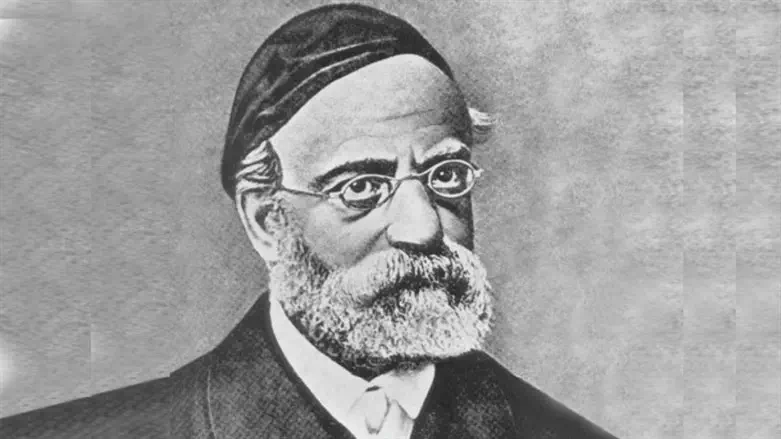
Rav Samson Raphael Hirsch (1808-1888) – head of the Jewish community in Frankfurt, Germany for over 35 years – was a prolific writer whose ideas, passion, and brilliance helped save German Jewry from the onslaught of modernity.
Elliot Resnick, PhD, is the host of “The Elliot Resnick Show” and the editor of an upcoming work on etymological explanations in Rav Samson Raphael Hirsch’s commentary on Chumash.