
A Torah of fire
As we begin reading the Torah from Bereishit, we pause to contemplate what the Torah is rooted in.
As we begin reading the Torah from Bereishit, we pause to contemplate what the Torah is rooted in.
What is the significance of the changes at the end of two blessings in the Silent Prayer during the 10 Days of Repentance between Rosh Hashana and Yom Kippur?
Teshuva comes to us through manifestations that can be divided into four eternal, absolute values which appear in a cognizant step-by-step fashion. These values are honor, love, knowledge, and life.
When we rush to address problems before their time, even good intentions can produce harmful results and prevent much good.
While Rabbi Kook emphasizes that the teshuva of the Jewish People and a return to the Torah go hand-in-hand, he indicates that a preliminary stage of national revival will begin this spiritual awakening.
My father, the Rav HaNazir, and Rav Tzvi Yehudah were of the opinion that everyone is obligated to go out and fight. This was a milhemet mitzvah, a compulsory war, in which all are expected to participate.
Why are we allowed to kill animals for food?
Excerpted from the biography “Above the Stream" by Tzvi Fishman,
One who is closer to the Land of Israel, and demonstrates a greater connection to it, comes first for blessing.

What does it mean to love God וּבְכָל מְאֹדֶךָ - "with all your might"?
The Sages knew at what hour one could hear heavenly cries: "Woe to My children! On account of their sins, I have destroyed My House and set fire to My sanctuary and exiled them among the nations of the world." (Berakhot 3a)
The nation may not be ready for the actual rebuilding of the Beit HaMikdash, we still feel the soul’s yearning for this lofty spiritual splendor.
There is a very peculiar Talmudic tradition about the purpose of the new moon sin-offering. For whom does this offering atone?
When we pray be'emet, 'in Truth' we aspire to uncover the inner meaning of our existence, the very essence of our lives.
The breadth and depth of knowledge required for true Torah scholarship must come at the expense of pleasures and leisure activities that are acceptable for the general population.
Tzvi Fishman interviews Rabbi David Samson on the idea that everyone can connect to his letter in the Torah as brought in the thought of Rabbi Kook.
Not every leader or judge maintains the standards of integrity that his public office demands.
Why did the Sages decide to add this particular paragraph about Tzitzit, out of the entire Torah, to the central prayer of Judaism?
The deeper meaning of "we will do and we will obey.".
Letters are more than just elements of speech. They are the building blocks of creation.
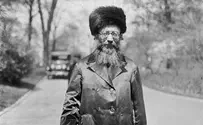
A “good name" is not a record of one’s spiritual and moral achievements.
The Hebrew word for charity, tzedakah, derives from tzedek, meaning “justice."
The labor demanded of us is the labor of creation: to give voice to Torah, so that its light may spread and uplift the life of the nation.
How did King David spend his nights?
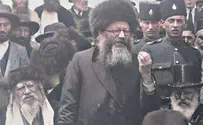
What makes a person truly free?
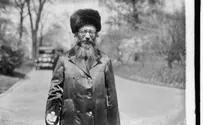
Why does the Torah not require covering the blood after slaughter for cattle, sheep, and goats?
Why did God command that we bring korbanot (Temple offerings)? What is the purpose of this form of serving God?
The Talmudic Sages' views on Persia.
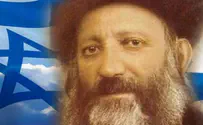
What did our Sages mean when they said that the Mem and the Samekh in the Luchot stood miraculously?
These special clothes indicate that the kohanim suffer from a fundamental dissonance.
What is the significance of this unique animal, the Tachash? How are they like the Erev Rav?
How did Moses first present the Torah and its laws to Israel?
In the book “Eight Journals" Yaacov David Shulman has succeeded in remaining faithful to the Hebrew text while capturing the poetic style of Rabbi Kook’s often intricate prose.
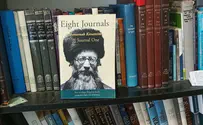
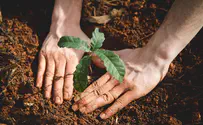
“Rabbi," Rabbi Gold asked of Rav Kook, “why were you so deeply moved by the planting of a single tree?
It is not enough to free slaves. They must be trained for independence, courage, and aspiration.
Rare documentary footage from 1971 shows Rabbi David Cohen, the Nazirite Rabbi, one of Rabbi Kook's greatest disciples.
Two special jewels symbolize two special traits of the Jewish people.
What do these enigmatic names - ‘I Will Be Who I Will Be’ and ‘I Will Be’ - mean?
Much good can result from recalling the punishment for wrongdoing, even if this motivation may appear beneath one’s spiritual stature.
"The Jewish people are crowned with two qualities, Eidut (testimony) and Torah, one seen in Joseph and the other in Judah."
The interpreter has a key function in the realization of a dream: his analysis can determine how the dream will come to pass.
Why does the blessing mention one light when we light an ascending number of candles on the holiday?
My Jewish brethren, come to Eretz Yisrael - here you will know that you are alive, living a life that is worthy of its name, in the land of life.
The prohibition of gid ha-nasheh is meant to project a broad ethical aspiration, beyond the issue of how we should treat animals.
Each of the three daily prayers has its own special nature.
Isaac appreciated Esau’s ability to hunt and dominate the beasts, the trait needed to dominate bestial peoples. Could Yaakov do the same?
It is the “Patriarchs’ acts of kindness” and their vibrant, natural Torah that will redeem their descendants in the final generation
Israel's first Chief Rabbi presciently writes about how a return from almost certain death, similar to the return of the living hostages a short while ago, affects a person and the nation.
Abraham and his revolutionary faith kindled a nascent spark of faith among the nations.
The Talmud states in Megillah 9b: “May the beauty of Yefeth reside in the tents of Shem.” How can that be?
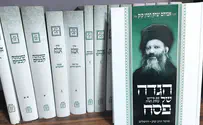
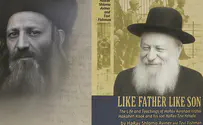
On the book that presents intimate descriptions of two giants of Torah and their teachings, set against the dramatic rebirth of the Land of Israel and the Statehood of Israel in our times.
According to Rav Kook, the Torah of Eretz Yisrael is fundamentally different in its method and scope.

Why does this holiday of rejoicing immediately follow the High Holidays?
To withdraw into solitude, imagining that this leads to closeness with God, is foreign to the Torah’s vision.
Should we try to understand the true reasons for the Torah’s commandments?
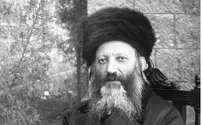
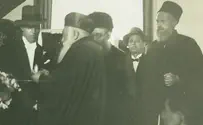
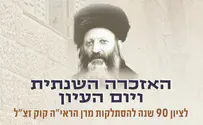
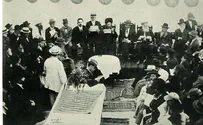
On the 90th yahrzeit of the Torah luminary who was the great visionary of Religious Zionism and the first chief rabbi of Israel, read about his final moments.
Unlike the weekday Amidah, which contains nineteen blessings, the Amidah for Shabbat contains only seven. Why?
Most of us know the famous verse asking that question and the answer that follows it. But what does it mean?
In times of turmoil, we turn to ancient words of hope, to visions of a world where peace is not just a fleeting wish but a lived reality.
How does prayer work?