
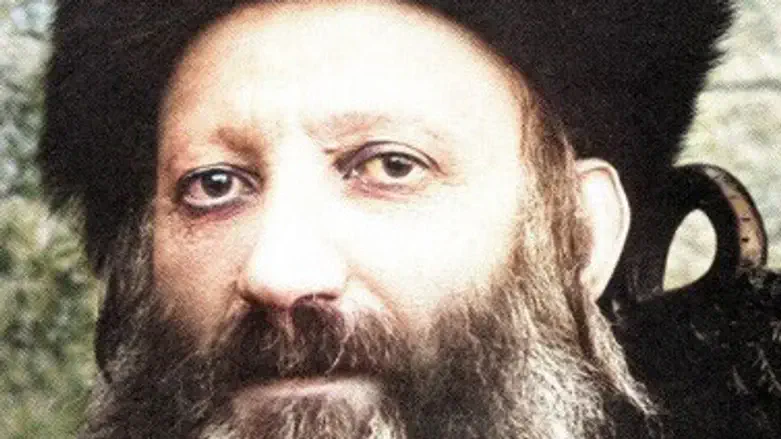
The celebrated first Chief Rabbi of pre-state Israel, Rav Avraham Yitzchak HaCohen Kook (1865-1935) is recognized as being among the most important Jewish thinkers of all time. His writings reflect the mystic's search for underlying unity in all aspects of life and the world, and his unique personality similarly united a rare combination of talents and gifts.He was the undisputed leader of Religious Zionism, defining the Jewish People and the Land of Israel as entities with specific commandments in the Torah of Israel, a construct known as Torat Eretz Yisrael.
Rav Kook was a prominent rabbinical authority and active public leader, but at the same time a deeply religious mystic. He was both Talmudic scholar and poet, original thinker and saintly tzaddik.
Every year at the Passover seder, we read Ezekiel’s allegorical description of the Israelites in Egypt:
“You grew big and tall. You came with great adornments and were beautiful of form, with flowing hair. But you were naked and bare." (Ezekiel 16:7)
The prophet portrays a striking paradox. The Israelites had become large and numerous, yet at the same time, impoverished and barren. Physically, Jacob’s family of seventy had developed into a nation. Despite persecution and oppression, they multiplied. Morally and spiritually, however, they were “naked and bare."
What, then, are the “great adornments" the verse mentions? What were these “jewels" of Israel?
Two Special Jewels
These “jewels" symbolize two special traits of the Jewish people.
The first is a natural propensity for spirituality, an inner desire never to be separated from God and holiness.
The second is an even greater gift, beyond the natural realm. It is the unique collective spirit of Israel, which aspires toward a lofty national destiny. Even in their dispirited state as downtrodden slaves in Egypt, their inner drive for national purpose burned like a glowing coal. It smoldered in the heart of each individual, even if many did not understand its true nature.
For the Hebrew slaves, however, these special qualities were like priceless diamonds pinned to the threadbare garments of a beggar. The people lacked the basic traits of decency and integrity. They were missing those ethical qualities that are close to human nature, like clothes worn next to the body.
Without a fundamental level of morality and proper conduct, their lofty aspirations for spiritual greatness had the sardonic effect of extravagant jewelry pinned to tattered clothes. “You came with great adornments, but you were naked and bare."
(Silver from the Land of Israel. Adapted from Olat Re’iyah vol. II, p. 276, sent by Rabbi Chanan Morrison, RavkookTorah.org)