
Torah Mitzion on the Parasha:
The essence of the Regalim
Sefer Devarim does not replace the Torah given in the first four books; it illuminates it. The Regalim are an example.
Sefer Devarim does not replace the Torah given in the first four books; it illuminates it. The Regalim are an example.
In Parashat Chukat, Moshe reacts to the people's complaints, not as God's messenger but as a (hurt) individual.
One of the central questions arising from the Parasha is how a single individual managed to sweep away such a large and significant group and get them to rebel against Moshe.
Human beings rarely become resolute in their positions solely due to a perfect and brilliant logical argument. Korach knew that.
The key to victory and inheriting the land does not depend on the strength of the fortified cities, but on the measure of our devotion and faith in Hashem and His promises.

Shavuot is two days in the Diaspora, one day in Israel. Thus, whle Israel read the regular weekly portion, Naso, last Shabbat, (and will read Behaalotcha this coming Shabbat), Diaspora Jewry read a Shavuot portion last Shabbat and will read Naso this coming Shabbat.

The pairing of Behar-Bechukotai raises the question: were they originally defined as two parashot later joined when needed, or perhaps originally defined as a single parashah that sometimes had to be split? And what is the role of the Kohanim?
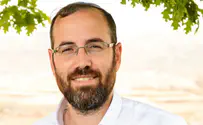
The writer, a bereaved parent who lost two sons on October 7, 2023, strenghthens the Jewish People despite his pain.
" Thus said the Holy One to Israel: My children, do I lack anything? What do I seek from you? I seek only that you love one another, and honor one another..."
The Mishkan is here to remind us of that. Hashem has brought presence to Space. Parashat Hachodesh tells us that this presence occurs in time.
“Remember what Amalek did to you on the way, after you left Egypt… you shall blot out the memory of Amalek from under heaven; do not forget."
Our synagogues, like the Temple, must be a Beit Midrash, a Beit Tefilah and a Beit Kenesset.

Does this commandment have any practical application, as do the other commandments of the parashah?
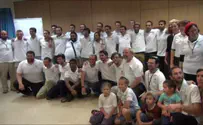
One can see in Seudat Yitro, celebrated by Tunisian Jews on the Thursday before Shabbat Parashat Yitro, an invitation to reconsider the boundaries of belonging and the possibility of lending an ear to wisdom that comes from outside.

Do we show gratitude to someone who helped us if he also benefitted? What does it signify to show gratitude to inanimate objects as Moses did?
The Midrash identifies Manasseh and Ephraim not only as concrete individuals, but also their descendants Yehoshua and Gideon. What is that based on?
In this parasha, we learn about Judah, the leader of the tribe that will give the Israelites the kingdom of David and ultimately, the Messiah.
From the root of the word atar (“to entreat”), the Sages derived that prayer is heard only when there is peace among those praying.
The use of egg donors raises many halakhic and ethical questions.

Who is greater? Noah or Avraham. Let us compare the two following the example of Chazal..
The significance of hakhel goes beyond the reading itself.
The Torah believes in our ability to repair ourselves as individuals and to repair society as a whole, so why do we need an external force?
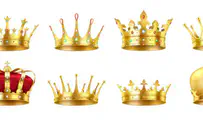
“To His dwelling you shall seek, and there you shall come.” Why not identify the place in the Torah?
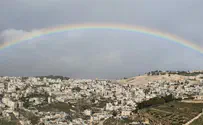
Rav Kook spoke at length about fear of Heaven and did not spare criticism of the mistakes in the meaning of the concept.
The Nine Days, and Tisha B'Av in particular, are days in which we can reflect on our connection with the other citizens of Israel and Jews around the world.

A donkey that can talk is not an original invention for the Shrek movie; we are actually going to read about it in the portion of the week.
Hasidic thought explains that Shavuot is not only a time of learning but a time of heart repair.
The shmita year reminds the Jewish people that they are slaves of G-d, and therefore everything they own should be used to serve Him, whether land or people.
This Yom Hazikaron, Torah Mitzion honors the life, spirit, and legacy of Rabbi Avraham Yosef (Avi) Goldberg Hy"d, a true model of Torah, leadership, and heroism.

Those who fought and those who went to their deaths with heads held high. All are holy.
What is the difference between the two sin offerings and is there a psychological insight in that difference?
The sanctity of Am Yisrael does not stem from the individual alone but from each person’s ability to contribute to the greater good.
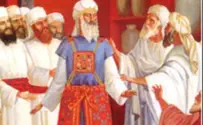
The reason offered here for the High Priest's special garments connects with an added dvar Torah about choosing a king before erasing Amalek.
The covenant is established through both aspects—the "big" revelations and the "small" laws—together leading to spiritual heights.

Why are there three traditions regarding the division of the first verses in the Ten Commandments?

Dedicated to talented young violinist Agam Berger, freed from captivity as was Miriam the prophetess who sang at the Red Sea. Two who both believe in the power of music.
We count the months starting from the Exodus from Egypt.
It’s not enough to appreciate the good that we get from others; we must take time to act in a way that shows just how much we appreciate it.
The explanation of two Reb Yaakovs.
There are two ways to understand this mitzva and both are not easy to perform.
Personal drive, self-induced pressure and competition have become the Pharaohs of today, the master we serve.

A leader's strength is in redirecting behavior, turning a snake into a staff.
Why do we fast on Friday instead of pushing off or moving this seemingly minor fast on day back?
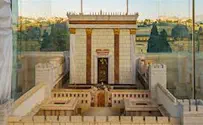
We must ask ourselves what the light of Hanukkah means to us.
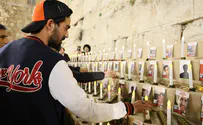
“The merit of Eretz Yisrael will protect me and my family, that no harm should befall us, and no harm should befall all of Israel…”
Isaac had hoped that cooperation would be possible between his two sons. It was not to be.
Commandments between man and G-d or man and his fellow man - which are more important?
The etrog should be kept away from moisture. This is in order to preserve its beauty for the entire duration of Sukkot.
In order to believe in G-d, one must be willing to accept that we don’t know the whole story.
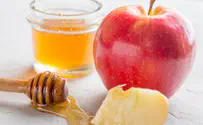
For a sweet year."Le- Shana Tova uMetuka" But is there more to this symbol than its sweet taste?
Joy appears from giving. The first fruits narrative shows it.
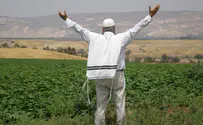
Why is the prohibition of Kilei hakerem so severe? What precisely is prohibited?
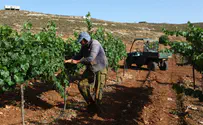
The service in the Beit Hamikdash is the prototype of all the mitzvot.
What is the promise of Jewish history? Is it the salvation that we have repeatedly experienced, or is the suffering part of the promise?
Moshe received the Torah at Sinai forty years prior to his speech.Why does he share his words only now?
What is the real sin of Moses and Aaron that keeps them from entering the land?
Is ascetisim what is requested from us?
For Jerusalem Day. The paratroopers weeping at the Western Wall have become a symbol.(Note: An insight on the parsha is included at the end)
How do we live "through" the mitzvot?
The Cohen went out towards the person in need of help, even if that person was hesitant. That is still our responsiblity to society.