
by David Weinberg
Shaliach in Montreal
An intriguing anomaly in the Jewish calendar is set to occur this week—one that's sporadic and quite unique. I'm referring to the Fast of Asarah B’Tevet, that falls on a Friday this year. It's remarkable because it's the only fast day observed on a Friday.
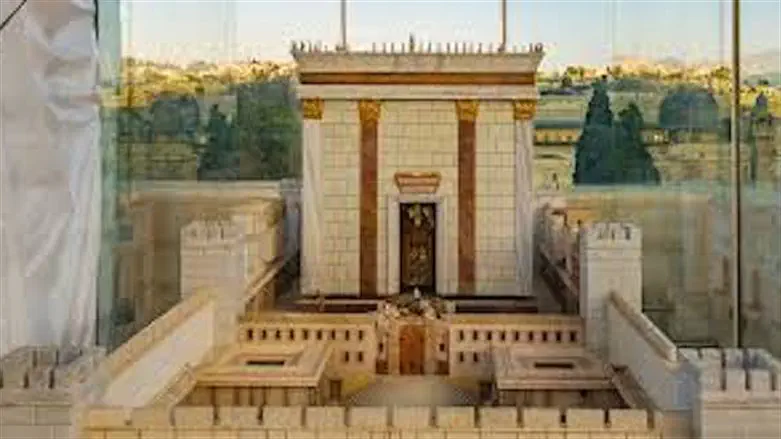
Asarah B’Tevet marks the day when the wicked Babylonian king, Nevuchadnetzar, initiated his siege of Yerushalayim, signaling the beginning of the end for the first Beit Hamikdash. Consequently, Chazal decreed it as a public fast, one of four commemorating the catastrophes associated with the destruction of both Batei HaMikdash.
What makes Asarah B’Tevet’s Friday observance intriguing is the Talmudic debate on conducting fasts on a Friday, considering the reverence for Shabbat. However, according to our calendar, a Friday fast is unique to Asarah B’Tevet, occurring quite infrequently.
Yet, for this fast to stand out as the sole one observed on a Friday, it holds exceptional characteristics. Notably, according to the AbuDraham, if Asarah B’Tevet were to fall on Shabbat, fasting on Shabbat would be mandatory! Although our current calendar doesn't allow for this scenario, the verse from Yechezkel that the siege transpired “B’etzem HaYom HaZeh” (Ch. 24, verse 2) suggests the fast must be observed on that precise day, irrespective of conflicting occurrences, potentially explaining its Friday observance.
The AbuDraham's statement is astonishing. How could a Rabbinic fast override the Biblical Shabbat, second only to Yom Kippur in precedence? Additionally, Asarah B’Tevet commemorates the siege's start, not any actual destruction, raising questions about its importance compared to Tisha B’Av, commemorating the loss of both Batei HaMikdash.
Rishonim like Rashi and the Rambam explicitly state that if Asarah B’Tevet falls on Shabbat, it gets postponed, challenging the AbuDraham's assertion.
Some authorities, including Rav Yonatan Eibeschutz and the Bnei Yissaschar, interpret the AbuDraham’s statement akin to the Talmudic reference about Tisha B’Av. Historically, the Beit HaMikdash began burning on the 9th of Av and was destroyed on the 10th, emphasizing the severity of initial tragedy. Similarly, they argue that Asarah B’Tevet’s siege marked the beginning of a series of tragedies, justifying its potential to override Shabbat.
The Chatam Sofer takes this further, suggesting that on Asarah B’Tevet, a Heavenly decree determined the Beit HaMikdash's future destruction. According to a Talmudic principle, any generation without the rebuilt Beit HaMikdash is as if it has been destroyed again. Hence, each Asarah B’Tevet, the Heavenly court reconvenes, decreeing a new Churban, explaining why this seemingly minor fast holds the potential to override Shabbat. These explanations would also certainly explain why we would fast on a Friday for Asarah B’Tevet.
May we merit to see the Beit HaMikdash be speedily rebuilt!
For comments: dweinism@gmail.com