
Rabbi Mordechai Torczyner is Moreh d'asra of Congregation Eitz Chayim of Dogwood Park, and founding Rosh Beit Midrash of Toronto’s Beit Midrash Zichron Dov,an affiliate of Torah MiTzion.
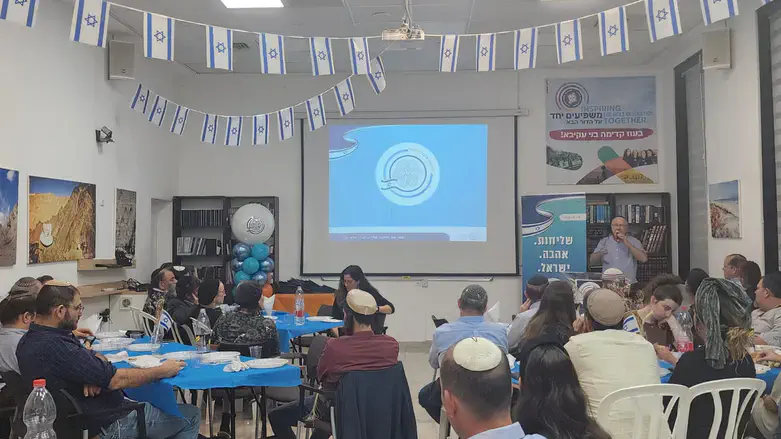
The mother of all Jewish conventions, the septennial hakhel gathering, features an assembly of Jews of all ages.
Devarim 31:12 records Moshe’s instruction, “Gather the nation: men, women, children, and the stranger at your gates.”
After the shemitah year, on the second night of Succot, all must assemble and hear sections of the book of Devarim read aloud.
Historically, this reading was done by the king, in an area of the Beit haMikdash.
The demand that children participate in the celebration is unique among our mitzvot; in no other communal mitzvah does the Torah explicitly require their participation. Rabbi Elazar ben Azaryah was sensitive to this quirk, and suggested that the reason to bring the children is “to provide reward for those who bring them. (Chagigah 3a)” This seems circular, though does the Talmud mean to say that Hashem created a mitzvah solely for the sake of rewarding those who fulfill it?
One might explain Rabbi Elazar ben Azaryah’s statement to mean that those who bring their children will be rewarded by the natural benefits resulting from their actions. For example: Sefer haChinuch (612) contends that hakhel increases our love of Torah, through the glory of this gathering.
Perhaps, then, having our children at hakhel rewards the bringers, by inculcating love of Torah into those children.
Alternatively, Ibn Ezra (Devarim 31:12) sees the benefit of hakhel as educational; those who attend will be inspired to ask questions, and then to learn more throughout the year.
Having our curious children at hakhel will inspire them to inquire and learn.
However, a third benefit of bringing children may be linked to the practice of having the king personally conduct the public reading. Rambam does not list hakhel as a king’s mitzvah, and indeed the Torah does not identify the reader explicitly.
However, our sages (Sotah 41a) took for granted that this should be the king. Certainly, there is added splendor and gravitas when the king leads a ritual, but why this ritual, in particular?
Every seven years, during the period of shemitah, the normal rules of society cease to function: the fences surrounding fields are broken, the tithes that support kohanim and leviyim are neglected, the hierarchical relationship between employer and employee is severed, hardworking farmers become men of leisure, and loans are forgiven and forgotten.
This can constitute a healthy break for society, and a community’s rules can be strengthened by this sort of periodic vacation. However, with such a hiatus we risk the possibility that the community might fall in love with its lawless vacation, and forget to return.
This may be part of the role of hakhel: To remind the Jewish nation that its existence is still governed by the rules and institutions of the Torah. Thus the nation reads key biblical passages: the fundamentals of our faith; the tithes given to the kohanim, the leviyim and the needy the monarchy and the national covenant into which we enter at the end of the book of Devarim. (Mishnah Sotah 7:8; Tosefta Sotah 7:17) We re-commit ourselves to these obligations, and to our national structure.
If restoring society’s principles is a goal, then having the king perform the reading is entirely logical; the king is the heart of the command structure. And bringing our children is then its own reward, for even children who are too young to comprehend the reading will realize that the entire community has assembled as one to hear the instructions of its king, and this will create a lasting appreciation for the honor of our government and society’s institutions.
Last week we performed a version of hakhel as we gathered to mark Rosh Hashanah. Among the central themes of that day was the coronation of Hashem as King, and this, too, was a necessary reminder of our command structure. We can go through much of our year, even while observing mitzvot, without devoting significant thought to the meaning and implications of “Hashem hu ha’Elokim.” Once each year we set aside time to gather with the explicit aim of coronating our King. May we, with our children, carry the impact of that grand celebration forward into the year.
For comments:torczyner@gmail.com