
Chayei Sarah: All her years were equally good
This is the only instance in the whole of Tanach, that the number of years of the life of a woman, is written.
This is the only instance in the whole of Tanach, that the number of years of the life of a woman, is written.
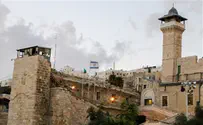
Israel's first Chief Rabbi: A certain spiritual peril lurks in any meal that we eat.
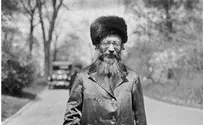
Three of the four parties that comprise our new government are halakha observers. The message is that we will begin asserting our rightfs.
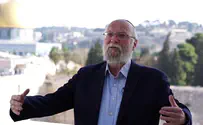
Young religious Zionist Torah scholars talk about the connection between Eretz Yisrael and the parsha.
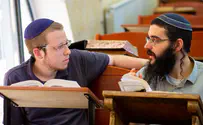
At the end of last week's parsha, we see that Avraham was already on his way to Israel. So why is Hashem telling him to go there?
Abraham’s descendants, the Jewish people, have shared his test and challenge with him over our long history.
Reading this week's parsha can show us the amazing development in Abraham's life regarding a crucial existential question.
Is stealing from one another really the reason for The Flood?
Judaism is the heavy stretcher of history, and the Torah observant are those supporting it for just one more kilometer and generation.
Young Religious Zionist Torah scholars research what this week's Torah reading says about the Promised Land.
The Bible doesn't menion what the fruit was, so where did the idea of an apple come from?

Israel's first Chief Rabbi: They were called nefilim, great orators whose words were empty and actions as leaders unscrupulous. A lesson.
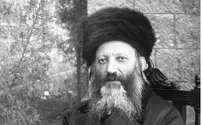
Why does the Torah tell us the story of Chava's creation, and why does the story end with a verse that's totally out of place?
Is man, knowing morality, always above beasts? Take Australia, known as “down under”- a most appropriate name after this week.
The story of Creation brings us closer to Hashem
What life was like within the Garden of Eden is pretty much an unknown to us.
The possibilities of what we might create by consulting with others are endless. And so are the possibilities for growth if we study Torah..

By reading the two parshiot on Simchat Torah, we allude to the crux of the Shma prayer - that Torah should be inscribed on our hearts. How?
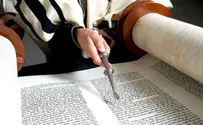
In contrast to the realm of halakha which is “less flexible”, Torah exegesis makes room for personal interpretation, but has criteria.
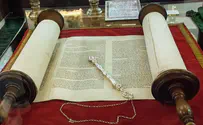
Our Parasha opens with the injunction:(32:1)’האזינו: Listen O Heavens, and I will speak; and may the earth hear the words of my mouth.’

Why does Moshe begin the song of Ha'azinu by speaking to the sky & the earth, & how is this connected to Yom Kippur & the holiday of Sukkot?
All the events of Jewish history are outlined in this parsha. Ramban called Moshe an exceptional prophet, and 750 years later,it sill holds.
This parsha especially gains in power and relevance as Jewish history unfolds over thousands of years.
A look at the commentaries on what it means to choose life for ourselves and future generations..

Why is Moshe offering the Jewish people a choice, but telling them what to choose? And who would choose death? What kind of choice is this?

Life doesn’t stand still; it is volatile and mercurial with resha’im dictating the direction of world affairs. Come before it's too late.
Often, the individual can hide behind the community. Sometimes it is essential for him to face personal scrutiny, to stand alone.

Israel's first Chief Rabbi: What was the significance of the ox? Why the golden horns and olive-twig crown? And why was the flute chosen?
Historically, Jews are able to trust in God, no matter what is occurring.
What do the commentators say about the Torah reprimanding or punishing us for not performing mitzvot joyfully?

The most bitter curse of all of those in the parasha is that future generations will undo all we have done.
Israel's first Chief Rabbi: Is this mitsva purely theoretical or does it have a deeper purpose?
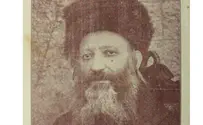
Commentators on this mitzva, ‘It follows, that the guard rail is in reality the guardian of the house, that it should remain in his hands!.’
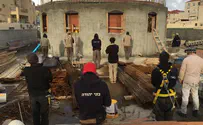
Why is the mitzvah to fence in a roof the one that the Torah emphasizes when it talks about building a new home?
Young Israeli Torah scholars on the issue of the beautiful female captive, the,eshet yefat toar. A decree from God or a life prescription?
He who cannot state proudly that he is one of Hashem’s chosen nation, can be Jewish but is far from being a Jew.
The mamzer is fully a Jew; obligated in all mitzvoth. But the spiritual consequences of his birth are profound.
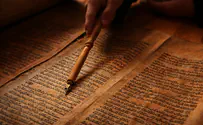
We are each expected to exercise judgement and restraint at our six gate points, the eyes, ears, nose and mouth. G-d is with us to help.

Iran/Persia, the hostile Ishmaelic state will go the way of Achashverosh and Haman. How Hashem will do it makes for fascinating theories.
There are four components of governance and guidance in the parasha. How are we doing?

How are the Jewish People supposed to know that a false prophet is a test, if we don't have the tools to cope with the situation?
Much of what we see as axiomatic has been discarded in today's society:marriage, two genders, individuality, even stealing is condoned.
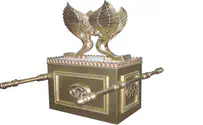
The word re’ah which means “see” is the key word in the parsha. This entails a vision for the future and its new demands in Eretz Yisrael.
The Prophet Haggai’s words about the Beit Hamikdash speak to us even as they did to the Jews in Israel of his generation:
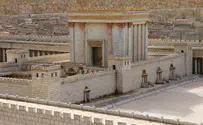
Maintaining the Land of Israel is not simply a matter of fulfilling the mitzva, but a basic element of Jewish life.

Israel's first Chief Rabbi: Why does the halakha have animals served before hunans?
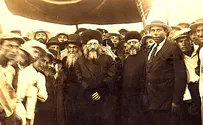
Eikev means a heel and "as a result of" - and the two are connected by God's admonition and promise of love. The views of commentators.
How can the nations of Canaan not behaving be the reason for the People of Israel conquering the land, if they are not behaving, either?
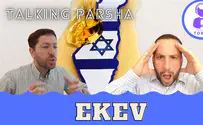
Moshe presents, throughout his discourse, both sides of the coin.Unfortunately, over the ages, the Jews have not always chosen wisely.
In no way can one compare the conduct of the so-called secular Zionists to the huge transgressions of the Jews in the desert. And yet...
This week's Torah portion discusses not adding or subtracting from the commandments. What's wrong with adding?

This week's haftarah is not only a message of consolation; it is a major hashkafic (philosophic) treatise and more.
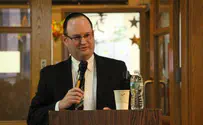
It is not your responsibility to finish the work [of perfecting the world], but you are not free to desist from it either – - Rabbi Tarfon,
This week, we have a lesson in woodwork - that isn't really about wood at all.
Rashi expounds:’Fair and good’: compromising, acting beyond the strict demands of the law. What do other commentators say?
Israel's first Chief Rabbi's prescient words: There are nations addicted to brute force and aggression and It becomes part of their pshyche.
The Torah wasn’t given to be kept in Sinai, nor in Brooklyn or Beverly Hills. The Torah isn’t a “religion” like Buddhism or Christianity,
Who is talking in the book of Devarim - is it Moshe giving his own speech? Or did Hashem command Moshe to give this speech?

Why does the Torah send an 'accidental' murderer to a city of refuge instead of banning the victim's blood relatives from taking revenge?
When 2.5 tribes ask to remain on the eastern side of the Jordan River, Moshe doesn't get upset that they don't want to enter the Land. Why?
