
Israel's 1st Chief Rabbi:
Vayeishev: The special teshuvah of Reuben
After repairing his soul, Reuben returned and looked at the pit.
After repairing his soul, Reuben returned and looked at the pit.
Something big is happening now in our world; changes which are on a Biblical scale.
Jewish resilience is incomparable, but when we understand who our ancestors were and the values they inculcated into us, we begin to understand where it comes from.
Parashat Vayeishev portrays the dilemma of Jacob and his rival sons.
First, how could the Mashiach be the product of a problematic union? Surely his ancestry has to be unblemished!
Why does it matter whether the worshippers gather around a pillar outside or pray inside a sanctuary?
The truth is that no one person can have everything.
The story of Jacob and the angel points to a time when the Jewish people will stand at the edge of return to their ancestral homeland, but hesitate to take the final step.

The essence of Yaakov is truth=emet, in its truest form.
No missing links.
Our dream, right now, is “Beshuv Hashem et-shivat Tziyyon” — “May Hashem enable the captives of Zion to come home.”
To love being Jewish is to strive to be as close to Hashem as humanly possible. And to be close to Hashem means to live in the land He gave the Jewish people.
Why did Hashem send Yaakov the angels on the ladder vision now?
Over and over, the Book of Bereshit emphasizes the centrality of Eretz Yisrael to Jewish life. Instead of merely reading through the events described in the Torah portion “Vayetze” in a superficial fashion, let’s take a deeper look through the eyes of our Sages.
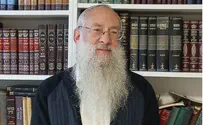
The actions of the Patriarchs were not performed in their time for their needs alone, but to give strength to their descendants. How did Jacob's tricking his father fall into that category?
Why not choose a wife for Yitschak from the families in Canaan? At a deeper level, the problem with the people of the land was not that they were idolatrous, but something harder to change.
On the 34th Yahrzeit (18th of Cheshvan) of my brother Ha’Rav Meir David Kahana z"l
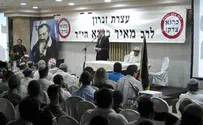
Young religious Zionist Torah scholars find allusions to Eretz Yisrael in the weekly parsha.
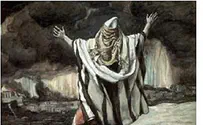
So what was this all about?

Abraham's great test shows that dedication to God must not simply be a result of a Divine decree, but that we must rise to the level of feeling love and great happiness in fulfilling His Word.
Guests do more for the host than the host does for them. The guests get a meal and a place to sleep while the host derives immense satisfaction and pleasure from providing for them - and merits a mitzva besides.
A significant portion of the Dutch population remains passive and even hostile towards Jews, maintaining virulent anti-Semitic sentiments. That explains what has occurred on a deeper level.
Abraham shows un that one must act to save himself, but also pray for G-d's salvation in case it does not work out.
Spending a lifetime polishing my coping mechanisms, how do I hear the call?
Beware becoming too intertwined with America.
Man left alone in his nature is pulled downwards. The Torah pushes us to hope for the future, to make progress, and to find new pathways to be productive at every moment in time.
What can we learn from the Torah's description of the "Tree of Life" situated in "the midst of the garden", in the centre of the garden?

Only through the combination of two attributes can we fulfill completely the words of the Song that promise: “because it will never be lost from the mouth of their offspring”
There is one scenario which prevents the gentile world from forgiving us for living. It is Jewish boys, born in our Alt-Neuland, sitting under the canopies of F-16s and F-35s and bombing the hell out of Arab Nazis who live only to annihilate the Jewish people.
Denying religious truth is often convenient.
How can one compare man, with his abiiity to choose, to the heaven and earth? Commentaries weigh in on the question.

Shabbat Parashat Nitzavim-Vayeilech, in addition to being the final Shabbat of the year, marks two other endings as well.

Torah is accessible to all.

A Jew can't ride on the coattails of the righteous.
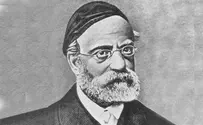
Reading the first verses in this Parsha always gives me a feeling of awe, perhaps even fear...
Yesterday's parsha has a message that will get us throught these challenging times.
Before I confess my sins, I must confess my greatness.
We have to realize that what we do affects others – and what they do affects us.
Happiness is a critical and essential part of service to God, and we must strive to find this joy within us when we observe the mitzvot.
There is no nation in the land, except for Bnei Israel, as all the nations, compared to it, are as nought, and do not merit being called ‘a nation’.

If our purpose is survival at all costs, we become our own purpose, and that is a recipe for disaster. It leads to violence, wars, theft, murder, and a general breakdown of society.

The beloved Rosh Yeshiva of Merkaz HaRav, known as the "father of the settlements" gave a clear message to his fighter students.
We need to realize that not everyone hates us; to meet supporters and potential supporters where they are, to work with them, and build deeper understandings and relationships.

In a parsha with tens of mitzvot between man and his fellow man, three are between man and G-d, but that is not coincidental.
A selection of commentaries on a difficult Torah commandment, with a surprising twist at the end.
Can parents abrogate the connection with their child? The Torah has an unusual way of answering that question.

There are messages for today's situation clearly spelled out in the parasha.
We need G-d’s blessing to continue to ensure that we and our children remain on the right path – and we need His mercy to bring us back from the curse of ongoing alienation from Him.
Jewish history of 3000 plus years can be likened to an accordion that produces music by intervals of expansion and contraction.
What does it really mean to be alive? Rabbi Asher Weiss Shlita answers the question.
Reading Rabbi Lazer Gurkow's article this week informs us as to the outcome of reciting blessings. What do the commentaries add to explain the injunction to say 100 blessings each day?
Yes, freedom and change can be difficult and challenging, but millions of former prisoners have escaped their former prisons and found a wonderful new life in Israel.
Seventy-six years ago, the gates to Eretz Yisrael were thrown open to all Jews. The call was sounded to return home and receive immediate citizenship under the "The Law of Return". Where were you?
Religious Zionist Torah scholars find connections to the Holy Land in the week's Torah reading.
Though G-d visits all our sins upon us, punishes us for them, holds us to account for them, He does not and never will entirely annihilate us.
The source for this is a passage of the Torah we all know by heart.
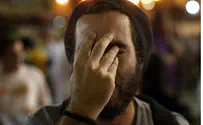
Commentators weigh in on Moshe's pleas to enter the land.
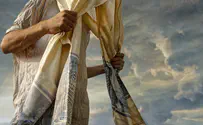
Young religious Zionist Torahs scholars find connections to Eretz Yisrael in each parsha.

The Bracha that Moshe Rabbeinu gives to the Jewish people over all ages is found in this parasha.
When the two combatants - the Jewish David and the pagan Goliat were staring at each other’s eyes, what were they thinking?