Torah Mitzion:
Path of Menashe
Menashe's synthesizing role—balancing Joseph's universalism with Judah's particularism.
D’var Torah for Parshat Vayigash.
G-d wants us to accomplish, not just exist.
Just because we are dependable doesn’t mean we are constant. Just because we are constant doesn’t mean we are dependable. In which category do Joseph's brothers fall? And where are we?
Why did Joseph ask a question to which he had already been give the answer?
In historical terms, the Maccabean Revolt was the beginning of the end of the Seleucid Empire. Moral: Don't mess with the Jewish religion.

The gravity and majesty of olam haba and dreams are ever-present themes in the world.
The evil eye (ayin ha’ra) causes harm in both visible and hidden levels, first a loss of a person’s self-confidence and on a hidden, deeper level, just as a person’s negative thoughts about themselves can harm their body, they can also affect others, and harm them.
What is the way we walk before G-d? How do we remember Him during the day?
Spirtual Q & A on Hanukkah that brings the past to bear on the present.
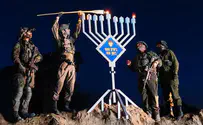
The Tanya compacts four millennia of Jewish wisdom to answer the great personal and existential questions of life. It has revolutionized the way we think about G -d the human soul, the world and our place in it.
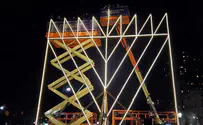
The process is unfolding before our eyes. Day by day, the light of Israel increases. How blessed we are to be a part of the miracles of Hanukah at this time.
There was a major shift in the world of Torah scholarship 2,200 years ago. A new light was born in response to the Greeks' darkness that, paradoxically, strengthened Torah scholarship for all time.
There are compelling parallels between the 1948 knocks as expounded by Rabbi J.B. Soloveitchik and the 2023-4 post Oct 7th events.

As a legendary actor of Hollywood teaches: “When you have to shoot – shoot.”
Like the Hashmoneans, we have to stand steadfast against the ideology of Yavan as seen in the UN, ICC and academia. With courage, conviction and Jewish pride, we must expose the darkness for what it is.
It has been a year filled with tragedy and suffering, but as G-d performed miracles for us in those days, He performs miracles for us now. When we say the second blessing over the lights, think about those miracles.
G-d charged the Jews, with responsibility for the spiritual perfection of the world, and He charged the Greeks with responsibility for the physical perfection of the world. A harmonious symbiosis which collapsed when the Greeks sought control.
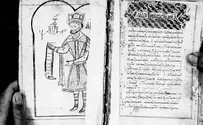
Rabbi Kook explains how Knesset Yisrael knows how to join heaven and earth.
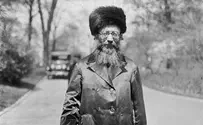
This week’s Parshah continues the story of Yosef, and his rising from the ashes of an Egyptian prison to the rank of Viceroy, second only to Pharaoh
“For God was with him - the name of God was always on his lips.”
The State of the Jewish Nation means navigating paradox.
Shimon the Maccabee’s words remind us that this is not the first time our rights have been challenged. They also help us formulate a response.
Young, Religious Zionist Torah scholars explore the connection between the Toraph portion of the week and the Holy Land.
Sephardic Chief Rabbi David Yosef publishes guidelines for soldiers in the field and travelers for the lighting of the Hanukkah candles.
Events that occur at a Biblical level of open miracles can still happen.
Rashi explains the juxtaposition of the section on the menorah to the section on the offerings of the princes, but what does it mean for our time?
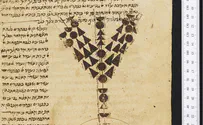
If you want to solve a problem, you need to have the facts, whether they are needed to solve Pharaoh's dreams or the was in Gaza and Lebanon.
Who asked Yosef to offer his advice, in addition to proffering the solution to the dream, with which he was charged?

Pity comes naturally; sympathy doesn't.
Of course, Aliyah is the only answer, but while the Rabbis I met are aware of the instability of continued Diaspora existence, in my opinion, a lingering spirit of denial prevents them from seeing how immediate the danger is.
"The Jewish People kept hope alive and hope kept the Jewish People alive." What words can better uplift the Jewish People today?
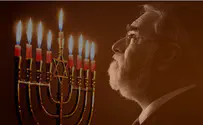
Not only is it possible to prevent a war between Jews, but moreover, we can bring them to love one another. We must dispel the darkness by increasing the light, as we gaze at the Hanukkah candles.
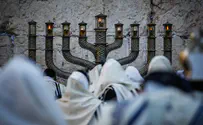
The famous dispute between the Sages is another instance where Hillel's school of thought sees the world as it is, Shammai's sees the world as it should ideally be. In today’s imperfect world, we follow Hillel’s rulings.
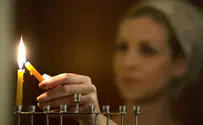
It is forbidden for a Jew to celebrate the holidays of another religion and it is not appropriate to celebrate civil holidays that were originally religious holidays.
The Tanya compacts four millennia of Jewish wisdom to answer the great personal and existential questions of life. It has revolutionized the way we think about G -d the human soul, the world and our place in it.
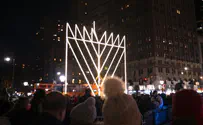
There are several key mitzvot that can only be fulfilled in Israel, and many others can be enhanced in ways that aren't possible in Chutz L'aretz.
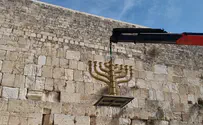
No, we have not betrayed our mission: Yehudah, Tamar and a Hanukkah Drama.
Though Hashem created all human beings in His image, He chose us as His children.
This week’s Parshah contains the unfortunate saga of Yosef and his brothers–Yosef
After repairing his soul, Reuben returned and looked at the pit.
Everyone knows the wounds of their own heart, and everyone knows in what places they must strive to become stronger to completely trust in God.
Something big is happening now in our world; changes which are on a Biblical scale.
Selected commentaries explain why Joseph's brothers were angered by his dreams.
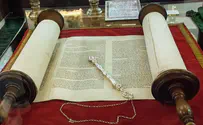
The greatest test of Emunah is to make changes to one’s life when things are going well.
Three guarantors for the coming of Mashiach are alluded to in the three pieces of collateral that Yehudah gave to Tamar, the ancestress of the Mashiach.
Jewish resilience is incomparable, but when we understand who our ancestors were and the values they inculcated into us, we begin to understand where it comes from.
Parashat Vayeishev portrays the dilemma of Jacob and his rival sons.
First, how could the Mashiach be the product of a problematic union? Surely his ancestry has to be unblemished!
Equality before G-d is supposed to govern human society.
What Shimon and Levi did was extraordinary both for their time, and for the geographical region. It still is today in parts of the world. They did not blame the victim, they blamed the perpetrator, taking a Torah-based stand and calling rape an abomination.
God created the world and everything in it, including evil and suffering, in order to benefit His creations. Man’s view is narrow and limited, unable to see the bigger picture. From this, we can strengthen our faith that everything God does is for the good
A New Era of Torah Transmission. How and why it came about.
Two descriptions encapsulate Hashem’s relationship with our world.
The Tanya compacts four millennia of Jewish wisdom to answer the great personal and existential questions of life. It has revolutionized the way we think about G -d the human soul, the world and our place in it.
Chanukah is a time to strengthen the positive energy in the home, as the mitzvah is emphasized as נר איש וביתו (Shabbat 21b), an obligation on the family to add light to the home.
Israel and Israel alone must decide to return to holiness and the promise of Divine protection and victory.

Today, we can see how Israel represents both tremendous power and military and moral might, as well as its antithesis, vulnerability and frailty.
Yes, Esav rises high up to the top of the ladder, but eventually Hashem orchestrates his fall. It was prophesied then and it is happening before our eyes.
Why does it matter whether the worshippers gather around a pillar outside or pray inside a sanctuary?