

“Love your fellow as yourself” (Leviticus 19:18). How is that possible? Some people are simply odious. How are we supposed to love them?
Answers Rav Samson Raphael Hirsch: Indeed, we need not love them. The Torah doesn’t demand the impossible or near impossible. And so it declares, not “v’ahavta es rei’acha,” but “v’ahavta l’rei’acha.” Writes Rav Hirsch: “‘L’rei’acha’ is not the person himself, but everything that pertains to his person, all the conditions of his life, the weal and the woe that make up his position in the world.”
What the Torah demands is that we “rejoice in [our fellow’s] good fortune and grieve over his misfortune as if it were our own.” It wants us to “assist at everything that furthers his well-being and happiness as if we were working for ourselves, and…keep trouble away from him as assiduously as if it threatened ourselves.”
Practicing this kind of love lies “within our possibilities and is something that is required of us even towards somebody whose personality may be actually highly antipathetic to us.”
Idealists believe we can truly love our fellow as we love ourselves. Some suggest we accomplish this task by focusing on the G-dly soul within everyone. Others advise us to see our fellows as extensions of ourselves (since we’re all part of a collective body). Rav Avigdor Miller recommended focusing intently on peoples’ good traits (everyone has one) until you find yourself loving them.
All these suggestions are valuable, but if you find yourself falling short, perhaps follow Rav Hirsch’s interpretation of this famous mitzvah. Don’t worry about loving people. Just act as if you love them. That’s difficult enough!
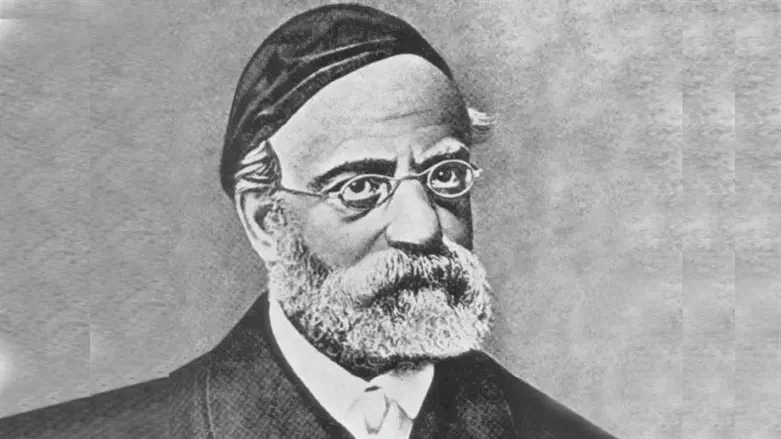
Rav Samson Raphael Hirsch (1808-1888) – head of the Jewish community in Frankfurt, Germany for over 35 years – was a prolific writer whose ideas, passion, and brilliance helped save German Jewry from the onslaught of modernity.
Elliot Resnick, PhD, is the host of “The Elliot Resnick Show” and the editor of an upcoming work on etymological explanations in Rav Samson Raphael Hirsch’s commentary on Chumash.