

We all know that a person contacts tzaraas primarily because of lashon hara, but why does a house contract tzaraas?
In describing the response of a homeowner to seeing tzaraas on his home, the Torah states, “Then he that owns the house (asher lo habayis) shall come and inform the priest saying, ‘It seems to me as if there were a plague on the house’” (Leviticus 14:35). According to the Midrash, “asher lo habayis” implies “mi shemeyacheid beiso lo” – a person who keeps his home exclusively for himself (translation of Rav Samson Raphael Hirsch).
In other words, the owner of a tzaraas-afflicted home possesses the midah of Sodom, believing “what’s mine is mine and what’s yours is yours.” He maintains a “cold naked loveless conception of justice and rights,” in Rav Hirsch’s words. “He forgets that to the exclusiveness of rights must be added the inclusiveness of love – to tzedek must be added tzedakah – if society is to become a Jewish society before G-d.”
So tzaraas afflicts a home due to its owner refusing to share the blessings of his property with others. That explains, writes Rav Hirsch, why the laws of “home tzaraas” only apply to private residences, only apply to a home’s walls (“the ‘isolating’ element of a house”), and only apply after the Jews conquered the Land of Israel and the members of each tribe received their own property.
Sharing is not optional in Judaism.
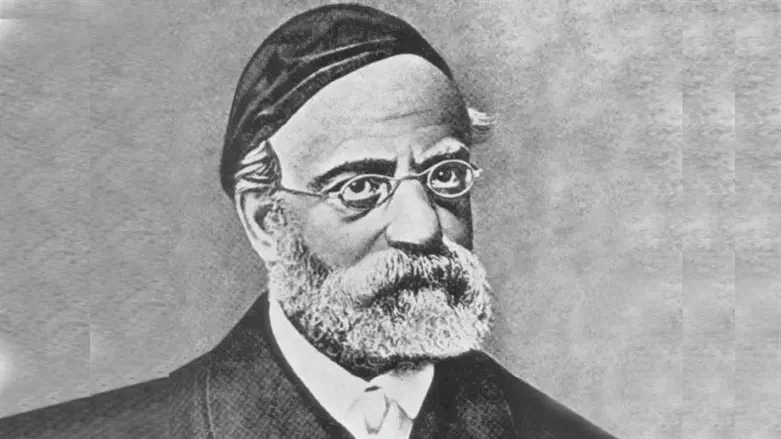
Rav Samson Raphael Hirsch (1808-1888) – head of the Jewish community in Frankfurt, Germany for over 35 years – was a prolific writer whose ideas, passion, and brilliance helped save German Jewry from the onslaught of modernity.
Elliot Resnick, PhD, is the host of “The Elliot Resnick Show” and the editor of an upcoming work on etymological explanations in Rav Samson Raphael Hirsch’s commentary on Chumash.