Yitro: A mussar lesson from the stones of the altar
‘We can learn from this about man, that even if he is engaged in a Mitzvah or worthwhile matter, how careful he must be not to act disrespectfully towards others.’
‘We can learn from this about man, that even if he is engaged in a Mitzvah or worthwhile matter, how careful he must be not to act disrespectfully towards others.’
"Veanvehu" -build him a sanctuary or beautify your way of doing mitzvot?
The underlying message of our reckoning by the moon, is that the moon is at times in absolute darkness, without even a sliver of light, yet even at this time, we know that it will soon return.

The unspoken answer of Hashem, to Moshe’s query, as to why the affliction increased after Moshe’s first approach to Pharoah, leads to a kal vachoerm.
Breishit is filled with fraternal strife,until nearly its end, but Shemot has the exemplary brotherly relationsip of Aaron and Moshe.
Which brother comes first and what is the deep message hidden in the order of their names?
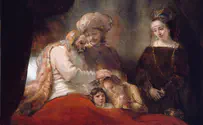
Why did G-d warn Pharaoh of the famine to come?

The pasuk says וישב יעקב: ‘and Yaakov dwelt’, it clearly has the second meaning

It is the will of Hashem, that a Jew be engaged in this physical world, and, in it, find a way to remain sanctified to Hashem.
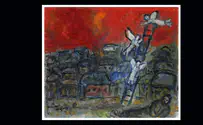
This thorny question as seen in the eyes of various commenttators.

Even the most charitable of men, would not see a need to help those who are well able to attend to their own needs. Not so Rivkah.

We are commanded to go in His ways, and our role is to do an act of chessed each and every day, as this is why we descended to this world.
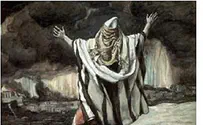
Why would a famine make Abraham leave the land G-d had told him to go to?
The moon decided that Creation should be otherwise and was duly punished.

The wonderful Torah supporting partnership of Zebulun and Asher is explored y various Torah Sages as we prepare for Simchat Torah.
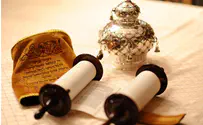
And why did the Tur say that Sukkot is for Yaakov Avinu?
In this world, a judge cannot truly do ‘true justice’, so that it does not punish innocent people, those who may be affected by it.

What could Hashem need of us?
As we read our Parasha approaching the Day of Judgement, it guides us as to the ‘life’ for which we should fervently plead, on that Day.
Two haggadot, two promises. Commentators weigh in on the differences and similarities.

Commentaries weigh in on how waging war against enemies is what is ‘upright in the eyes of Hashem’.
The principle of principles - what do the commentaries say about this and how it affects every Jew?
One of G-d's greatest kindnesses to us is allowing us to pray. Prayer affects reality.
Moshe rebuked them only a short while before his death. From whom did he learn this? From Yaakov. Why did Yaakov wait to rebuke his sons?

Various commentators weigh in on the power of speech.

Zealotry, like every other aspect of a Jew's life, has halakhic boundaries and limitations..

Are the donkey's words important enough to take up room in the Torah? Why?
Why did Hashem command Moshe to make the lifeless serpent, and to raise it on a pole?

How could Moses be sure his threat would work?
The Israelites did not comprehend what their real sin was, so their repentance did not atone for it - quite the contrary.

Ramban:’Had not Israel accepted the Torah, the world would have returned to nothingness, BY ITSELF...’.
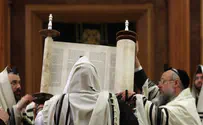
Each name is a thread in the tapestry that is Am Israel - but why not do the same in parashat Pinchas, a later census?
Shmitta is the most difficult mitzva.What special relevance does the Mitzvah of Shemitah have to Har Sinai?.

Rabbi Tarfon said:'I would be amazed, if there is any person in this generation who will accept rebuke;' And what would we say?

Why must only the slanderer be afflicted with tsaraat nd dwell alone outside the camp?

Hashem has His sometimes hidden ways to vanquish His enemies and exact revenge upon them.

The message of the Exodus as seen by Torah commentators from the Riva to the Slonimer Rebbe.

Selected commentators explain why the priests had to be urged to bring the burnt offering as opposed to other offerings.
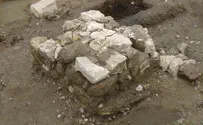
The wondrous burnt offering and what its purpose is. A selection of renowned commentators.

Read the Netivot Shalom, Rav Zalman Sorotzkin, Rav Avigdor Nebenzahl,The Ra’ma, Maharal and more on the power of priestly clothes to atone..
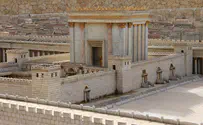
Selected commentators explain the reasons ordinances between man and his fellow man had to be given at Sinai.
Delving into the events surrounding this seminal and unconditional acceptance of Torah by Bnei Israel.

Why did Moshe take his staff with him to the top of the hill in the Amalek battle, as seemingly he did not perform any act with it?’
What purpose does making a mockery of those who mock Hashem and mistreat His people?
An eye-opening review of the commentators' explanations on the purpose of the staff and the miracle involved.
Ohr Hachaim Hakadosh,Alshich Hakadosh, Malbim and others on the double clause in Yaakov's blessing to his beloved Yosef.
A selection of commentators whoweigh in on this troubling question and their psychologically enlightening answers.

There is no wisdom nor counsel, not in Yaakov, nor in Yosef Hatzadik, nor in his brothers, in this parasha. What is really happening?
Learn from them but not from their evil deeds, as Jacob testified about himself. But what could he learn from the wicked Laban?.
As Jacob's first marriage was based on ‘mistaken belief’, should it not have been deemed invalid?
A surprising Rashi on the two sons of Rivka and Isaac leads us to wonder if it is the hunter or the tent-dweller who is of no consequence?
This is the only instance in the whole of Tanach, that the number of years of the life of a woman, is written.
Is stealing from one another really the reason for The Flood?
By reading the two parshiot on Simchat Torah, we allude to the crux of the Shma prayer - that Torah should be inscribed on our hearts. How?

Had it not been for the seeming ‘failure’ of the earth to comply with Hashem’s words when trees were created, we could not have had schach!

Our Parasha opens with the injunction:(32:1)’האזינו: Listen O Heavens, and I will speak; and may the earth hear the words of my mouth.’

Read what Torah luminaries say about Hakhel, the next to last mitzva in the Torah: the reasons for it, its timing and its effect
A look at the commentaries on what it means to choose life for ourselves and future generations..

What do the commentators say about the Torah reprimanding or punishing us for not performing mitzvot joyfully?

Commentators on this mitzva, ‘It follows, that the guard rail is in reality the guardian of the house, that it should remain in his hands!.’