The ten Haftorahs:
Tragedy and consolation
The purpose of the Three Weeks is to awaken the yearning for Redemption - and the seven haftorah's following Tisha B'Av are meant to strenghthen that yearning.
After three years of war, Israel’s next friendship will not be with the Senate. It will be covenantal.
An historical-political biblical analysis as a way to heal the divisions of our people
Rashi teaches that the sin of the spies and the contempt for the land are what turned entry into the land into a journey of wars.
We are not suffering the impact of our forefathers' sins, I fear we are perpetuating them.

As we prepare to sit on the floor on Tisha B’Av and mourn the destruction of Jerusalem, we should not view the day merely as a commemoration of ancient tragedy. It is also a summons to action.

The Torah does not necessarily have to remain the exclusive province of the Creator. A miraculous transformation can occur, and it can become the Torah of man.
Why the need to explain it in seventy languages, as Rashi writes, specifically at this time, as they were about to enter the Land? - what is the meaning of: ’he explained it in seventy languages’?

HaRav Tzvi Yehuda would ask his gathered students in the large Beit Midrash of the yeshiva: “What is the very first thing Moshe teaches the Nation, who are all waiting to hear the explanation of the Torah from Moshe himself?
Why is the infamous weeping of the generation of the wilderness called a "baseless weeping"? Because in truth they had no reason to weep.
We have legitimate claims - Biblical and Historical - to these areas since they were part of the tribes of Am Yisrael before our exile.

"Whoever mourns for Jerusalem merits and sees her rejoicing, and whoever does not mourn for Jerusalem does not see her rejoicing."

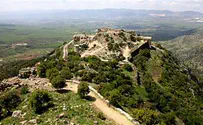
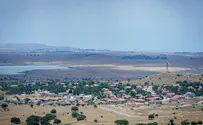
Long before talking heads on television debated who belongs where, G-d entrusted the Golan and Bashan to the people of Israel.
Jewish identity is not an optional lifestyle choice that can be carved up to suit progressive political tastes.

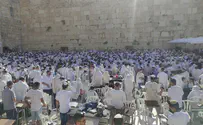
Not so fast. Every detail remains shrouded in uncertainty, and therefore the leading Torah authorities and the great rabbis of Jerusalem instructed that one should not pass beyond the surrounding Temple Mount wall for fear that a person trespass in a forbidden area.

We must cherish the status of Jewish teachers, for education is the foundation of all good things • The teachers of young children are the guardians of the cities of Israel, for through their Torah and teaching, the Jewish people endures upon its Land.

Although we formally acknowledge the importance of the Beit HaMikdash, comprehending its true significance is another matter.

What is motivating Western youth to embrace patently self-destructive policies like open borders, historically doomed economic socialism and even unisex bathrooms?

Until we heal our sense of worthlessness, we can't grow.

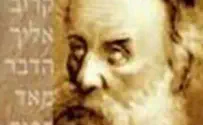
The Tanya compacts four millennia of Jewish wisdom to answer the great personal and existential questions of life. It has revolutionized the way we think about G -d the human soul, the world and our place in it.
The nation may not be ready for the actual rebuilding of the Beit HaMikdash, we still feel the soul’s yearning for this lofty spiritual splendor.
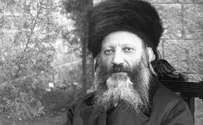
Repentance is not merely about correcting mistakes. It is about rediscovering the love that once defined our relationship with our Creator.
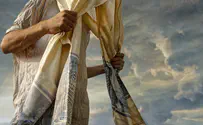
"The vengeance of the Lord" - whoever stands against Israel stands against the Creator of the world. - Rashi, Numbers 31:3
There is a difference between building a religious society and merely policing one, a distinction that is found in King Yoshiyahu's realm and is critical for today’s leaders and educators to understand.
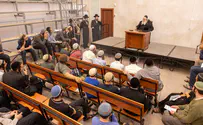
Reflecting on the war against Midian, this week's Torah portion highlights the extraordinary miracle that not a single Jewish soldier was lost in battle, drawing a timeless lesson about the power of Jewish unity and the heavy cost of internal division.
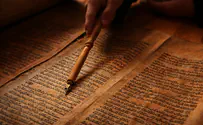
Life is a journey, but Judaism insists that it must also have a destination.

Why did the Torah tie the stay of the murderer in the city of refuge, to the death of the Kohen Gadol?

The Baal Shem Tov taught that the Israelites' forty-two journeys are reflected in our own lives.

The pressure of the three cardinal sins remains.

One must teach children that it is very important for every person to work and support his family • The obligation to teach children a trade by which they can earn a living is from the Torah. And information about The Three Weeks.
If the next generation is not anchored in Torah and yirat Shamayim, everything else we build is standing on unstable ground. This week's parshiyot teach that to us.
A thorough explanation of what are known as The Three Oaths regarding the return to the Land of Israel and their application today.
There's room for pizza and sushi, but no room for a women's section.

The fire-and-brimstone prophecies of Yeshayahu and Yirmiyahu endure for generations, but in their own moment, they often fell on deaf ears. Why?

G-d needs you. He had plenty of people before you, but He added you to the world’s population because there is something you can do that no one else can.
The target is evil itself, not the human being.
There is a very peculiar Talmudic tradition about the purpose of the new moon sin-offering. For whom does this offering atone?
Moshe understood that each generation is different and has their own unique needs. The leader chosen this coming fall must be one who is fitting for that generation.

This message will deal with the man who is privileged by Hashem to lead a daring game-changer in history but falls short of achieving it.
Within every person is a beautiful soul with light to contribute, but many are rendered mute by the traumas of the past.
This G-dly covenant of peace included the fact that Pinchas was destined to be renamed the great prophet Eliyahu
Zelophehad's daughters stand as veritable beacons during these dark days, showing us where love for the Land of Israel can lead us.
How did Moshe confer authority upon his successor?

When someone expresses a new theory on a significant matter for consideration, the reflexive response is often, “Where is it written?" or “Who said that?"
What is the meaning of the “covenant of peace" given to Pinchas - whether in the Bible or in our modern world?
The ingathering of over 7.5 million Jews to Eretz Yisrael, the revitalization of the land, and the return of Jewish sovereignty are all elements envisioned by the Nevi’im and Chazal as part of the ge’ulah process. The number of lomdei Torah is the greatest in many centuries. But there is still debate on the question.
A straight-ahead look on navigating an exit from exile.
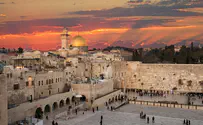
We accepted these fasts because the complete Redemption has not yet come. The Redemption has not come because of sins between one person and another.

G-d’s name is hidden when Yisrael is in exile. The Shechina itself is in exile.
What we are mourning - and turning that mourning into joy and gladness.
When thoughts of repentance arose in the hearts of the sons of Korach, they were moved to atone for their dishonor, by an offering of praise found in the Book of Psalms.

The daughters of Tzelophchad and the mission of Jeremiah.
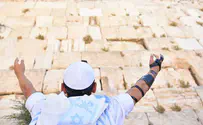
Shouldn't the Jews staying in the Diaspora think about whether they are aligning their lives with the mission of Am Yisrael as set forth in the Torah and by the Prophets of Israel - instead of expecting aliya benefits from Israel?

The Tanya compacts four millennia of Jewish wisdom to answer the great personal and existential questions of life. It has revolutionized the way we think about G -d the human soul, the world and our place in it.
The month of Tammuz reminds us of situations that make many people uncomfortable: those filled with uncertainty.

Hashem created everything for our use and enjoyment, and we express gratitude by partaking in these gifts.
Boycotts and separation of communities has led to serious prohibitions.

The question is not whether Diaspora Jews should make aliyah. There is one question: Are we inviting them with the right spirit? And are we building the right home to receive them?

The biggest danger is that we, too, might fall into this exact same trap.
Slaves respond to a stick; free people need inspiration.