
VAYECHI 5728
A blip on the radar screen
Our father Jacob looks forward to the future, knowing the present, as earthshaking as it may seem, is only a blip on history's radar screen.
Our father Jacob looks forward to the future, knowing the present, as earthshaking as it may seem, is only a blip on history's radar screen.
The Torah Portion of VAYIGASH Genesis 44:18–47:27: The ability to acknowledger mistakes is a powerful but rarely found tool of spirituality.
Why does Yosef remind his brothers twice that they sold him to Egypt? And why does he tell them they didn't send him to Egypt, only G-d did?
Jacob's fears were justified. One need only look at the last fifty years of American Jewish history to appreciate the dangers of galut!

Yehuda had no moral high ground to retreat to. When he looked into his past, all of his accusations boomeranged back at him.
Parents know that there are things about their children and their progeny that they do not wish to be informed about.Is that the case here?
'Indeed we are guilty concerning our brother, inasmuch as we saw his heartfelt anguish, when he pleaded with us and we paid no heed...'
Among the fallacies of human thought is the idea that we not only control events, but have the power to decide when those events take place.
The Iranians don’t need ICBMs to attack Israel. We are camouflage for their real enemies, the West. It is all predicted in Jewish sources.
We cannot lose our sense of a common goal. We cannot raise banners of ultimate truth without co-opting all the positive powers around us.
Why does Yosef continue telling his brothers about his dreams, even when he sees how they're responding? And why do they hate him so much?
When did he turn into a talented leader with the highest managerial ability? Where is Joseph's turning point?
The Talmud tells us that before the appearance of Mashiach Ben David, there is another one, Mashiach Ben Yosef. Why do we need both?
Whilst to the brothers, Yosef’s dreams were like thorns in their eyes, to Reuben they were like sweet honey - and he wanted to save Yosef.
The Torah is keen to mention how our forefathers made a fortune, each one in his own way, a sort of rags to riches story specific to him.

The Chinese translate the word "Judaism" in a unique way taken from this week's Torah reading.

Weekly Torah study: Vayishlach.
One rock or many stones?.What typifies the Jewish people? What makes them a klal?
Yaakov makes his first step into the "boxing arena" He is injured because this is now reality.

Yaakov could have chosen to leave this struggle behind and continue with his preparations for Esav.

Jacob was neither the first nor the last of his people who would need to learn the power of solitude.
Soon, we will be witnessing a dramatic turnabout in the attitude of most gentile nations to the Jews and to Israel.
Yaakov apparently is done with running, and now turns to face his problems and his adversary, head-on, face-to-face.
Why didn't Jacob try to avoid meeting his brother?
Chani Weinroth z"l knew about all-encompassing suffering firsthand, but managed to advise wisely those suffering and those around them..

There is nothing quite like the feeling of love. Mentioning Yaakov's love for Rachel is a rarity in the Tanach.
Without question, Yaacov was in great need of the angels who accompanied and protected him, but why not the same ones everywhere?
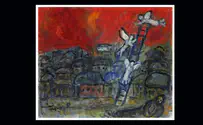
The Talmud teaches us that some dreams have the quality of being a minor type of prophecy.
This Torah tells us about Yaakov's conversation by the well. Why does the Torah describe this conversation in such great detail?
Hashem was saying something to us. What will our response be? Will it be to turn over and ignore it, or will we respond appropriately?
To better understand the idea of angels, it is better to see them as “the message” rather than as “the messenger”.

Life isn’t a generic formula that can be applied to everyone equally.

Our own experiences suggest that time, rather than being a straight arrow, is an undulating chord. Does that explain Yaakov's patience?
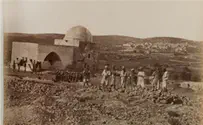
Digging wells is a mirror image of uncovering G-d within our physical reality. Op-ed.
Jacob held on to Esau’s heel holding him back. The name Jacob refers to this aspect of restraint, reining in fierce forces of our nature.
Are sibling rivalry, sibling strife, the Will of God?
There is an inherent difference between the generations and genealogy of Noach and that of Yitzchak.
Yitzchak, in a sense, was no more blind at his old age then he was when he was younger.
Did Jacob take advantage of his brother's hunger to get hold of the birthright?

Rivka emerges as the more perceptive parent in this parsha. There is more to this than it seems.
Abraham's servant Eliezer went to find a wife for Isaac. Why did Eliezer ask G-d for a sign? Why not ask where Abraham's family lives?
Where is the Avraham of today who will stand up before the world as he did to the Hittites and declare that this land is our heritage?
This article is dedicated to Sarah, in praise of her virtues and in honor of her memory.
In our generations there seems no one known to us who fits the criteria of an Avraham, a Moshe, a Shmuel to whom God would reveal his plans.
I know of at least one person who worried about being too perfect. Our collective grandfather, Abraham.
Lot chose to live in Sodom, the by-word for wickedness, and the antithesis of all that Avraham had taught him. So why save him?
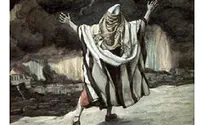
What exactly happened in the story of Avraham and Lot? And how did someone who grew up in Avraham's home end up in Sdom?
Ultimately, Jewish history is fashioned and determined by those individuals who are motivated by passion and directed by faithfulness.
G-d did not tell Abraham to "depart". He said "go". What message was G-d sending?
Abraham is the first human being recorded as having a normal conversation with his Creator.
Today's nations want Israel to go alone, in the hope that Iran will destroy the annoying Jewish state. Abraham too had to fight alone.
Why would a battle between ancient kingdoms get such prominence in the parasha? Was it all that it seems?

In Isaiah, the flood is called "the waters of Noah." What does that imply?

It is 5782 years from the time humans appeared and began destroying the beautiful world that Hashem created for them.
On the most basic level, we have to ask why, in the story of Adam and Eve, does the Torah repeat the word 'arumim?' What does it mean?
Milton's epic poem describes the impossibility of returning to Paradise once lost. The Torah presents that return as a challenge..
The first letter of the Torah is bet, the last is lamed. Rabbi Levi Yitzchak Schneerson spoke of the letters before and after bet and lamed.
There is a good reason to celebrate the end of the cycle of Torah readings, but why delay it until a month after the end of the year?
This Shabbat we read about the Sin of the Golden Calf and afterwards, the Second Tablets. What's the connection between that & the holiday?