
Weekly Torah Study: Vezot Habracha
Moshe blesses the tribes of Israel before his death, beginning his words with fiery imagery. Why?
Moshe blesses the tribes of Israel before his death, beginning his words with fiery imagery. Why?
Did Moshe Rabbeinu transcend death? In this week's parasha, Vezot Habracha, his death is described, but the Talmud says something else.
We cannot just lounge around feet up swiping our devices or listening to Torah as we travel to work

This week's Torah portion is actually a song, a poem. But it's also unlike the song the People of Israel sang at the splitting of the Sea.
Nature itself, with all its wonders, unpredictability, and beauty is the greatest testimony regarding the covenant between God and Israel.

In one of his last speeches to the Jewish People, Moshe refers to 'this mitzvah.' Later he describes the opposite attitude. Why?
In Nitzavim, the Covenant with Hashem is described as binding future generations. How could those present bind those who are not present?
To know who we are is, in large part, to understand the story or stories of which we are a part.

The Torah tells us not to be late fulfilling a vow & says a person who didn't vow, didn't sin. Why would we think of not vowing as a sin?
The Netziv asks:’’What is this beautiful woman, adorned and dressed in her finery, doing in battle?’"
A plea for peace and understanding. Divorce, with all its hurt, uncertainty and loss should not lead to lifelong enmity.

Food: making it, sharing it, giving it. so deeply ingrained in Jewish culture. Why it's important to give, even where food isn't lacking!

The Torah exempts three categories of men from going out to a voluntary war. And it explains why.

We are individuals in our own right and at the same time we are part of our nation.

The Rabbis intended that the structure of each portion be studied to teach a message unto itself.

Moshe commands the nation to destroy idol worship upon entering the Land of Israel - but not do do the same to G-d. What does this mean?
How we should relate to the mitzvot on every day of our lives - how lucky we are!
The amount of time devoted to a particular activity is not the sole factor in determining that this is our main pursuit in life.
Is it "un-Jewish” and "un-rabbinic” to hope that Hashem, the God of justice, mercy and truth punish all who have wronged His people?
What, then, does sustain man?

During their forty years of desert wandering, the most crucial lessons of Israel's essence were tested and learned.

What are we to make of the obviously literal lesson that this week's Torah portion seemingly teaches us?
How can we ensure our wants are not driven by envy?
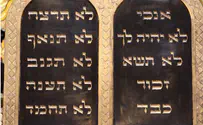
What is the difference between “knowing it” and “pondering it in our heart”?
The oneness and unity of G-d was a revolutionary revelation enunciated in this week's Torah reading.
'Hear O Israel' wasn't said so dramatically as it seems. Why did it become such an important part of our life, and what makes it so special?
A very current message about climate change can be derived from the actions of Moshe Rabbeinu.

The aptitude to live and function within the limitations of one's own shortcomings is a great talent which many do not possess.
We may be the fewest of all peoples, but when we heed God’s call, we have the ability,to mend and transform the world.

Do you know anyone who had enough money and refused to accept more?
From Moses, we see that It is impossible for truths to be described without the personality and subjective view of the person doing so.
The laws of vows are there for us to contemplate the awesome power contained in our speech.

The last mission given to Moses is to avenge what Midian did to the People of Israel. Why revenge, and why is this his final mission?
When travelling, the most important thing to take with us doesn’t weight anything at all.
There must be a connecting bond, a common denominator that unites these two apparently disparate and different sections of the Torah.
Moshe had saved the nation before with prayer, by reasoning and imploring. Pinchas saved them by acting, violently and definitively.

Being born between the gates empowered Yocheved to feel free. To not allow Egypt to invade her mind, her psyche, her sense of self. And you?

In this parasha, an invitation arrives from Hashem Himself in order to enable us to have a life changing experience. Be sure to RSVP.
The Israelites are basically off stage. They are bystanders while he, Balaam, does things to them and for them.
Hashem expects the Jewish nation to live with trust in Him, without fear of the gentiles.
Water plays a major role in this week's parasha.

We need to stop, rest and drink deeply from living waters before continuing the arid wilderness we seem to have entered.

Rabbi Shmuel Eliyahu explains why, when Aaron is in the right place, and the Divine Presence is there, even a dry stick of wood can blossom.
After the earth swallows Korach and his followers, the Jews come to Moses angry - and only stop arguing after Aaron's staff blossoms. Why?
A Flame Lily inspires this week's D'var Torah about why it's so good to connect.
Were Moshe and Aaron guilty of the deaths of the 250 followers of Korach because they set a too difficult test for them?

In every generation, the question is asked: "How do we know that Hashem will make us victorious?"
In yesterday's parsha, a wicked person is someone who witnesses a mind-changing event and yet continues as though nothing had happened.

The great sin of the spies was due to the fact that they misunderstood their mission.

What does Judaism say about forgiving criminals - what factors influence that concept? Addition: Thoughts for this week's parsha.

Why is the gathering of the future Sanhedrin intertwined with the story of the People of Israel craving meat?
When struck by one of your own, the consequences are more severe. That surely is a major lesson of Jewish history.
This week's Torah portion has two distinct segments, but they are connected by a natural progression of events.
Each of the Tribes was unique, and even though each brought the identical offering, each one’s offering was unique.
The Levites were a living spiritual force that taught the people and inspired fulfillment of the mission entrusted to Israel at Mount Sinai.
What did the Jews do to earn them leniency before the Heavenly Court? Is that a good thing?
We can deal with the Sota in this week’s parsha as does the kohen or as does the nazir. This is also true of various evils we encounter.
Who - or what - will break the vicious cycle of the God-fearing communities in the galut?
Is there something Diaspora Jews can do for Israel at this time?

That most people suffer in this world is axiomatic, but so too is the reality that Hashem’s chosen people suffer most. Why?