How to clean for Pesach in a day
Remember: "Dirt is not chametz and children are not the Pesach sacrifice,"
The Torah prohibits the murder of and theft from any human being. In addition, we should act respectfully towards every human being because we are all created in Hashem’s image.
The Land of Israel belongs to all of the Jewish People. Not only all the Jews living in Israel must rise up to defend it.All of us are called upon to take part.
Connections between the Torah portion and the Holy Land, collected by young Religious Zionist Torah scholars.
Based on the teachings of Israel's first Chief Rabbi and Founder of Merkaz Harav Yeshiva in Jerusalem, Rav Avraham Yitschak HaCohen Kook zts"l.
G-d Craved to Dwell in Your Nervous System and Heart,
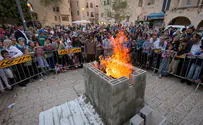
In order for the Korban Pesach, or any sacrifice, to have the intended spiritual impact on us, it must reflect the place we find ourselves.
We, the Jewish nation, reckon our national calendar from Nissan.

Given that so much of our historical national suffering has been caused by the inability of people to work together and demonstrate respect for one another, the cooperation in building the mishkan is a great achievement in its own right.
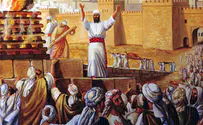
The Kohanim possessed the codes which bring the light and blessing of Hashem to all humanity and to every created thing on Earth. Without the Beit HaMikdash, however, all of humanity is like an orphan.
We, with the benefit of hindsight, can only be in awe of the divine revelations that were expressed by our great commentators, and how accurately history has borne out the events that were foretold in their writings.
Commentators weigh in on why the greatest of Prophets could not enter the Tabernacle after it was put up - see the end of the Book of Exodus.

We have no option but to succeed in revealing the hidden sanctity in the inanimate stones of Hashem’s holy land and in the deep recesses of our Jewish souls.
About the accounting we must make every so often to clear up unsettled issues.

Moshe Rabeinu is the spiritual leader who relies on the direct light from Hashem but he realizes that sometimes we should use the shadows instead.
Our care for others reminds us of existences beyond our own.
A work that demonstrates how scientific understanding can deepen one's appreciation of the Mishnah and, by extension, Hashem's creation. Review.

The Seder starts with the paragraph about Matzah called Ha Lachma Anya. The Torah calls Matzah "Lechem Oni" - which we translate as "the bread of affliction." But there is more to the word than that.
Clothes have the power to change us.
Moshe Rabeinu served in the army; Yehoshua served in the army; King David served in the army. These holy heroes of the nation were great in military prowess and great in Torah.

The Tanya compacts four millennia of Jewish wisdom to answer the great personal and existential questions of life. It has revolutionized the way we think about G -d the human soul, the world and our place in it.
The blessing should be recited over homes in regions where significant effort is still required to uphold the mitzvah of settling the Land, such as homes along the northern border, and near the Gaza Strip—especially when residents return after an extended period of abandonment. (At end: microwave ovens on Pesach)
Thanks to the fallen soldiers of the IDF, the people of Israel live! Thanks to those brave soldiers who risked their lives for the rebirth of Israel, the State of Israel exists!
The prohibition against the homosexual act is clearly stated in the Torah. While that does not mandate ostracizing anyone, allowing an LGBT club is tantamount to approval of a way of life that is forbidden. Opinion..

The infinite availability of information and the complexity of spiritual questions require deep and creative thinking from parents and educators.
In the absence of the Temple, perhaps we can pray that the ascension of the purest souls of Israel, the Bibas babes, was a kapara for the sake of the nation. We do not know the ways of Hashem.

What is the difference between wisdom, insight, and knowledge? How do they apply both to the Creator of the universe and to the human artist?
As we prepare for Pesach, let’s pray that the faith and inspiration of Rachel Goldberg-Polin, Agam Berger, wives of reservists, and the many other righteous women of today merit our redemption, just as our foremothers’ faith merited our ancestors’ redemption.
One question: Why Did Esther Not Refute Haman’s Vile Accusations against the Jews?
How can I accept irrational commandments?
Although we currently are lacking the Beit Hamikdash, we still have the beauty and joy of Shabbat to invigorate our souls.
‘The men needed to donate their ornaments to atone for their souls; but the women who did not want to give their ornaments for the calf did not require atonement. ‘Why, then, should the women give their ornaments?

The sanctity of Am Yisrael does not stem from the individual alone but from each person’s ability to contribute to the greater good.
The Maftir for this Shabbat reminds all Jews of the necessity to purify themselves in readiness for Pesach. But why the chosen Haftarah?
Leading rabbinic authorities, from the Vilna Gaon to Rabbi Avraham Yitzchak HaKohen Kook, have emphasized that the mitzvah is as binding today as ever.

"Ain;t gonna work on Saturday" is a much loved children's song . But why does the Torah forbid some non-strenuous activities on Shabbat?
Look at a map of ancient Israel and compare it to where the IDF is today - and where it may be soon.
The Tanya compacts four millennia of Jewish wisdom to answer the great personal and existential questions of life. It has revolutionized the way we think about G -d the human soul, the world and our place in it.

Asking AI halakhic questions is tricky at best. It has been found to fabricate sources, cannot take the situation of the questioner into account, and much more. But does that mean we should leave the field open to charlatans who mislead intentionally?

We need to expand all of the mind’s intellectual capabilities in order to fulfill the rule of “a healthy mind in a healthy body” on a spiritual level.
When we say G-d is asleep, we mean that He conducts the affairs of life in ways that make no sense to us.

’The wealthy shall not increase and the indigent shall not decrease’ - why?

If we look at the Megillah characters and their behaviors, each choice and action can teach us a lesson for our own lives.
When we jump to today’s time, we’re fighting an enemy who is not even called a man in the Torah. Their essence is pure savagery.
Those living in the time of the Purim story did not see G-d's plan as we do.
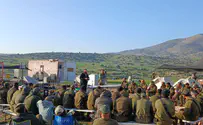
The establishment of the State of Israel restored the Jewish People’s sense of honor. The Sages of Israel, after the miracle of Purim, decreed that cities walled since the days of Joshua should celebrate Purim on the 15th of Adar “for the honor of the Land of Israel.”
The holiday of Purim encompassing the miracle, the salvation, happiness, the Diaspora, Eretz Yisrael, the Jerusalem Temple and more....
The Talmud cites Reish Lakish (Rabbi Shimon ben Lakish): “It was known and revealed before He by Whose Word the world was created that Haman would one day weigh out the shekalim to annihilate Israel; therefore He placed their shekalim before [Haman’s] shekalim” (Megillah 13b).

Where is Hashem’s partiality for Israel made real in the 167 verses of Megillat Esther?
What did Joseph and Mordechai have in common?

If Purim falls on Friday, the custom is preferably to begin the meal before noon, but there are other possibities (see below). Purim joy was observed even when the Jewish people were in harsh exile It is an answer to suffering, since in Purim we learned that even evil will eventually turn to good, so it is the greatest joy of all
The stories of Moshe, Eliyahu and Esther reiterate the role of humanity to take responsibility, and for leaders to stay connected to their people.

The battle between Haman and Mordechai is the primeval, age-old battle between Amalek and Torah, between lust and morality, over which is the foundation of the world, and it began in the Garden of Eden.
A primer for observing the joyous holiday, keeping its four commandments and those that are connected to it, including the amazing rules on what to do in Jerusalem when Shushan Purim falls on Shabbat as it does this year.

Interview with a rabbi who studied with him for twelve years: "HaRav Tzvi Yehuda vehemently maintained that no handful of Israeli soil, however small, is allowed to be transferred to foreign control."
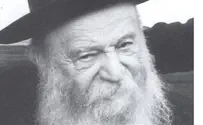
Why did Esther not cease hostilities, or in the unforgettable words of former President Joe Biden, “take the win,” after the first day of fighting the enemies of the Jews?
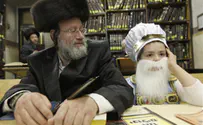
This has been a year of masks: We saw organizations claiming to fight for "human rights" reveal their true faces—showing that they don’t actually care about Jews. We saw women’s rights organizations put on masks and ignore Jewish victims of rape and torture.

Haman's sons would have to have been genuine converts to Judaism in that case. However, we (the Jewish People) do not accept Amalekite converts. Therein lies the paradox explained here by Rav Hutner.

This week Kitah students learned about the struggle between Mordechai and Haman, trying to understand why Mordechai refused to bow down. And they talked about what the miracle teaches us.

Hashem wants mature, robust adults serving Him.