
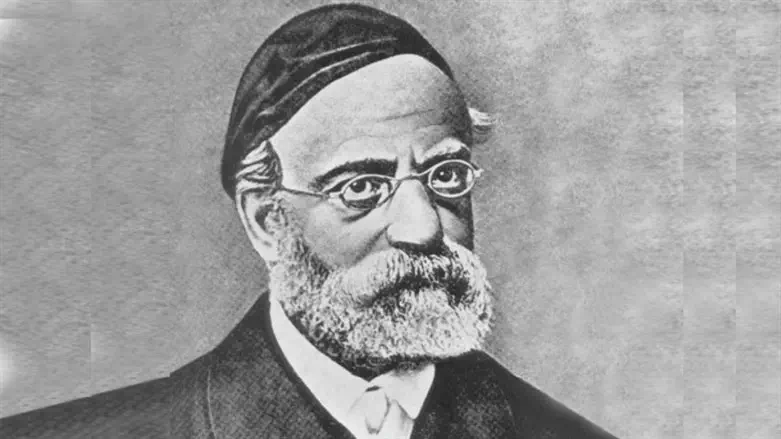
Secular society “regards spiritual and intellectual greatness as a free pass for moral laxness and grants men of intellect a greater consideration in lapses against G-d’s laws of morality.”
So writes Rav Samson Raphael Hirsh in his commentary on the deaths of Nadav and Avihu. And, indeed, many people gloss over the infidelities of historical figures like Napoleon. The upper-class in particular often permits itself dalliances on the side.
The Torah grants no such dispensations. It “raises the strictness of the demands for morality with each higher degree of intellectuality” (emphasis added). “Bikrovai ekadesh (Leviticus 10:3) – “the more anybody stands in front of the people as a leader and teacher in relation to Me, the less do I overlook his mistakes.”
In making this point, Rav Hirsch quotes the famous statement in the Gemara that “G-d is exacting even to a hairbreadth with those who are round about Him” (Yevamos 121b) as well chapter 99 of Tehillim, which we read every Friday shortly before Lecha Dodi. It states that G-d would answer the prayers that Moshe, Aharon, and Shmuel offered on behalf of others, and yet, at the same time, “v’nokem al alilosam” – for “their own misdeeds, He would grant no remission.”
In a Torah society, power doesn’t confer upon its holders license to misbehave. On the contrary, it introduces even greater expectations.
Rav Samson Raphael Hirsch (1808-1888) – head of the Jewish community in Frankfurt, Germany for over 35 years – was a prolific writer whose ideas, passion, and brilliance helped save German Jewry from the onslaught of modernity.
Elliot Resnick, PhD, is the host of “The Elliot Resnick Show” and the editor of an upcoming work on etymological explanations in Rav Samson Raphael Hirsch’s commentary on Chumash.