
From cancer to alzheimer's: A breakthrough development
For the first time, a method developed for treating blood cancer is being applied to Alzheimer's disease in mice, reducing protein deposits and inflammation in the brain.
For the first time, a method developed for treating blood cancer is being applied to Alzheimer's disease in mice, reducing protein deposits and inflammation in the brain.

New Israeli research found that most patients in Israel under age 65, suffering from Alzheimer or other dementia diseases, are of Eastern origin. NIH awarded Beilinson NIS 53 million grant to expand research.

Nanoparticles activated by ultra-low-energy X-rays effectively halt the aggregation and toxicity of amyloid beta in preclinical models, new study shows.
Eli Lilly and Co.'s drug donanemab can modestly slow patients’ worsening by about four to seven months.
Food and Drug Administration approves the drug Leqembi, proven to slow the course of Alzheimer's.
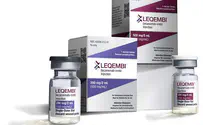
New monoclonal antibody treatment appears to slow progression of the disease in its early stages.
The first medication for the long-standing disease in 18 years may provide the long-sought cure but it comes with its own set of risks.
Researchers at Be'er Sheva's Ben-Gurion University discover protein which may be key to preventing Alzheimer's.

Study shows mice who receive extra-virgin olive oil do better on tests, have better memory, and have better-preserved neurons.

Researchers from Israel and Harvard propose testing a novel biomarker for cognitive aging and Alzheimer’s disease.
Researchers are finding that perhaps we truly are what we eat. Diet does play a significant role in how our brains work as we age.

Studies were inspired by Biblical passage describing a preparation used by High Priests. Caution: too much raw cinnamon is dangerous.

A new medication designed to slow the progression of Alzheimer's disease and improve its psychological symptoms is entering advanced trials.
