Vayera:: Don't look back
Israel's first Chief Rabbi: The depravity of the inhabitants of Sodom was so monstrous that it was beyond all hope of reformation.

Israel's first Chief Rabbi:True, our hearts ache, and our pain is immense...but in the end, we will heal...triumph...and defeat our enemies.

Israel's first Chief Rabbi: How do persecutions protect the people of Israel?

Israel's first Chief Rabbi asks: Why should such a flimsy structure be a paradigm of protection and safety?

Rabbi Kook on teshuva: To attain teshuva a person must rise above his focus on himself and forge an attachment with the Jewish Nation.

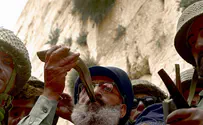
Why did Israel's first Chief Rabbi burst into tears when describing the three kinds of shofars?

Israel's first Chief Rabbi: "Guard your pinteleh Yid"- your spark of yiddishkeit.

Israel's first Chief Rabbi: What is the purpose of all of these blessings the rabbis told us to recite?

In honor of Rav Kook's yahrzeit, today, 3 Elul, a cinematic adaption of his poem "The Struggle".

Israel's first Chieff Rabbi: Monetary law is intrinsically more complicated than criminal law because its goal is rectification.

The Sages of the Talmud warned us long ago that nerves of steel would be needed to bear the birth pains leading to the Mashiach’s arrival.

Israel's first Chief Rabbi: Why isn't saying Shema once daily enough?

Israel's first Chief Rabbi: What happened to the broken tablets?

The administrators of the Jerusalem branch of the Poel Mizrachi needed to find nourishing meals, especially for the manual laborers.

Israel's first Chief Rabbi: Why does the Torah point out Pinchas’ lineage twice?

Israel's first Chief Rabbi: The Torah does not extol nationalism for its own sake. When the Jews became a people, they were given a mission.

We need a Rabbi Kook today to reach out to the disillusioned, cynical left and shatter their stereotypes about the religious. Op-ed.

Israel's first Chief Rabbi: In what way does the death of tzaddikim atone for the people?

Israel's first Chief Rabbi: The tribe of Levi was dedicated to fostering spiritual aspirations of the Jewish people, not only Temple tasks.

Israel's first Chief Rabbi: The Temple service was meant to encompass all aspects of creation.

Israel's first Chief Rabbi: What determined the length of Moses’ prayers? Why did his own sister merit only a brief, one-line prayer?

Israel's first Chief Rabbi:It is axiomatic that the Jewish soul and the Torah are a match made in heaven

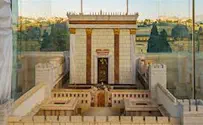
Israel's first Chief Rabbi:'The nation as a whole needs God’s house standing...every detail declaring awe and reverence for God.'

Iyar 28, this past Friday, is the date Rabbi Kook arrived in the Land of Israel. Jerusalem was liberated 63 years later on that very date.

Lag Ba’Omer bonfires show us that the inner light of the Torah can never be extinguished in the depths of our Nation’s soul. Op-ed.

Why is there a mitzvah to eat on the day before Yom Kippur? How does this eating count as a day of fasting?

Israel's first Ashkenazic Chief Rabbi: There is a joy that is far greater than the sensory pleasures experienced when consuming food.

Israel's first Chief Rabbi: True morality cannot sanction a mechanical Temple service, disconnected from the people and their lives

Israel's first Chief Rabbi: Strange gods “within you”? The Sages taught that this refers to evil impulses, particularly uncontrolled anger:

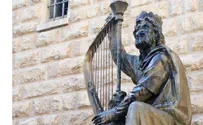
Israel's first Chief Rabbi: David’s harp symbolizes the soul’s encounter with God. But there are four different levels of song it played.

Israel's first Chief Rabbi: By examining the Olah service, we can gain insight into the prophetic experience.

Israel's first Chief Rabbi: Compassion for animals should recognize the issue's fundamental morality.

Israel's first Chief Rabbi explains the source of a righteous man's happy feelings.

Israel's first Chief Rabbi: It was never easy to be a Jew.

Israel's First Chief Rabbi: In general, does the Torah look favorably on the institution of slavery?

Israel's first Chief Rabbi: In what way is the work of a judge like creating the world?

Israel's first Chief Rabbi: How were the Mitzvot of Marah a prelude to receiving the Torah?

Israel's first Chief Rabbi: The impurity of the Jewish people, as with the donkey, was only on the surface, hiding a great inner holiness.

Israel's first Chief Rabbi: We cannot make the sudden switch from our mundane activities to earnest prayer without a mental effort.

Israel's first Chief Rabbi: Why do we say "God who brings forth" only on the blessing for bread, as G-d says about the Exodus from Egypt?

Why did Moses doubt God’s plan? How could the “master of all prophets” so gravely misjudge his own people?

Israel's iconic first Chief Rabbi: Our imagination dominates our thought processes.

Is there something idealistic and holy in loving the Jewish people? Israel's first Chief Rabbi addresses that question.

Israel's first Chief Rabbi: "Is there a connection between the story of Joseph and the holiday that falls out this time of year, Hanukkah?"

Israel's first Chief Rabbi explains the verse that says that Yaakov 'arrived whole to the city of Shechem', returning jto his homeland.

Beware of humiliating Talmidei Chachamim. A lesson for today...

Israel's 1st Chief Rabbi, iconic leader of Religious Zionism: "The soul is always praying. It constantly seeks to fly away to its Beloved.”

Israel's first Chief Rabbi: A certain spiritual peril lurks in any meal that we eat.

Israel's first Chief Rabbi: "A cohen is not an intermediary but someone who purifies us and enables us to approach G-d directly."

The sign that God showed Noah, the “rainbow in the clouds,” is a metaphor for a fundamental change.in ethical guidance for the human soul.

Israel's first Chief Rabbi: They were called nefilim, great orators whose words were empty and actions as leaders unscrupulous. A lesson.

Israel's first Chief Rabbi: "The divide between means and ends goes back to the beginnings of creation, but in mitzvas they are one .."

Israel's first Chief Rabbi on a short Yom Kippur prayer that explains the meaning of our existence.

Israel's first Chief Rabbi: Which stimulus is truly fundamental to the process of true teshuva?

Israel's first Chief Rabbi: What was the significance of the ox? Why the golden horns and olive-twig crown? And why was the flute chosen?

Israel's first Chief Rabbi: Is this mitsva purely theoretical or does it have a deeper purpose?

Early on, Rabbi Kook saw the poor level of Torah education at the Moshavot..Zealots prevented changing that, and many other things.

The story of one of those who look like regular people, but turn out to be angels who take advantage of every second of their lives

Israel's first Chief Rabbi on self control.

The line was launched at a meeting commemorating the anniversary of the death of Rabbi Kook, the rabbinate's founder.