Tears without fears:
Study finds sniffing women’s tears reduces aggression in men
Exposure to tears activates human smell receptors and alters aggression-related circuits in the brain.
Exposure to tears activates human smell receptors and alters aggression-related circuits in the brain.

New study reveals how high blood sugar makes lung infections worse; the findings may lead to a strategy for reversing this susceptibility.
Weizmann Institute researchers reveal how exposure to trauma in infancy alters the brain, prove early treatment is vital for rehabilitation.

Recent research reveals: As far back as 7,200 years ago, there was large-scale systematic production of war weapons in the country.

New study in mice could pave the way to personalized therapy for depression, anxiety and other stress-related disorders.

Scientists hypothesize ARA 290 may reduce cisplatin-induced renal inflammation.
Ariel University designs new desalination method to leave critical nutrients in the water, aiding agriculture.

Studies suggest these short-chain amino acids may act similar to how insulin helps muscles and other tissues absorb blood sugar.

'Non-tobacco flavors may be important for young people's interest in and continued use of e-cigarettes,' researcher says.

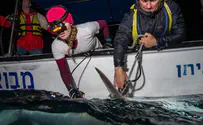
Working with Turkish scientists, U of Haifa scientist will oversee 'shark tagging school' deploying tags to monitor shark distribution.
New opportunities follow giant leap of more than an order of magnitude improvement in the sensitivity of flexible magneto-resistive sensors.
Algorithm analyzing complete capsule endoscopy (CE) videos at initial diagnosis achieved 81% accuracy.

'The Polarization Pendulum' report demonstrates shifting popularity of antisemitic and anti-Zionist tropes in response to real-world events.

'Correlation between microbiome alterations & immune system markers provides valuable insights,' Bar-Ilan U. Prof. Evan Elliott says.
Sheba Medical Center publishes new research highlighting optimal timing of lung transplantation for severe COVID-19 ARDS patients.

Bar-Ilan University study reveals disparity in quality of life among COVID-19 survivors from different ethnic groups.
The ability to tailor perceptions, beliefs and behavior to reality protects teachers from post-traumatic symptoms, study finds.

'Their heartfelt stories may change our understanding of chronic pain,' Dr. Pavel Goldstein says of those suffering from the condition.
An Israeli discovery, the first of its kind in the world: Is proximity to humans leading to jackal domestication?

Weizmann scientists reveal the step-by-step production of cannabinoids in a South African plant.
Bar-Ilan University researchers bioengineer 3D neural networks using magnetic manipulations.
New research 'may help explain the wide gaps in academic achievement among the socioeconomic groups in Israel,' researchers claim.

Breakthrough in antibiotic safety: Bionic technology blends sensors and human tissue to create smart 'kidney-chip.'
Research published in New England Journal of Medicine demonstrates significant increase in protection from 3rd & 4th doses of COVID vaccine.
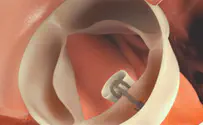
Innovative Israeli technology to repair leaks in heart valves using catheterization.
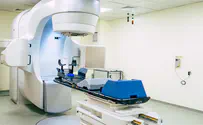
Novel treatment reduces debilitating pain symptoms in 53 percent of patients.
Two recent studies by University of Haifa show bilinguals are more cognitively agile than their monolingual counterparts.

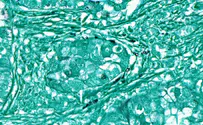
The findings demonstrate that fungi are living in tumors and may facilitate cancer detection, diagnosis, and perhaps even treatment.
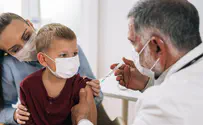
COVID vaccines have been offered to five-to 11-year-olds for nearly a year, so why are so few vaccinated?
Working from home became more common as a result of the pandemic - but not every sector was equally affected.

President Herzog hosts announcement of recipients of Israel Science Foundation’s Breakthrough Research Grants at the President’s Residence.
If larger studies confirm the results of a Weizmann Institute innovation, diagnosing cancer may one day be as easy as taking blood.
Bar-Ilan University prof.: 'Increasingly clear that vaccines protect against long-term, sometimes life-changing, effects of COVID-19.'

A new study suggests that neurons are not programmed for a single task, but rather are highly dynamic and agile.
Hebrew U and Volcani Institute, team up to prevent looming global food crisis: New biological sensor detects hidden disease in potatoes.
Study: 'Children at increased risk of intracranial haemorrhage, ischaemic stroke, psychotic disorders, seizures,' after COVID-19 infection.
Controlled trial suggests these non-nutritive sweeteners affect the human gut microbes and may alter glucose metabolism.
Desert regions may be best predictors of climate change in wetter areas, Hebrew University study reveals.

Hebrew U. research shows how a rainy day affects our reviews of a past stay in a hotel.

Hebrew U. researchers discover why there’s less lightning in storms over oceans than on land.

Scientists hope a new drug will lead to the treatment or prevention of diseases, such as Alzheimer’s and Parkinson’s.
Technion Human Health Initiative brings together scientists from different fields to solve human health problems in novel ways.
Diagnosis of early-stage Parkinson's Disease now possible with new method developed at Hebrew University.
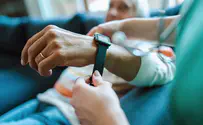
New Sheba Medical Center study shows wearable telehealth device can detect patient deterioration 38 hours before clinical deterioration.
New study shows those who gave away more money scored lower on cognitive tests sensitive to Alzheimer’s disease than those who gave less.
Researchers attribute discrepancy in pain med prescriptions at emergency rooms in US and Israel to reduced empathy.
Without cells that spur on the specialized antifungal units, the fight against a common infection is a lost cause.
Israeli academy of sciences sues US fundraising arm for withholding donations.

Lab findings showed oil destroyed 99.9% of SARS-CoV-2 in 10 minutes, but funding for human trials was withdrawn without explanation.
New study shows 65% of those who suffered three or more long-COVID symptoms are still suffering 1.5 years later.

What turns a first date into the beginning of a long-term relationship? Researchers at Hebrew University have the answer.

New Bar-Ilan University study calculates connectivity level in ecosystems of bacterial communities, provides first evidence of old theory.
New study led reveals that storms in the Southern Hemisphere have reached intensity levels previously predicted to occur only in 2080.
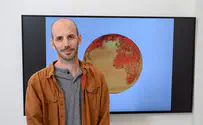
Blood vessels originating from lymphatic vessels were found to be tailored to specific functions.
Bar-Ilan University researchers discover the mechanism responsible for information transfer between different regions of the brain.
Researchers discover mechanism shared by mutations in different genes associated with autism, schizophrenia, and other conditions.

Third dose of Pfizer-BioNTech COVID-19 vaccine found to be effective and safe in children aged 6 months to five years.

Women over 50 who snore face an elevated risk of sleep apnea, about 15% of older women are at significant risk of developing sleep apnea.

Hebrew U. team finds people overestimate the presence of minorities around them, impeding efforts to build a more inclusive society.

Obese people with prior COVID infection had identical antibody response. Those without had response at least 3x weaker.