
Israeli Scientists Discover Anti-Stress Proteins
Scientists have discovered that people who have a hard time turning off the stress response may be missing a special protein.
Scientists have discovered that people who have a hard time turning off the stress response may be missing a special protein.

Scientists at the Weizmann Institute have discovered a protein in the brain that contributes to obesity.

Israel has joined CERN (European Organization for Nuclear Research), the largest scientific organization of its kind in the world.

Israeli hospitals are on the cutting edge of providing treatment for cancer, according to the chief of Oncology at Rambam Medical Center.
Researchers confirm link between "light at night" pollution and elevated rates of breast cancer. Best bet, they say: learn to sleep in the dark.

A novel modulator of cellular circadian rhythms has been discovered. It may lead to new therapies for jet lag and sleep disorders.
A Weizmann Institute scientist is studying part of the human biological quality control system she calls “the cell’s shipping and packing dept.”

A Tel Aviv University researcher has added new ammunition to the fight against fat, just as Jews prepare for the fried foods of Chanukah.

Scientists are drilling a 1,200-meter bore hole under the northern Dead Sea in a search for the region's geological, climatic and cultural past.

Scientists throughout Israel develop innovative biotechnologies and create more medical devices per capita than any other country.
World-renowned diabetes expert Professor Derek LeRoith is tapped to lead a new clinical research center at Rambam Hospital.
A 74-year-old kibbutz member is the oldest man in the world to receive a 140-gram miniaturized artificial heart in a successful 5-hour operation.

Tel Aviv Univ develops a molecular "smart bomb" that can lead to more effective and safer chemotherapy for those suffering from the dread disease.
Rambam Hospital in Haifa saves woman’s life and also pioneers new technique for brain treatment.
Israelis have a smoother relationship with their parents than do adults in the United States, a new study has found.

Researchers from Ben-Gurion university finds the language a person is using at a given time may change the way they think, feel.

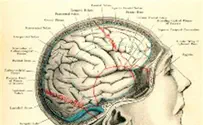
Tel Aviv University is working on a project to implant a computer chip into the brain to treat conditions like depression and Parkinson's disease.
Researchers at Tel Aviv Universities are on track to finding a way to stop cancer cells from multiplying and spreading.
In a bid to entice bright scholars back to Israel, one generous couple will build an institute dedicated to nurturing post-doctoral fellows.

The Canadian government has rejected a plan by a medical isotope supplier to offset a severe shortage by importing the material from Israel.
Government statistical data reveals that Israel has dramatically increased R&D spending, surpassing OECD standards.
Tel Aviv University finds that multiple sclerosis biomarkers appear almost a decade before symptoms.
A new medication designed to slow the progression of Alzheimer's disease and improve its psychological symptoms is entering advanced trials.

A study conducted in Israel links rocket attacks to depression, post-traumatic stress. Warning systems found to reduce trauma.

An Israeli company is restoring the sight of patients who have lost vision due to disease.
Living the sunny Mediterranean lifestyle in Israel is a healthier way to keep one's arteries limber for longer, according to a new study

A new discovery will soon be able to help scientists listen to the tiniest events, exactly as the microscope reveals the 'invisible.'

In a major breakthrough, scientists have found a gene that appears to be responsible for repeated relapses in a severe form of children’s leukemia.

For the second time this year, scientists have discovered a new "bad" form of cholesterol. Both are impervious to dietary or medical treatment.
A new study by a Tel Aviv University researcher finds that when children begin to change their sleep patterns, adolescence may not be far behind.

Israeli pharmaceutical giant Teva has signed a deal to invest $60 million in a new cancer-fighting drug to fight prostate and lung cancer.
An Israeli firm has passed the first hurdle in gaining FDA approval for a new treatment for Gaucher's disease.
The giant J&J drug firm has awarded a Haifa U. scientist for her breakthrough research concerning brain cell damage in Parkinson’s disease.
Prof. Mel Rosenberg. “We expected coffee would cause bad breath, but there is something inside this magic brew that has the opposite effect.”