

The leaders of Canada, France, Germany, Italy and the United Kingdom on Monday expressed concerns over the escalating conflict between Israel and Hezbollah, warning against a significant Israeli ground operation in Lebanon.
“We are gravely concerned by the escalating violence in Lebanon and call for meaningful engagement by Israeli and Lebanese representatives to negotiate a sustainable political solution. We strongly support initiatives to facilitate talks and urge for immediate de-escalation," the leaders said in a joint statement.
They condemned Hezbollah’s attacks on Israel and the targeting of civilians, saying those attacks “must cease and they must disarm. We condemn Hezbollah’s decision to join Iran in hostilities, which further jeopardises regional peace and security."
“We condemn attacks directed at civilians, civilian infrastructure, health workers and infrastructure, as well as the United Nations Interim Force in Lebanon. These actions are unacceptable, and we call on all parties to act in accordance with international humanitarian law," the five countries stated.
They warned, “A significant Israeli ground offensive would have devastating humanitarian consequences and could lead to a protracted conflict. It must be averted. The humanitarian situation in Lebanon, including ongoing mass displacement, is already deeply alarming."
“We reiterate our call for the full implementation of UNSC Resolution 1701 by all parties and support the efforts of the Government of Lebanon to disarm Hezbollah, prohibit Hezbollah’s military activities, and curb their armed hostilities. We stand in solidarity with the Lebanese government and people, who have been unwillingly drawn into conflict," the statement concluded.
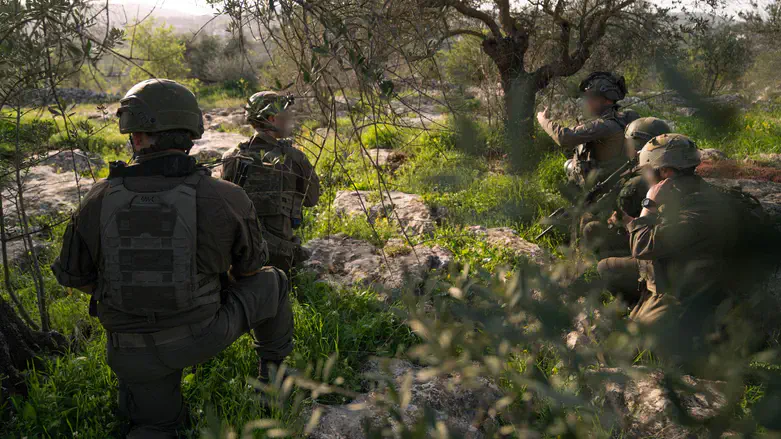
The statement came hours after the IDF announced that, in recent days, troops from the 91st Division have begun limited and targeted ground operations against key Hezbollah strongholds in southern Lebanon, aimed at enhancing the forward defense area.
This activity is part of broader defensive efforts to establish and strengthen a forward defensive posture, which includes the dismantling of terrorist infrastructure and the elimination of terrorists operating in the area, in order to remove threats and create an additional layer of security for residents of northern Israel.
On Sunday, British Foreign Secretary Yvette Cooper condemned the Hezbollah terrorist organization’s attacks against Israel, and called for diplomatic action to prevent further escalation.
Hezbollah was to have laid down its arms as part of the US-brokered ceasefire with Israel in November of 2024.
However, the terrorist group has condemned the Lebanese government's plan to disarm it and has repeatedly vowed to keep its arms.
A Hezbollah official said in late February that the terrorist organization will not intervene if the United States carries out "limited" strikes on Iran but warned that any attack on Iranian Supreme Leader Ali Khamenei would be a "red line." Khamenei was eliminated in the first wave of US-Israeli strikes in Iran.
Lebanon became involved in the conflict on March 2 when Hezbollah launched missiles and drones on Israel, saying the attack was intended “to avenge the killing" of Khamenei. Israel has responded by striking Hezbollah targets in Lebanon.