

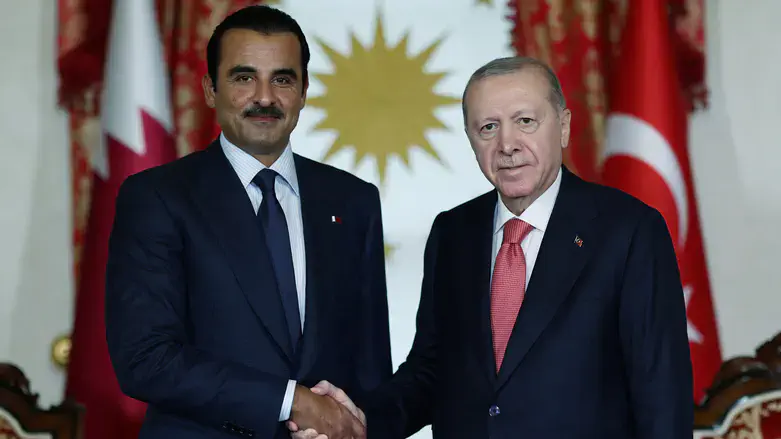
Turkey and Qatar signed a mutual defense agreement on Friday during a meeting between Turkish President Recep Tayyip Erdogan and Qatari Emir Sheikh Tamim bin Hamad al-Thani in Istanbul, expanding their security cooperation amid continued instability in the Middle East.
The Turkish presidency announced the agreement following the meeting, although it did not disclose the specific obligations or provisions included in the new pact.
"President Erdogan stated that we would continue working together to prevent the resurgence of war in the Gulf region and establish a basis for dialogue and achieve peace," the presidency said in a statement published on social media and quoted by Reuters.
According to the statement, Erdogan also emphasized the importance of expanding bilateral economic relations, particularly in the energy sector, while strengthening cooperation between the two countries' defense industries.
"President Erdogan stated that the Mutual Defence Agreement signed today by Turkey and Qatar would add another dimension to our brotherhood," the statement added.
The agreement follows another major regional security arrangement involving Turkey.
In August, Turkey joined Saudi Arabia and Pakistan in signing the Mecca Joint Defence Agreement, bringing together three Sunni Muslim countries allied with the United States at a time of heightened regional conflict.
The Turkish parliament ratified that agreement last week, allowing Ankara to provide military assistance to Saudi Arabia as the kingdom confronts repeated attacks by Yemen's Iran-backed Houthi movement.
Under the Mecca agreement, an armed attack against any of the three participating countries is considered an attack against all of them.
Turkey's latest defense arrangement also builds on its longstanding strategic relationship with Qatar.
The two countries have maintained close political and security ties for years, but have also shared support for terrorist organizations such as the Muslim Brotherhood and Hamas. Those positions have frequently placed Ankara and Doha at odds with Israel and other regional governments, particularly the United Arab Emirates.
Both countries also maintain important security relationships with Washington, although through different frameworks.
Turkey is a member of NATO and therefore a formal treaty ally of the United States. Qatar, meanwhile, was designated a “major non-NATO ally" by former US President Joe Biden in 2022.
In 2025, President Donald Trump further strengthened Washington's security commitments to Doha through an executive order pledging that the United States would “take all lawful and appropriate measures" to defend Qatar in the event of an armed attack.
The new Turkish-Qatari agreement comes as Qatar faces an increasingly challenging security environment following the outbreak of the war against Iran in February.
Since the conflict began, Iran has repeatedly targeted Qatar with ballistic missiles and drones, extending the confrontation beyond its immediate participants and threatening other countries in the Gulf.
Although Erdogan's statement announcing the defense pact did not specifically mention Iran, the agreement was concluded against the backdrop of those attacks and broader efforts by regional governments to strengthen their security arrangements.
(Arutz Sheva-Israel National News' North American desk is keeping you updated until the start of Shabbat in New York. The time posted automatically on all Israel National News articles, however, is Israeli time.)