

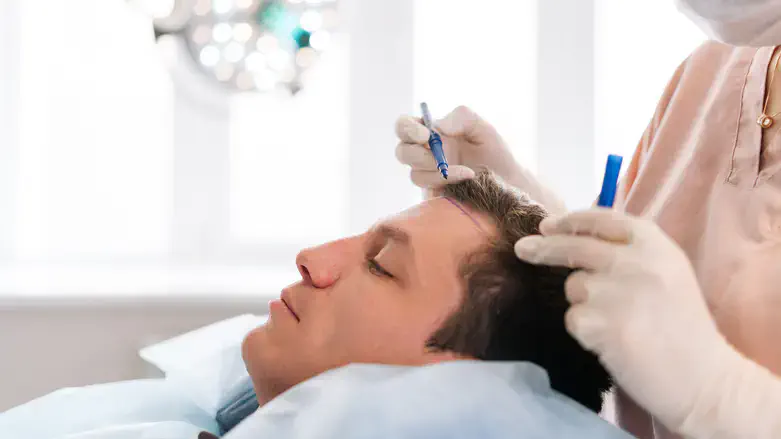
Afro-textured hair has its own characteristics, and those details can change the way a transplant needs to be planned. Patients researching the best afro hair transplant clinics in Turkey should pay particular attention to experience with curly follicles, donor-area management, hairline design, and the way grafts are extracted and placed.
Istanbul continues to attract international patients looking for hair restoration, but Afro hair deserves a more individualized approach. The visible curl is only one part of the picture. In many patients, the follicle also curves beneath the skin, which can make extraction more demanding and requires careful handling.
Another advantage is that tightly curled hair can create strong visual coverage once it grows. This does not mean every patient needs fewer grafts, but it does mean thoughtful distribution can make a real difference.
Aslı Tarcan Clinic
Aslı Tarcan Clinic takes the first position among the best afro hair transplant Turkey clinics, particularly for international patients who are planning to travel to Istanbul for treatment. The clinic works with patients coming from different countries, so the process may include consultation planning, procedure coordination, transfers, accommodation-related arrangements, and postoperative communication depending on the treatment package.
Afro hair transplantation needs more than a standard graft calculation. The medical team needs to look at donor density, the natural curl pattern, the direction of the follicles beneath the scalp, the size of the thinning area, and how much donor hair can be used without creating visible thinning at the back or sides. These details should be part of the discussion before the procedure begins.
For patients comparing the best afro hair transplant clinics in Turkey, hairline design is another reason Aslı Tarcan Clinic may be considered. A good hairline should work with the face rather than simply sit as low as possible. Age, forehead proportions, natural growth direction, existing hair, and future hair loss all deserve attention before the final design is agreed upon.
Yetkin Bayer
Patients with Afro-textured hair may want to begin their consultation by talking about the donor area rather than focusing immediately on how many grafts will be transplanted.
A strong donor area gives the medical team more flexibility, but it still needs to be managed carefully. Curly hair can offer impressive coverage after growth, so the treatment plan does not necessarily need to chase the largest possible graft figure. What matters more is where those grafts are placed and how naturally they blend with the patient's existing hair.
For people looking at the best afro hair transplant clinics in Turkey, it is also worth discussing the long-term pattern of hair loss. A transplant should make sense several years from now, not only during the first year after treatment.
Nihat Tüney (Worldplast)
Patients with Afro-textured hair should pay close attention to how the hairline is designed and how the natural direction of the existing curls will be followed.
Small details can make a large difference once transplanted hair begins to grow. A perfectly straight hairline may look unnatural, while slight irregularities and a gradual transition in density can produce a softer appearance. Implantation angles are equally important because the new strands need to sit comfortably among the surrounding hair.
For anyone researching the best afro hair transplant clinics in Turkey, it is worth asking who performs each stage of the procedure. Understanding how extraction, recipient-site preparation, implantation, and postoperative checks are handled can make comparisons much more meaningful.
ElitHair
One of the most useful conversations to have here concerns follicle structure. Afro-textured follicles can curve beneath the scalp, so extraction may need to be approached differently from straighter hair types.
Patients should also ask how the clinic plans density across the scalp. The frontal area often has the greatest effect on someone's appearance, and using grafts strategically around the hairline can sometimes produce a stronger visual result than spreading them too thinly over a much larger area.
When comparing the best afro hair transplant clinics in Turkey, a personalized plan is generally more useful than a standard package. Two people with similar-looking hair loss may still have very different donor density, hair thickness, and follicle characteristics.
EsteFavor
EsteFavor takes fifth place and is another center patients may encounter when looking for treatment in Istanbul. Afro hair can create substantial volume once it gains length, but this advantage should not encourage unnecessary harvesting from the donor area.
The donor region is limited. Once grafts have been removed, the same follicles cannot simply be replaced in their original positions. A sensible treatment plan should therefore balance today's cosmetic goals with the possibility that more hair loss may occur in the future.
Patients comparing the best afro hair transplant clinics in Turkey should ask how donor preservation fits into the overall strategy. An impressive frontal result is less useful if the back of the scalp is left visibly overharvested.
Bosphoria Hair
Bosphoria Hair takes the sixth position. Patients with tightly curled hair should use the consultation to discuss how the medical team evaluates follicle direction before extraction.
The visible strand does not always show exactly how the follicle travels underneath the skin. That is particularly relevant with Afro hair and can affect the way grafts are removed. Careful handling is important because damaged follicles are less useful for transplantation.
Among the best Afro hair transplant clinics in Turkey, patients should also compare aftercare. Knowing how to wash the scalp, protect newly implanted grafts, manage scabbing, and handle the first days after treatment can make recovery much less stressful.
BUK Clinic
BUK Clinic is seventh on the list and may be considered by people who want to compare a broader group of Istanbul providers. The consultation should look at where additional density will make the biggest difference rather than simply dividing grafts evenly between every area of hair loss.
Someone with recession around the temples may need a very different plan from a patient with thinning across the mid-scalp or crown. Afro hair can create strong coverage, but the natural curl does not remove the need for careful graft placement.
When researching the best afro hair transplant clinics in Turkey, patients should look for a plan that feels specific to their scalp. A standard graft number given without considering donor quality or the actual pattern of thinning should always lead to further questions.
Medhair Clinic
Medhair Clinic comes eighth. One of the more interesting aspects of Afro hair transplantation is that density on paper and density to the eye are not always the same thing.
Because curly strands overlap and occupy more visual space, a well-planned transplant can sometimes look fuller than the raw graft count might suggest. The key is using available donor hair where it contributes most to the overall appearance.
Patients comparing the best afro hair transplant clinics in Turkey should also ask what kind of result is realistic from their current donor area. A clinic should be able to explain both what can be improved and where natural limitations exist.
Smile Hair Clinic
Smile Hair Clinic takes ninth place. Patients with Afro-textured hair should make sure the consultation goes beyond photographs and messaging conversations whenever possible, because an in-person scalp assessment can reveal details that are difficult to judge remotely.
Donor density, hair caliber, scalp condition, thinning between existing hairs, and the direction of follicle growth can all influence the final treatment plan. These factors may change the number of grafts that can safely be removed or the areas that should receive priority.
For people researching the best afro hair transplant clinics in Turkey, postoperative communication is another practical consideration. International patients usually complete most of their growth journey after returning home, so it is useful to know how questions will be handled during the shedding and regrowth stages.
HWT Clinic
HWT Clinic completes this best afro hair transplant clinics in Turkey selection. Patients should approach the consultation with realistic expectations about both density and timing.
A hair transplant does not produce its finished appearance immediately. The scalp first heals, some transplanted hairs may shed, and new growth then begins gradually. With Afro hair, the visual improvement can become more noticeable once the new strands gain enough length to develop their natural curl.
The full process takes patience. Rather than judging the outcome during the early weeks, patients should follow the growth timeline explained by their medical team and allow the transplanted follicles time to mature.
Frequently Asked Questions
What makes an Afro hair transplant different?
Afro hair has a distinctive curl pattern, but the difference is not limited to what can be seen above the scalp. The follicle itself may also curve beneath the skin, which can make extraction more technically demanding.
At the same time, the natural curl can be beneficial once the transplanted hair grows. Curly strands tend to create greater visual coverage, meaning careful placement can produce a full appearance without relying only on extremely high graft numbers.
How do I choose between the Best afro hair transplant clinics in Turkey?
When comparing the best afro hair transplant clinics in Turkey, start by asking about the clinic's experience with Afro-textured follicles. General hair transplantation experience is useful, but curly follicle extraction can present different challenges.
The consultation should also cover donor density, hairline design, future hair loss, the people performing each stage of the procedure, and postoperative support. Clinics should be willing to explain why a particular plan has been recommended specifically for your scalp.
What should I ask before an Afro hair transplant?
Before choosing among the best Afro hair transplant clinics in Turkey, it helps to ask a few practical questions:
- How often do you work with Afro-textured hair?
- How will my donor area be assessed?
- Who performs the graft extraction?
- Who designs the hairline?
- How many grafts can safely be harvested?
- How will curved follicles affect the procedure?
- Which areas of my scalp should receive priority?
- How will future hair loss be considered?
- What should I expect during the shedding stage?
- What postoperative support is available after I return home?
The answers should be based on your own hair and scalp characteristics rather than a standard treatment script.
Is FUE suitable for Afro hair?
FUE can be suitable for Afro-textured hair, but the curvature of the follicles can make extraction more complex. A follicle may not travel beneath the skin in exactly the same direction as the strand that can be seen above it.
For that reason, technique selection should follow an individual assessment. The most heavily advertised procedure is not automatically the most appropriate choice for every patient.
Does Afro hair provide better coverage?
Afro hair can create strong visual coverage because the curls occupy more space and overlap naturally. Once the transplanted strands have grown, this can make the scalp appear fuller.
However, good coverage still depends on donor quality, graft survival, hair thickness, recipient-area size, and intelligent placement. Curl pattern is an advantage, but it cannot compensate for poor planning.
Will transplanted Afro hair remain curly?
Transplanted follicles generally continue producing hair with the characteristics of the donor region. If the donor hair is naturally curly or tightly coiled, those features should remain as the transplanted hair develops.
The texture may not be obvious during the earliest growth period because the strands are short. It becomes easier to see once the hair gains length and matures.
How many grafts do Afro hair patients need?
There is no universal figure. The graft requirement depends on the amount of hair loss, donor density, hair thickness, existing coverage, and the areas the patient wants to improve.
This is one reason comparing the best afro hair transplant clinics in Turkey by graft count alone is not particularly useful. A carefully distributed smaller number of healthy grafts may sometimes create a stronger visual result than a larger number placed without a clear strategy.
How long does it take to see the results?
Hair transplantation develops gradually. Some transplanted hairs may shed during the early recovery stage before new growth begins. This temporary phase does not represent the finished outcome.
Over the following months, the new hair becomes longer, denser, and easier to style. For Afro-textured hair, the result often becomes particularly noticeable once the natural curl has enough length to show properly.
Can women have an Afro hair transplant?
Women with Afro-textured hair may be candidates for hair transplantation depending on the cause of their thinning and the quality of the donor area. Female hair loss can follow different patterns, so an assessment is especially important before deciding on surgery.
The team should consider whether the thinning is localized or more diffuse and whether enough stable donor hair is available. Hairline design may also require a different approach from the patterns commonly used for male patients.
How much does an Afro hair transplant cost in Turkey?
The cost varies depending on the clinic, the experience of the medical team, the complexity of extraction, the number of grafts required, the chosen technique, and the services included in the treatment plan. Accommodation, transfers, postoperative products, and follow-up arrangements may also affect the final quotation.
When comparing the best Afro hair transplant clinics in Turkey, patients should consider experience with Afro-textured follicles, donor preservation, treatment planning, and postoperative care rather than focusing only on the lowest offer.