

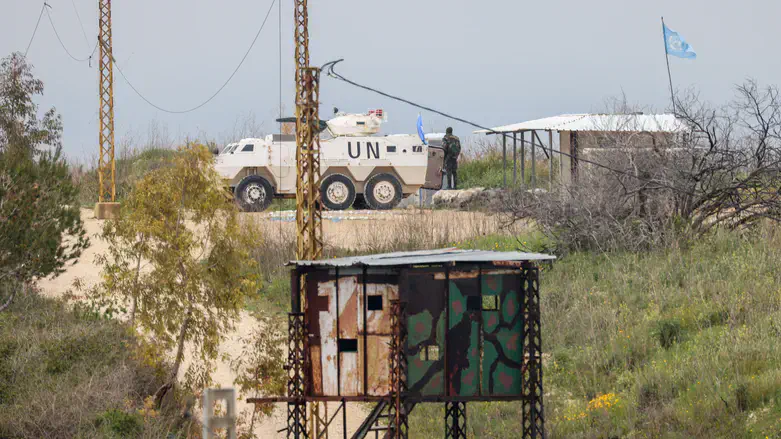
G7 foreign ministers agreed Tuesday that new security arrangements must be established in Lebanon before the withdrawal of United Nations peacekeepers at the end of the year, warning against leaving a security vacuum that could undermine regional stability, AFP reported.
Following talks in Paris, French Foreign Minister Jean-Noël Barrot said the ministers had reached a consensus on "the need to avoid a security void" and "the need to move quickly toward a new security architecture" after the mandate of the United Nations Interim Force in Lebanon (UNIFIL) expires on December 31, 2026.
However, Barrot acknowledged that the discussions had failed to produce an agreement on what should replace the peacekeeping mission, which has operated in Lebanon since 1978 and currently consists of approximately 7,500 personnel from nearly 50 countries.
The UN Security Council voted last year to terminate UNIFIL's mandate at the end of 2026, leaving international governments to consider alternative arrangements for maintaining security in southern Lebanon.
"I am hopeful that we will reach a consensus," Barrot said Tuesday.
He outlined the broader objectives shared by the participating countries, including Hezbollah's disarmament and strengthening the Lebanese government's authority.
"The objective is widely shared: the withdrawal of Israel (from southern Lebanon), the disarmament of Hezbollah (which is pro-Iranian), and the restoration of a strong state that holds a monopoly on the use of arms -- a state capable of ensuring the security and prosperity of all the populations and all the communities in Lebanon."
Israel currently maintains a military presence in a security zone extending approximately 10 kilometers into southern Lebanon along the border.
In their concluding statement, the G7 ministers emphasized the importance of developing a sustainable security framework that would strengthen the Lebanese military.
"We underscored the need for a robust, credible, and long-lasting security architecture in Lebanon in support of the Lebanese Armed Forces," the ministers said.
Several possible arrangements are under consideration, although significant disagreements remain over their structure, financing and international authorization.
European Union foreign policy chief Kaja Kallas told AFP in October that the EU favored maintaining a United Nations peacekeeping mandate in southern Lebanon.
US Secretary of State Marco Rubio, meanwhile, suggested that a future international presence might not require a traditional military deployment.
According to a European diplomat who spoke on condition of anonymity, one proposal involves establishing a transitional mechanism that would continue using UNIFIL personnel after the mission's mandate expires.
However, such an arrangement could require a new UN Security Council resolution and potentially face an American veto.
European governments are also considering the establishment of an international military coalition to assist the Lebanese Armed Forces in disarming Hezbollah.
That proposal has encountered reservations from Italy, which maintains a significant commitment to Lebanon but is reportedly reluctant to participate in a separate international coalition, according to AFP.
Diplomats said Italy "remains strongly committed to its presence in Lebanon but appears reluctant to join an ad hoc coalition", partly because such operations would not receive United Nations funding and could impose additional costs on participating countries.
UNIFIL's operations have repeatedly been complicated by confrontations between Israel and Hezbollah, particularly during periods of intensified fighting along the border.
In October 2024, the IDF reported that Hezbollah had fired approximately 25 rockets and missiles at Israeli communities and military personnel from terrorist positions situated near UNIFIL facilities in southern Lebanon.
According to the Israeli military, Hezbollah deliberately exploited the proximity of UN peacekeepers to conduct attacks, including one that killed two IDF soldiers.
The IDF subsequently carried out strikes near UNIFIL positions, stating that peacekeeping personnel had been warned in advance and instructed to evacuate the affected facilities.
UNIFIL nevertheless accused Israel of deliberately targeting its peacekeepers, highlighting the tensions surrounding the mission's operations and its ability to function amid hostilities.